

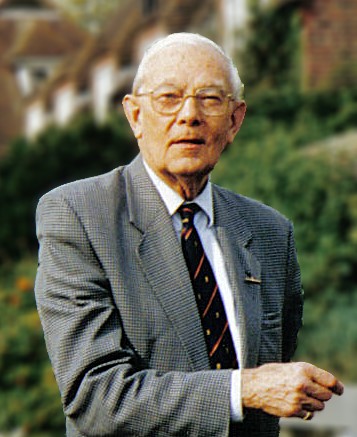
Edward Andrew Life (7 June 1921 – 14 July 2010)
By Martin A. Life
11 March 2026
Andrew was born in Cricklewood where his mother, Emilie Life, was a teacher. His relationship with Chenies began when he was five and Emilie was appointed headmistress at Chenies School, the family then moving into the schoolhouse. Andrew was to find that it wasn’t always easy being a pupil in your mother’s school: there was an expectation of exemplary behaviour, and this ingrained in Andrew a personal imperative to work hard; and perhaps a desire to please those around him – forces that, together, were the foundation of the person he was to become.
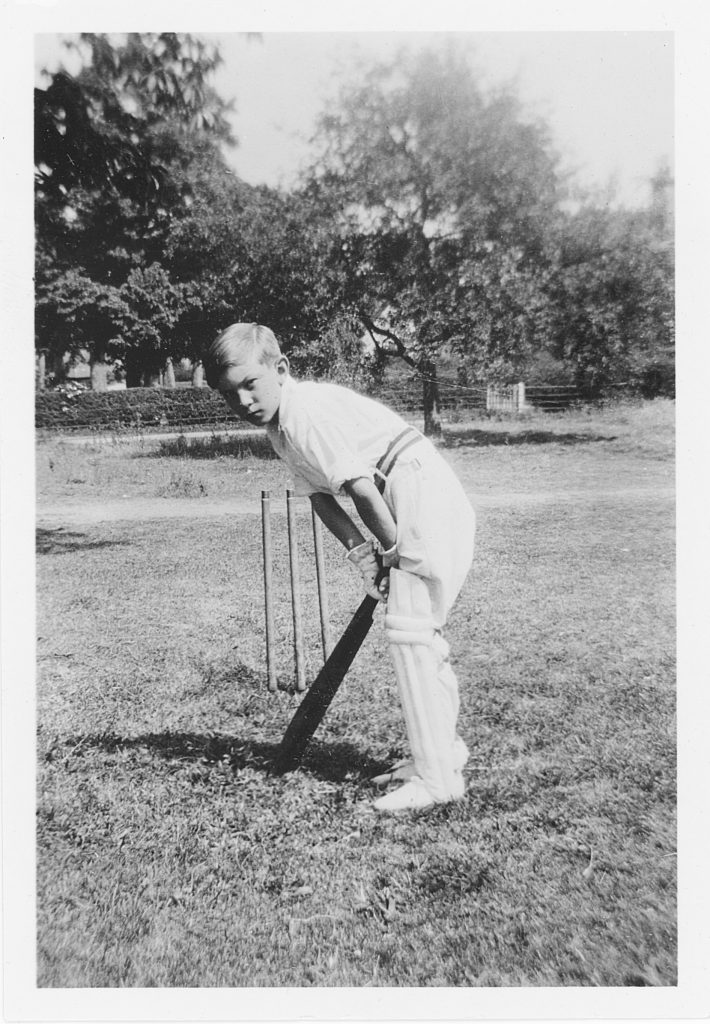
Andrew’s childhood in Chenies in the 1920s and 30s was a happy time. His parents encouraged an interest in wildlife that developed into a passion, immersing him in the wildlife and beautiful countryside of the Chilterns. His father, Ted, was a fanatical cricketer and this became a lifelong interest of Andrew’s as well. He played for Chenies before and after the war and followed the club’s fortunes throughout his life.
Chenies school was to be the scene of a particularly critical episode in Andrew’s story. In 1933 the seven-year-old Joan White‘s family moved to Little Chalfont, and she too started as a pupil at the school. Although Joan and Andrew couldn’t have known it at the time, it was to mark the beginning of a relationship that would last the rest of their lives. Andrew was a few years older, but in due course they both went on to Dr. Challoner’s Grammar School and their paths continued in parallel.
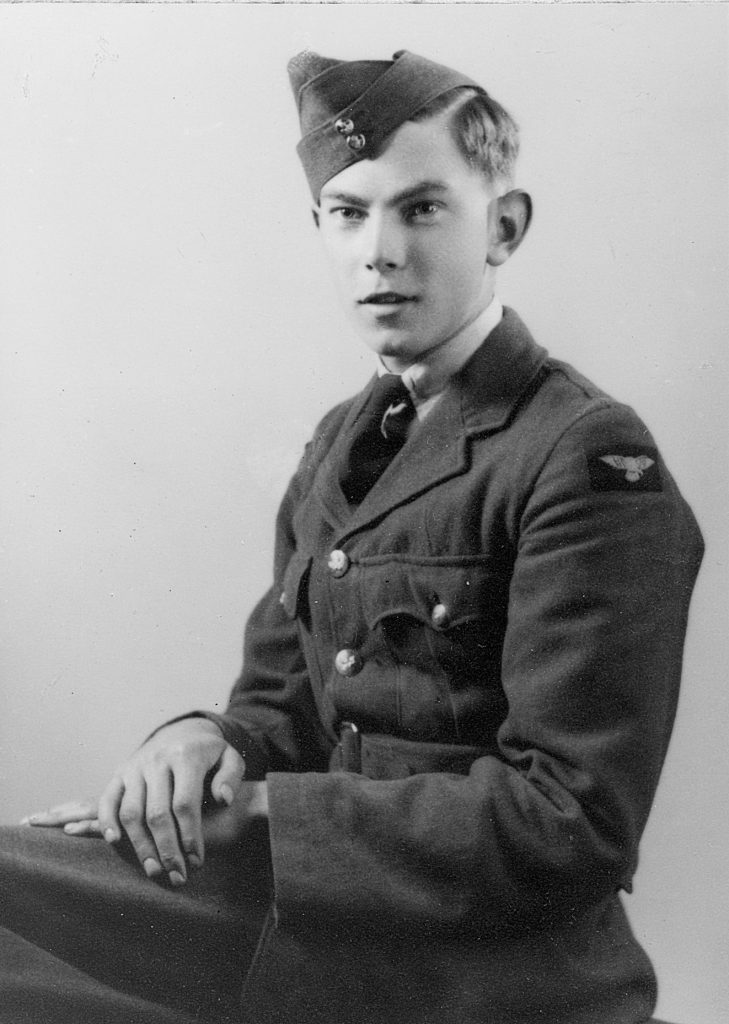
In 1939, Andrew left Chenies to study at the King Alfred’s Teacher Training College in Winchester. He qualified as a teacher there and came back to Buckinghamshire to work, but then came the war, and ties with Chenies were again disrupted. He spent his military service in the RAF and was posted to Malaya and India but subsequently returned to the village. In 1947, after briefly working as an assistant teacher at Great Missenden Voluntary School, he returned to education himself at the University of Manchester, where he studied Geography.
After his graduation, Andrew’s direction was firmly set in the career that was to be such a fundamental part of him. Teaching wasn’t just a job for him – throughout his life he wanted to find out things and tell other people about them; and that could be a class of school pupils, a seminar room full of senior managers, his own children struggling with their school work or, in later years, a group of 21st century children from Chenies school who he coached up at the village cricket ground.
Throughout their periods apart, Andrew and Joan remained in contact with one another, and their relationship developed further. They married in 1951, and initially moved from Bucks to the Midlands, where Andrew found work in industrial management.
Children – Martin and Susan – were born respectively in Nottingham and Birmingham, but the family ties to Chenies remained: both were baptised at St. Michael’s Church. The village was always ‘home’ to Andrew. His career developed, initially in line management, but then (perhaps inevitably) his focus became the teaching of managers at postgraduate level. After moving around the Midlands for some years, the family returned to live in Chesham in 1960. After the death of Ted Life in 1971 and Emilie’s subsequent decline in health, Joan and Andrew moved to The Pightle in 1981 to take care of Emilie until she too passed away in 1983.
From Andrew’s point of view, perhaps the biggest event in his career had been his appointment as a lecturer at the Henley Management College at Greenlands, just outside Henley. This proved to be a great environment for Andrew, and he joined it at a time when management theory was undergoing dramatic development. The way people work in groups interested him deeply, and he contributed actively to the research of Meredith Belbin on team roles – research that still remains influential. While active in course administration at the college, he was also exploring the application of the team roles work to managers in practice and worked as a consultant for some years.
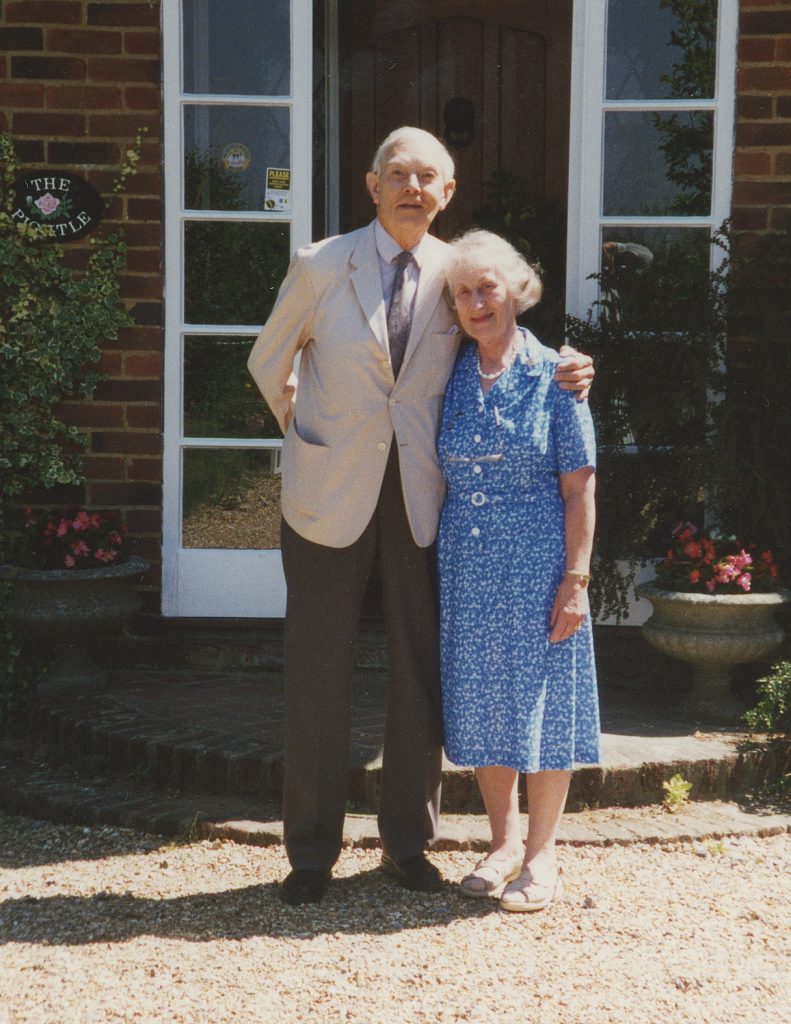
Retiring in 1986, Andrew entered another happy phase of his life. At home in Chenies, he was able to indulge his passion for learning in new directions. His interests in natural history and garden plants were pursued in greater depth, but his book collection expanded, and topics as varied as artificial intelligence, neuropsychology, cell biology and genetics appeared on the shelves. On hearing of someone facing a knotty problem it was typical of him to disappear and come back 15 minutes later with a book holding the answer!
Inevitably, Andrew became more involved in the life of the village – particularly as a Governor at the school, through his cricket coaching and his occasional talks to school children about life in Chenies when he was a boy. He and Joan were inseparable companions through his retirement years, and he was deeply engaged in the lives of his children – Sue and Martin – and grandchildren – Laura and Christopher.
Andrew became rather withdrawn in his final couple of years, and his health declined steadily. Joan, looked after him continuously at home, but he died in July 2010, and is now buried in the churchyard of St Michael’s, a few yards from the schoolhouse where he spent his childhood, and the school where he met his future wife, became a governor and was a part-time cricket coach in his later years.