

A New Headmistress for Chenies School
Martin A. Life
26 Feb 2025
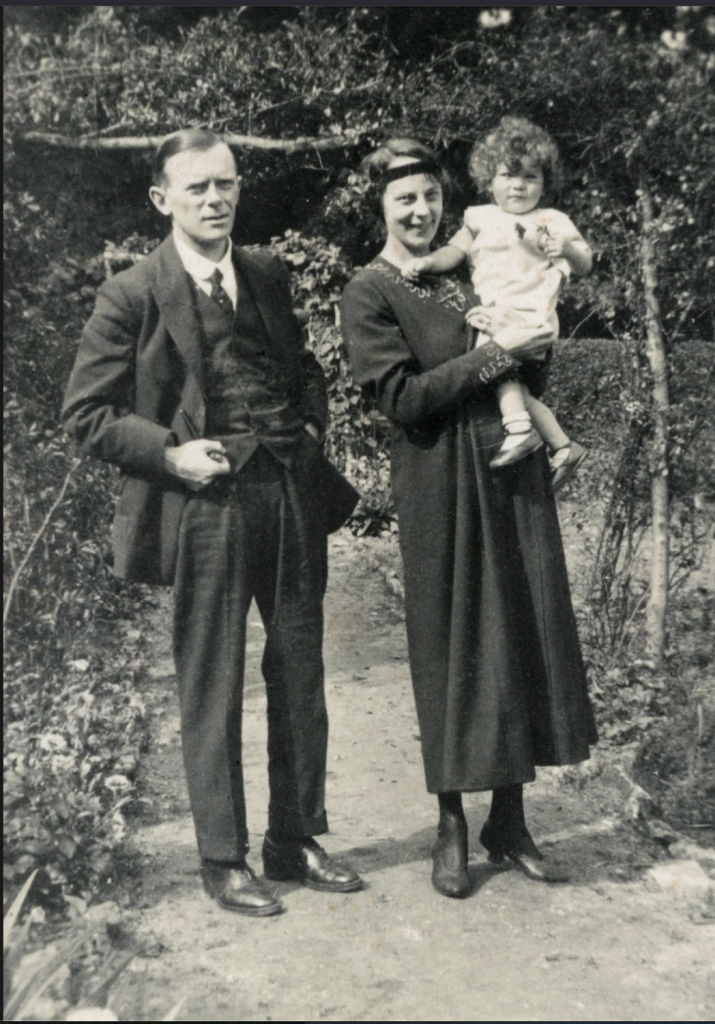
Emilie Life was appointed Head Teacher at Chenies School in July 1926, having previously taught at schools in central London. She and her husband Ted had lived in West Hampstead, and there had a young son, Andrew. Emilie and Ted had both been born in Wheatley – a small country town 4 miles east of Oxford. Their own rural upbringing may have led to the decision to move out of London to give Andrew a better environment for a child to grow up in.
The previous long-term Chenies Headteacher, Thomas James, had vacated the post in December 1921. For four years, the running of the school was done by a sequence of teachers in post for relatively short periods, the last of whom was a Kathleen Cruickshank.
Emilie—born Emilie Cruickshank—had a younger sister, Kathleen, who was also a teacher. It seems very probable that the Kathleen teaching at Chenies was actually Emilie’s sister and that she had drawn attention to the opportunity at the school, which Emilie duly took up. She, Ted and young Andrew moved into the Schoolhouse on the village green in the summer of 1926, and so began a long and happy relationship between the Lifes and Chenies. When she finally retired, 25 years later, Emilie would reflect, amusingly and, at times movingly, on her time at the school in an address to colleagues and local residents. Much of what follows relating to her professional life is drawn from this account Emilie Life – retirement speech (edited transcript) .
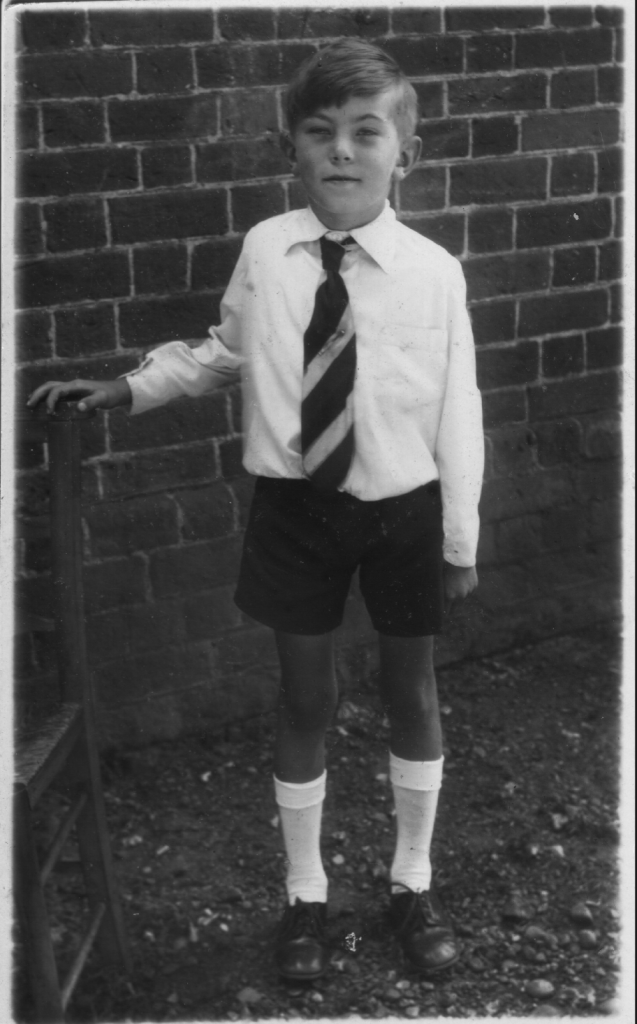
At the time she took over, there had been only 16 children on the school roll, she being the only teacher. One of her first personal challenges was to integrate life as a working teacher with having a five-year-old son just approaching school age. She was worried that there could be problems if he joined her school because, as she put it ‘[it]might prove to be a case of Mary and her little lamb’. She accordingly arranged for Andrew to visit a local retired teacher for private lessons every morning. However, before long, with home being the school house and also being eager to learn, Andrew manage to attach himself to the pupils in the school playground and sit at the back of the class when they went in after their afternoon break! Emilie’s dilemma appears to have resolved itself quickly, as he managed to avoid over-familiarity with Emilie and yet to contribute significantly in lessons, so enrolling him officially as a pupil was the obvious thing to do in the end. There is more about Andrew’s time at Chenies school at Andrew Life (1921 – 2010).
Emilie loved nature: a love that she would share with Andrew and with her pupils in school. It was central to her curriculum, providing a natural workshop for connecting the rural context of the village to academic concepts of subjects like maths and geography. It was something that stayed with her throughout her life – I personally remember her enthusiasm when, as a small grandchild then living in Birmingham, we visited Chenies two or three times a year in the late 1950s. One year, she had somehow managed to acquire an orphaned baby squirrel that she was hand-rearing at the Pightle. She fed it, as I recall, on a mixture of egg and milk and named it ‘Grunter’ after its enthusiastic vocalisations when feeding. Sadly, it didn’t survive for very long, but not for want of love and attention!
During the 1930s, the school roll had dropped to just 10 pupils, making Chenies the smallest in Buckinghamshire and placing it under threat of closure. Similar falling numbers were faced by other village schools in the area, and in the end Chenies survived by dint of its having buildings in better condition than its competitors. Chenies duly acquired 24 new children from Latimer, which subsequently rose to 50 by the outbreak of war in 1939, allowing the school to take on a second teacher to look after the class of infants.
However, World War II brought new challenges, with the evacuation of children from London to the safer environment of Buckinghamshire. Emilie recalls:
‘Then came the war and evacuees and London (LCC) teachers. In one week, our numbers rose to 175 and the staff to six. In a room for 40 we packed 120 children, three in a desk, with two of us to instruct same. From September till May we struggled under those conditions. Perforce we had to take many combined lessons. Heretofore, the singing of my children had been rather weak and colourless. What a change when the LCC children joined in! Believe me everyone in Bucks could have known what we did to the drunken sailor!! No longer did any mistake in my accompaniment sound to high heaven….’ Emilie Life – retirement speech (edited transcript)
Despite the strains on accommodation at the school, the arrival of evacuees had its rewards. The Chenies staff became very fond of them, and their presence made a change from the pre-war routine. Emilie had a deep affection for all her pupils, valuing the trust and privileged access she and the other teachers had to their personal lives: ‘One is made a member of their family – a kind of extra auntie’.
The disruption of the war extended to Emilie’s family life. When the National Register was compiled in later September 1939, Andrew had been shown on the census as a student. In fact, he had just finished his time at Dr Challoner’s Grammar School in Amersham, and was shortly to move to a teacher training college in Winchester. While continuing the family tradition of becoming a school teacher, he was soon to depart from Chenies for a period that was to last nearly 40 years. Ted, then commuting daily to London by train, was engaged in organising trade exhibitions. In his spare time, he would now become a member of the Chenies Home Guard.
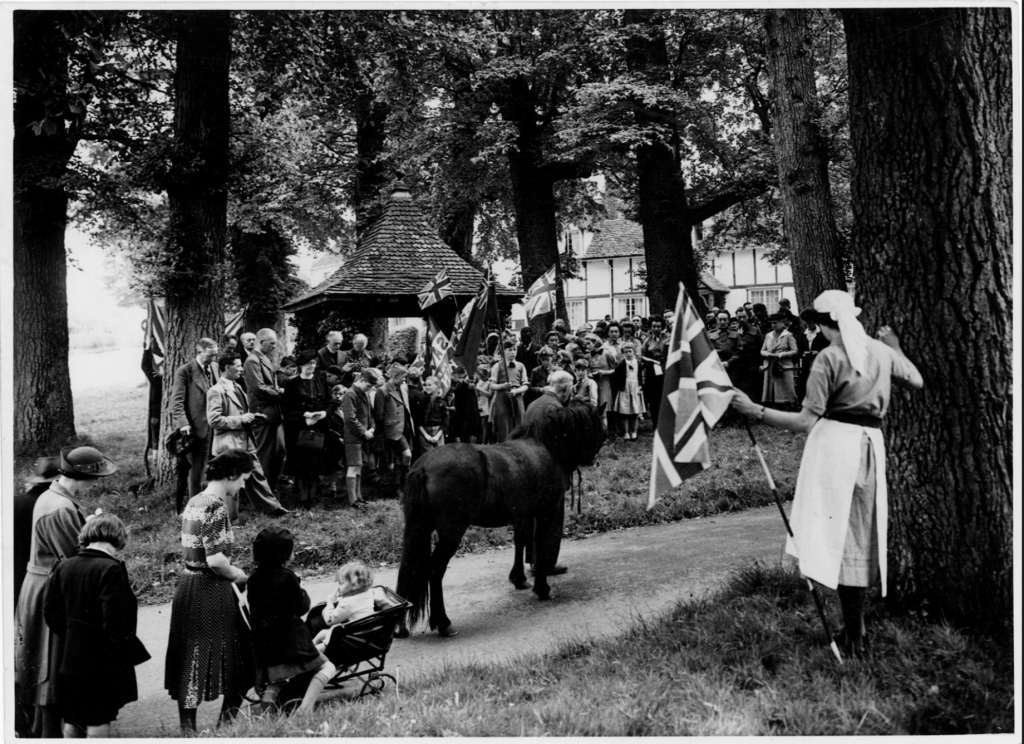
In due course, the return of peace was celebrated across the village in 1945 and, subsequently the school would become part of the local celebrations of the Coronation of Elizabeth II when she acceded to the throne on 6 February 1952. However, 1951 marked Emilie’s sixty-first birthday and, in part due to health problems, she took the decision to retire from teaching, which inevitably meant leaving the Schoolhouse.
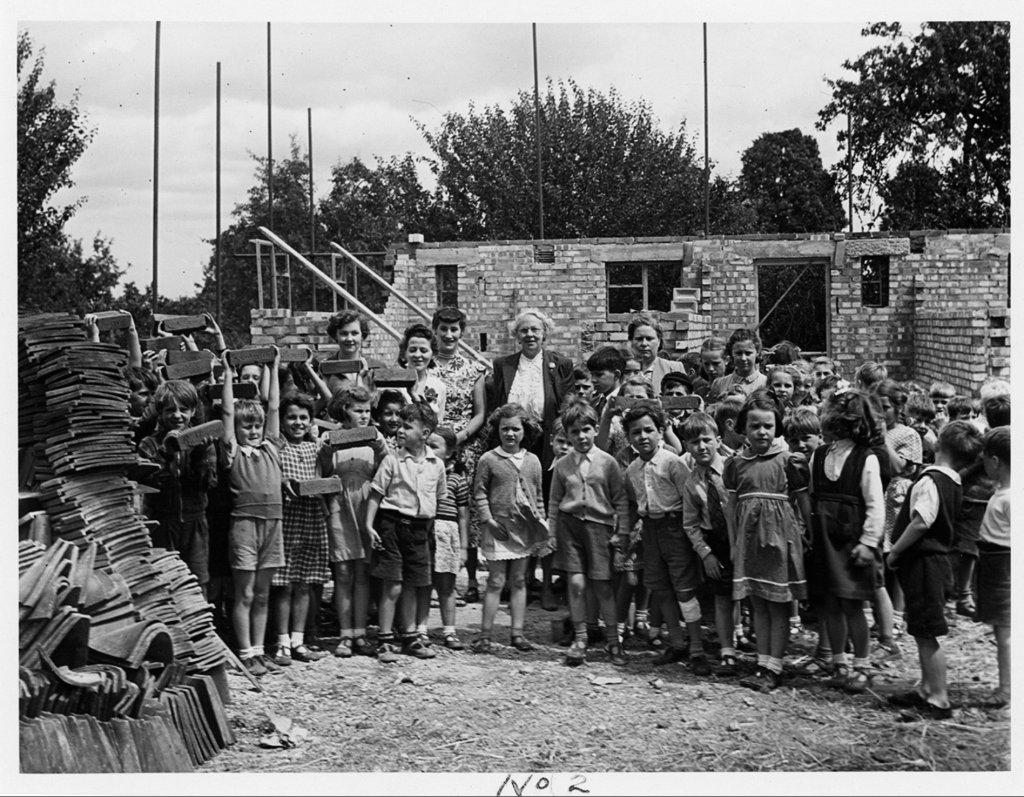
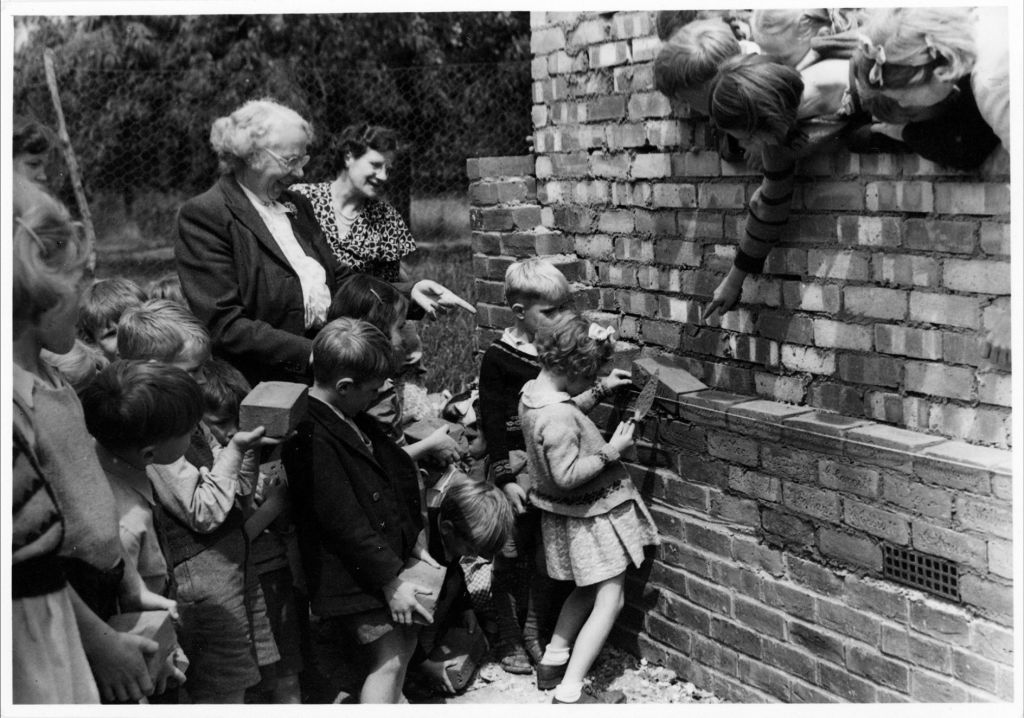
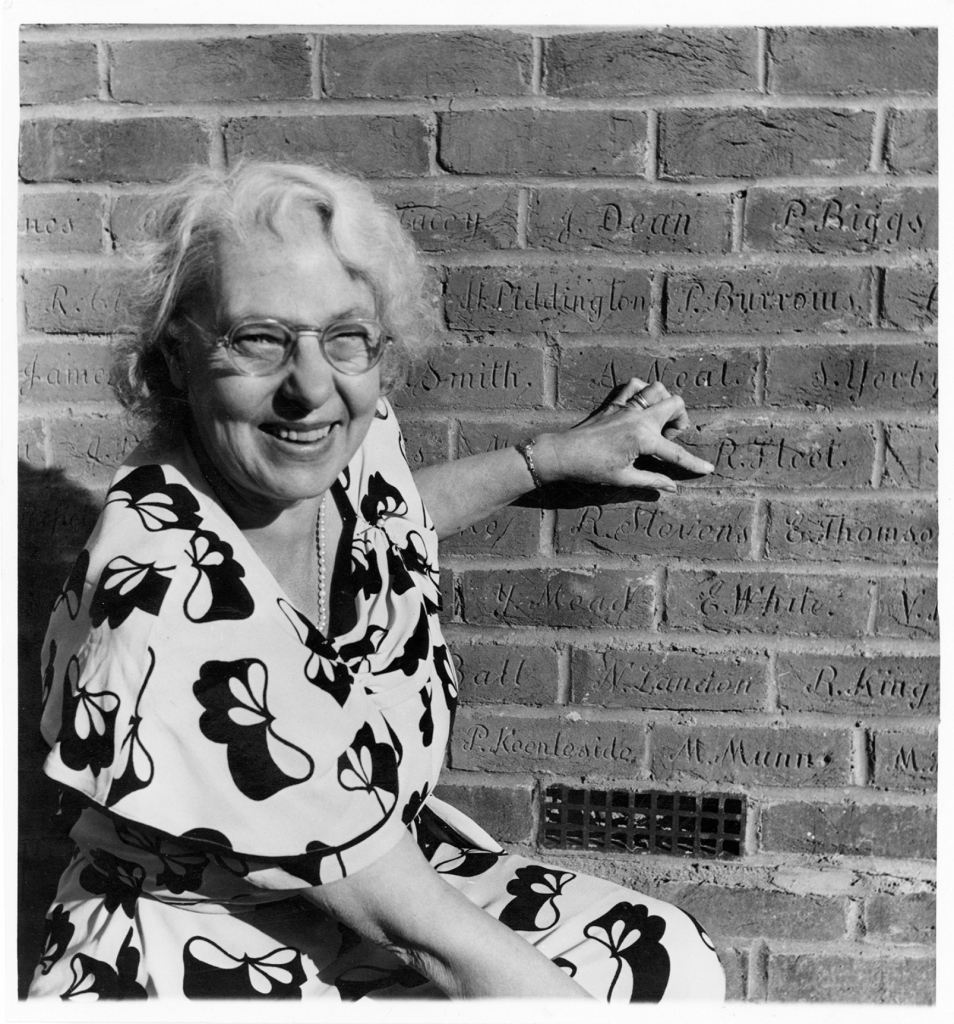
She and Ted had prepared for their move in advance, by commissioning the building of a new home a hundred yards away, further up Claypits Lane. The Pightle , as it was to be, was styled in the distinctive Chenies pattern, with red brick, tall chimneys in the Tudor style echoing the Manor, and diamond window panes. But what made this house unique was that every child on the school roll in 1951 – and a few other professional colleagues – had their name engraved on a brick. Each laid their own personal brick in the wall of the new house, which was subsequently blessed by the Rector of St. Michael’s Church, Rev. Trevor Jones. This event brought Emilie a moment of national fame, as the story was published in the Daily Mirror and other newspapers – both national and local – identifying her as the ‘Mrs. Chips’ of Chenies!
Although there were many regrets at leaving the school, there were new adventures on the horizon. That same year – 1951 – her son Andrew married Joan White who, while her family had been living in Little Chalfont, had been a pupil of Chenies School at the same time as Andrew. After the war, Andrew had decided to return to university and his career direction subsequently changed from the teaching of children to the teaching of managers in industry. His first post in his new career was at Nottingham Polytechnic, so he and Joan’s first home together was in Nottingham, and there was born Emilie’s first grandchild, Martin (me!), in 1952. Grand-daughter (Susan) followed in 1955 when the couple had moved to Birmingham.
As Joan’s parents also lived in Bucks (High Wycombe), Joan and Andrew started making regular train journeys south to visit Chenies and Wycombe. These visits were major events for all involved: particular in the summer and at Christmas. Emilie still had a special relationship with the village community that, staying at the Pightle, I eventually began to understand. It was impressive that many ex-pupils of the school, even as adults, continued to address her as ‘Governess’: the form of address she had used throughout her time as head teacher. She seemed to be held in high esteem by many in the village. Miss Redit, who took over as Head when Emilie left, came to visit once a week, enabling Emilie to catch up with school matters, and there was a regular stream of other visitors who would drop in to update her on village events.
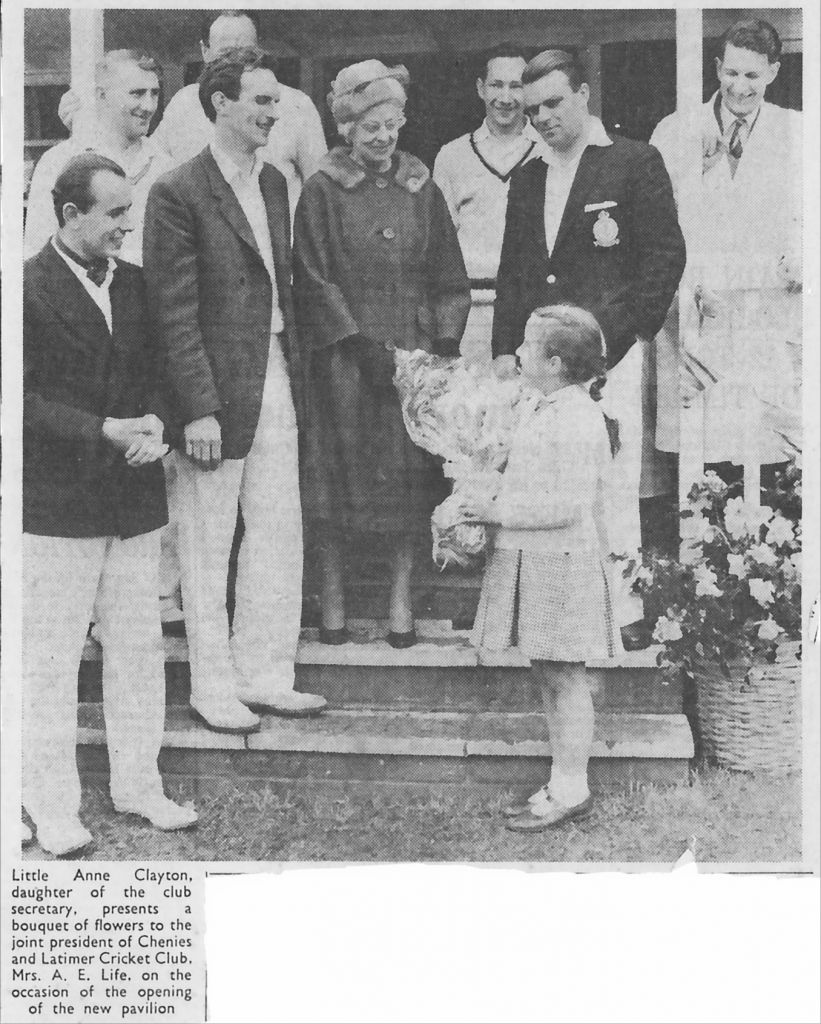
Ted had long been involved in Chenies Cricket Club – initially as a player but later as captain, secretary and treasurer – and Emilie, as a well-known figure in the village and avid supporter, became its president. So it was perhaps natural that Emilie was asked to open the new club pavilion when it was completed in 1962.
In the early 1960s Ted retired as well, and Joan and Andrew had moved to Chesham, where Martin and Sue spent most of their school years. Naturally, Emilie followed their progress avidly and was always interested in what they were doing. The family would visit regularly now, and as Ted’s health was not always good, Joan – an ex-nurse – became a regular support for Emilie in caring for him.
In the late 1960s, another strand of Emilie’s involvement with the younger Lifes was her offer of the use of the garage at The Pightle as accommodation for Martin’s car restoration project. He had acquired a 1947 Riley in a dilapidated state and would spend most weekends at Chenies ‘doing it up’. This worked well for everybody – Martin could not only work on the car but also spend time with his grandparents and help out with odd jobs that might arise. However, as Ted’s health declined, Joan would cycle over to Chenies from Chesham a couple of times during the week to help Emilie with the housework.
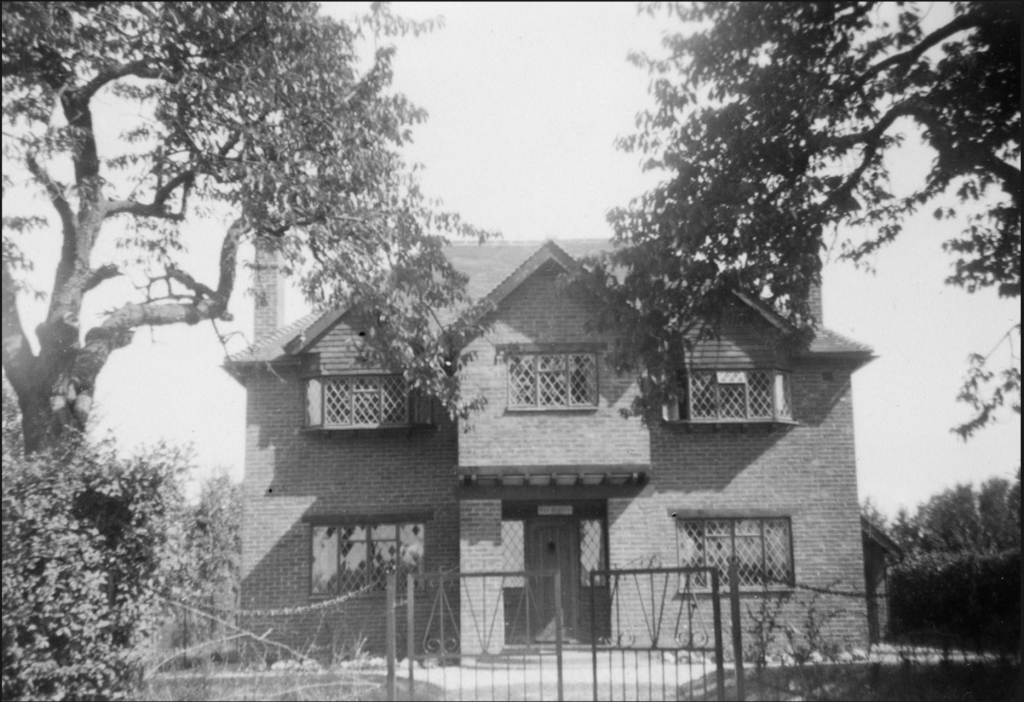
Ted passed away at The Pightle in 1971, which hit Emilie hard. Her own health was all too often poor, and Joan’s visits became critical. Mrs. Bond – another Chenies resident – came in to sleep at the Pightle to provide support should Emilie need it overnight. Although Joan kept her regular visits up through the 1970s, Emilie became increasingly frail, and after a fall at home, needed, full time care. At this point, both Martin and Susan were at college away from Chesham, and the first step was for Emilie to move in with Joan and Andrew. However, due to the small size and layout of the Chesham house, this was far from ideal for everyone, so the decision was made for the whole family to move to the Pightle, which they did in 1980.
Although receiving full time nursing care by Joan, Emilie died peacefully in her beloved Pightle in June 1982 at the age of 92. The lives of her and Ted are commemorated on a small stone against the eastern external wall of the chancel of St. Michael’s, Chenies, next to that of Joan’s parents, Sydney and Alice White.
content source: Various family archive materials contributor: Martin Life date published: 01/11/2025