

Introduction
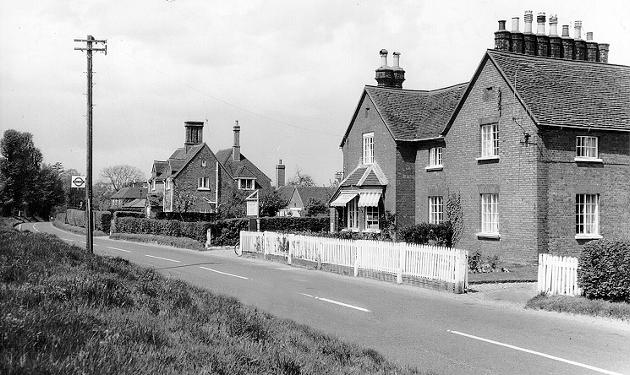
Chenies School has a history which it can be proud of, stretching back over 170 years.
These are some of the milestones in the development of the school and its buildings:
1831 The first school was held in Lord Wriothesley Russell’s kitchen in the Rectory from 1831 to 1846.
In 1845 The Duke of Bedford instructed an Infant School to be built, this was what is now known as No 49 Chenies (Field Cottage), it carries a Bedford crown and the date 1845.
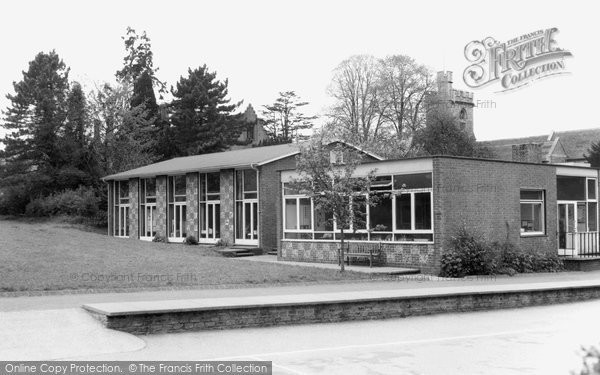
1846 The oldest part of the present school building was built on the instruction of Anna Maria, the wife of the 7th Duke of Bedford and there is a plan of this building in the minute book when formal records began with the formation of the School Board in 1887. It was built to educate the children on the estate.
1879 A very special event celebrated in the school one Sunday afternoon was the presentation of a special frame made with wood from St. George’s Chapel, Windsor, with paintings of local scenes and the signatures of all the residents, to Lord Wriothesley Russell, on his Jubilee as pastor. Of the school it was written:
“Chenies has been called a model village, and certainly this was a model school. In these days of education, when every parish is trying to hold its own in learning, and aiming to perfect its machinery, how apt we are to forget the efforts of those who began this good work!“
An article in the Bucks Advertiser in 1884 agreed with this assessment, and describes in great detail the running of the school at that time. The author ends by saying:
The thought prominent in our own mind as we left the beautiful village of Chenies was the impossibility of estimating the value of one such village school, so nobly supported, so admirably managed, and so excellently taught.
The undertaking at Chenies, like that in some other places, commenced in the Rectory kitchen, and went on increasing, till it not only culminated in that perfect little school-room, built by the individual sacrifice and personal effort of the noble rector, but was deemed of such high order as to find a place of commendation in the Blue Book, and to be held up as an example worthy of imitation by the whole country – according to the words of one of her Majesty’s inspectors, who was able to say, after examining Chenies school,
“I consider it not only the best school in Buckinghamshire, but one of the best in England.”
Evolving Education
In England State Education did not arrive until towards the end of the 19th Century. In the main, the churches ran the schools. Chenies School was governed by St Michaels Church. Boys and Girls were taught separately and infants were initially housed elsewhere in the village and incorporated in the 1880’s.
Government Grants were paid to the church based on attendance figures and each child who passed exams in reading, writing and arithmetic so income was ‘results dependant’.See Scholars claiming a Grant 1882.
Until 1891 parents had to pay a weekly fee for their child’s education. See Weekly School Fees 1887.
The 1870 Education Act made compulsory the provision of elementary education for children aged 5 – 13 and expected School Boards to be set up to oversee and supervise education.
The 1880 Education Act made school attendance compulsory.
Chenies became a Board School in 1887 and this is a summary of agreements from the first two School Board meetings:
- Election of Chair (Revd Shann), Vice Chair and Treasurer
- Appointment of Sophia Smith to the post of Mistress at a salary of £60 for the first yea
- Approval of Leasing Agreement of the School from the Duke of Bedford. See Leasing Agreement 1887
- A table of fees to be charged to children attending the school was drawn up. See Weekly School Fees 1887
- Religious Instruction regulations were agreed to:
- ‘The bible shall be read, and then there shall be given such explanations, and such instruction therefore in the principles of morality and religion, as are suited to the capacities of children, provided always that in such explanations and instructions the provision of the Act of 1870 in sections 7 and 14 be strictly observed, both in letter and in spirit, and that no attempt be made to attach children to any particular denomination.
- That each morning, unless necessarily prevented, the school be opened with prayer, the singing of a hymn or hymns, and reading of the Bible, with explanation, or learning portions of the scripture by heart.
- That the time devoted to religious instruction be in the morning from 9 to 9.40am.
- That a hymn or verse of hymn be sung at the close of morning school.
- That in the afternoon the school be closed with a hymn and prayer. The time for this to be at the close of the two hours of secular instruction, required by the code.’
- Rules regarding corporal punishment were agreed:
- Every occurrence of corporal punishment must be formally recorded in a book kept for the purpose.
- The Mistress must exercise the utmost caution in inflicting corporal punishment so as never to strike a child on any part of the head, either with the hand, or with any instrument.
- Corporal punishment must not be inflicted during school hours. The name of any child to be punished shall be put down, and the case dealt with at the close of that attendance during which the offence occurred. The Mistress may inflict immediate corporal punishment in exceptional cases, which in her judgement require such a course, but a special report of each case must be made by her in the punishment book, giving in full the reasons for departing from the ordinary rule of the board.
- Assistant teachers, pupil teachers, and monitors are absolutely prohibited from inflicting such punishment. The Mistress is held directly responsible for every punishment of the kind.
- Employment of a School Cleaner (Rose Joiner) at a rate of five shillings a week.
The 1891 Education Act made elementary education free.
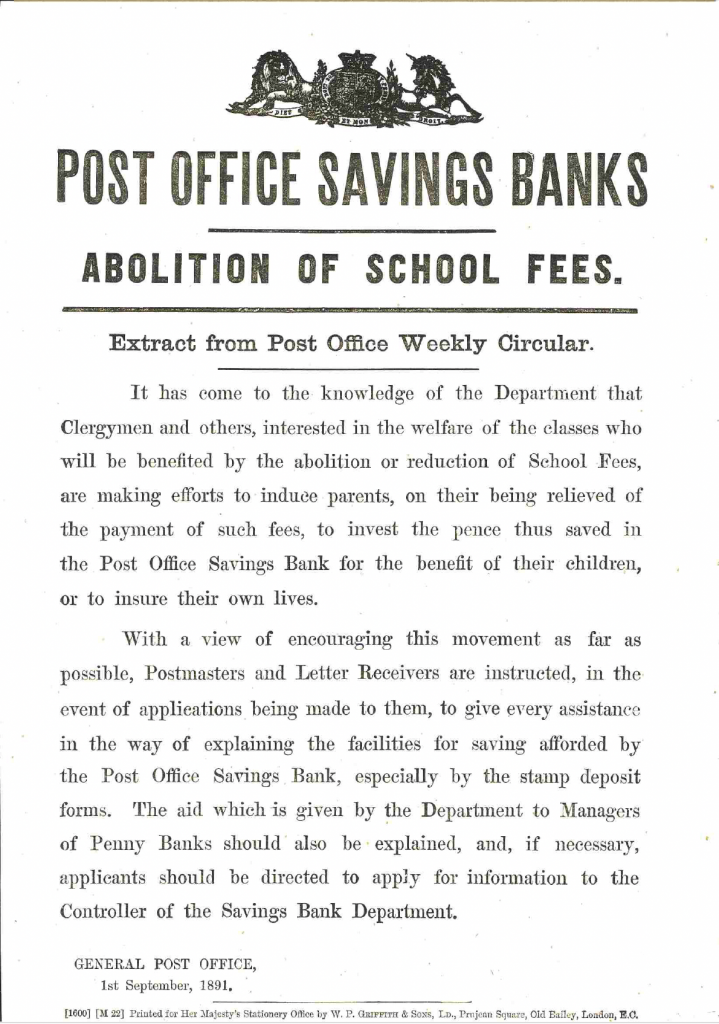
School Savings Banks were introduced/promoted to encourage parents and children to save regularly for the child’s future. The following circular, with its somewhat supercilious and condescending tone, makes for an interesting read. A couple of extracts are below. School Savings Banks 1891
Extracts from Circular 308 to School Managers from the Education Department 12 Oct 1891
‘Experience has shown that many of the evils which weigh most seriously on the industrial classes in this country are the results of and waste. But some of these evils admit, at least, of partial remedy. To learn how to economise slender resources, how to resist temptation to needless expense, and how to make reasonable provision for future contingencies, is an important part of education. Such knowledge is calculated to protect its possessor from much trouble and humiliation, and to help him greatly in leading an honourable and independent life.’
‘The child who is helped to deny himself some trifling present gratification, who is encouraged to save by degrees a few shillings, and who finds this sum available for the purchase of books or clothes, for helping his parents at a time of family misfortune, or ultimately for his own equipment on leaving school for work, has received a practical lesson in forethought and self-restraint which will probably abide with him for life.’
Teaching
Until the 1890’s teachers were, in the main, trained by voluntary religious agencies. Pupil-teachers aged 13-14 were employed to teach for 20 hours per week. See Employment of a pupil-teacher 1884.
The Chenies School Inspectors Reports of 1870, 1877 and 1887 demonstrate how teaching, attendance and results were linked with funding grants:
These interesting hand-written maths exam questions of 1920 demonstrate the standards expected of the different age groups. Challenge yourself and give them a go!
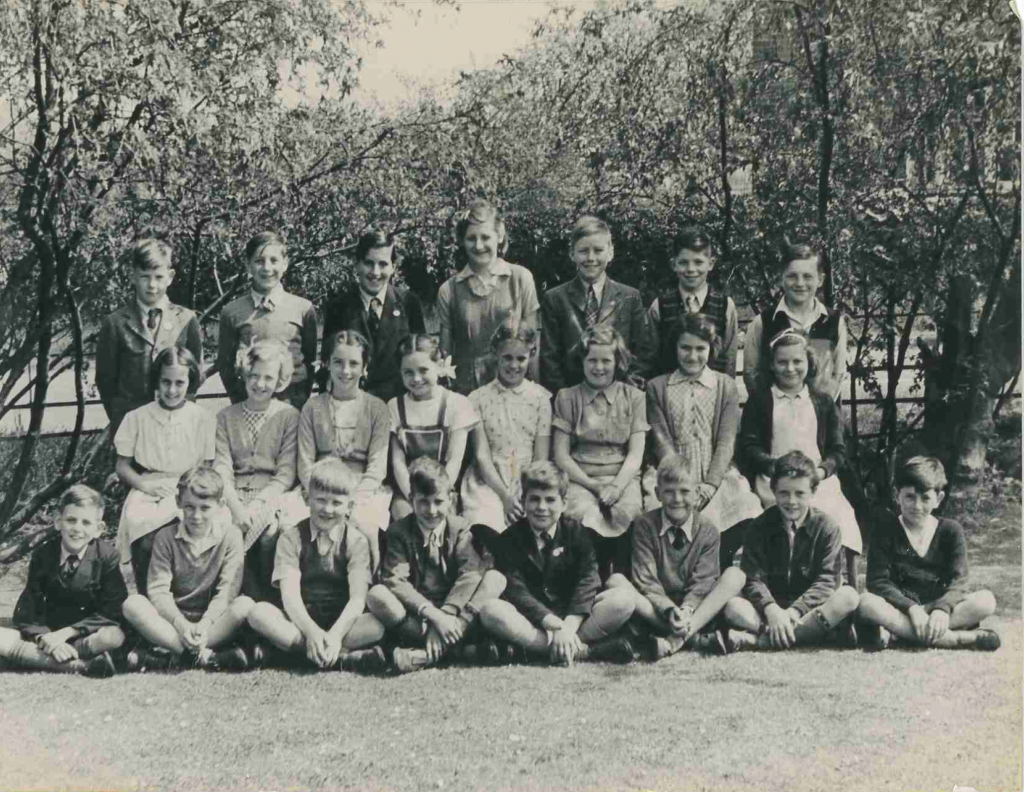
The Chenies School Inspectors Report of 1955 records how the ‘baby boom’ and post war expansion of the geographical intake area greatly increased pupil numbers with a strain on the physical accommodation. The teachers were commended for their fortitude and teaching excellence.
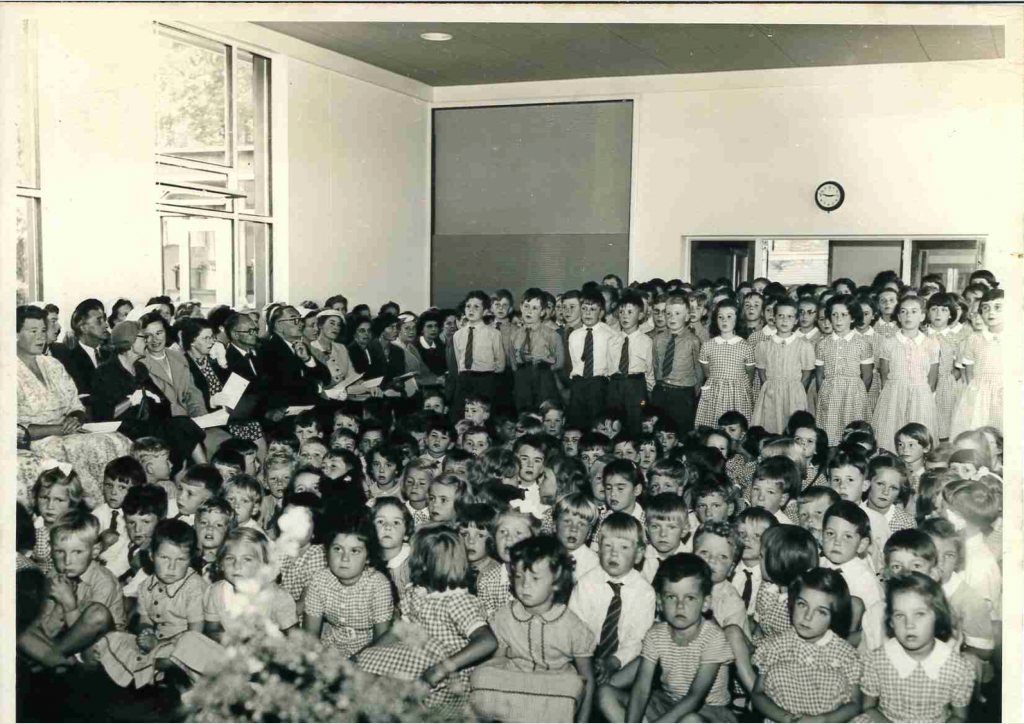
Funding was made available to address the size of Chenies School and in 1957 the new Hall, classroom and kitchens were opened. See the following photograph below:
In June 1996 Chenies School organised an extensive and very successful 150th Anniversary celebration of the opening of Chenies School. As part of the celebrations, they invited former pupils to write down memories of their time at the school and some of these are available to read below. They provide a fascinating insight into the experiences of being the pupil of a small village school between the 1920’s and the 1950’s.
Head Teachers of Chenies School
1841 – Robert Hockley (29) Schoolmaster and his wife Harriet (33) were living in the Schoolhouse with their two children, Albert (2) and William (10 months). (1841 Census) This predates the present school building.
1846 – The oldest part of the present buildings was opened.
1851 – Robert Hockley (38) Schoolmaster and Harriet Hockley (42), schoolmistress, were living in the schoolhouse with their children Albert 12, Robert 9, Harriet 6, Gertrude 3, all scholars, also Mrs Michel Clark, a widow aged 39 and her daughter Hannah, 10, who was the Infant School Teacher. This was housed at No 49 Chenies, which has a Bedford crown and the date, 1845. These still remained in post in the 1861 Census.
1868 – (approx) James Dolman, Certificated teacher, appointed, whilst Mrs Hockley continued as School Mistress.
1871 – James Dolman (31),continued in post, living in a boarding house between the Bedford Arms and the School House with his wife Caroline, who was born in Chenies, the daughter of the licensee on the Red Lion (Hughes), and their two children, Frank,2, and James, 1. Michel Clark continued to be in charge of the Infant School. Robert Hockley, still living in the School House, is now described as the Parish Clerk, but Harriet is still schoolmistress. George Forfeit was a pupil teacher, son of the farm bailiff and living in the Bailiff’s cottage.
The school rules at this time stated that no child shall be absent without leave except in case of illness; and the following inscription hung on a shield on the walls:
William Pope was admitted to Chenies School October 25, 1869. Invariably attentive, diligent, and punctual, he left June 19, 1877, without one absence during the whole of that period.
1883 – Until the end of 1883 the School was described as “Mixed”, with Mr. Dolman in overall charge.
1884 – The school was split into a Boys’ School under Mr. Dolman, and a Girl’s School under Zeta Bradshaw with an Infant Class. An 1884 newspaper article states:
For many years past, thanks to the wise and fostering care and constant oversight of the Vicar, the Rev. Lord Writhesley Russell, the reputation of the village school of Chenies has stood high enough to have well earned the honourable title at the head of this notice. More than 20 years ago his lordship appointed Mr. Dolman to the mastership, and the school has been so successful under his management that it has more than once earned the distinction of special mention in the Blue-book.
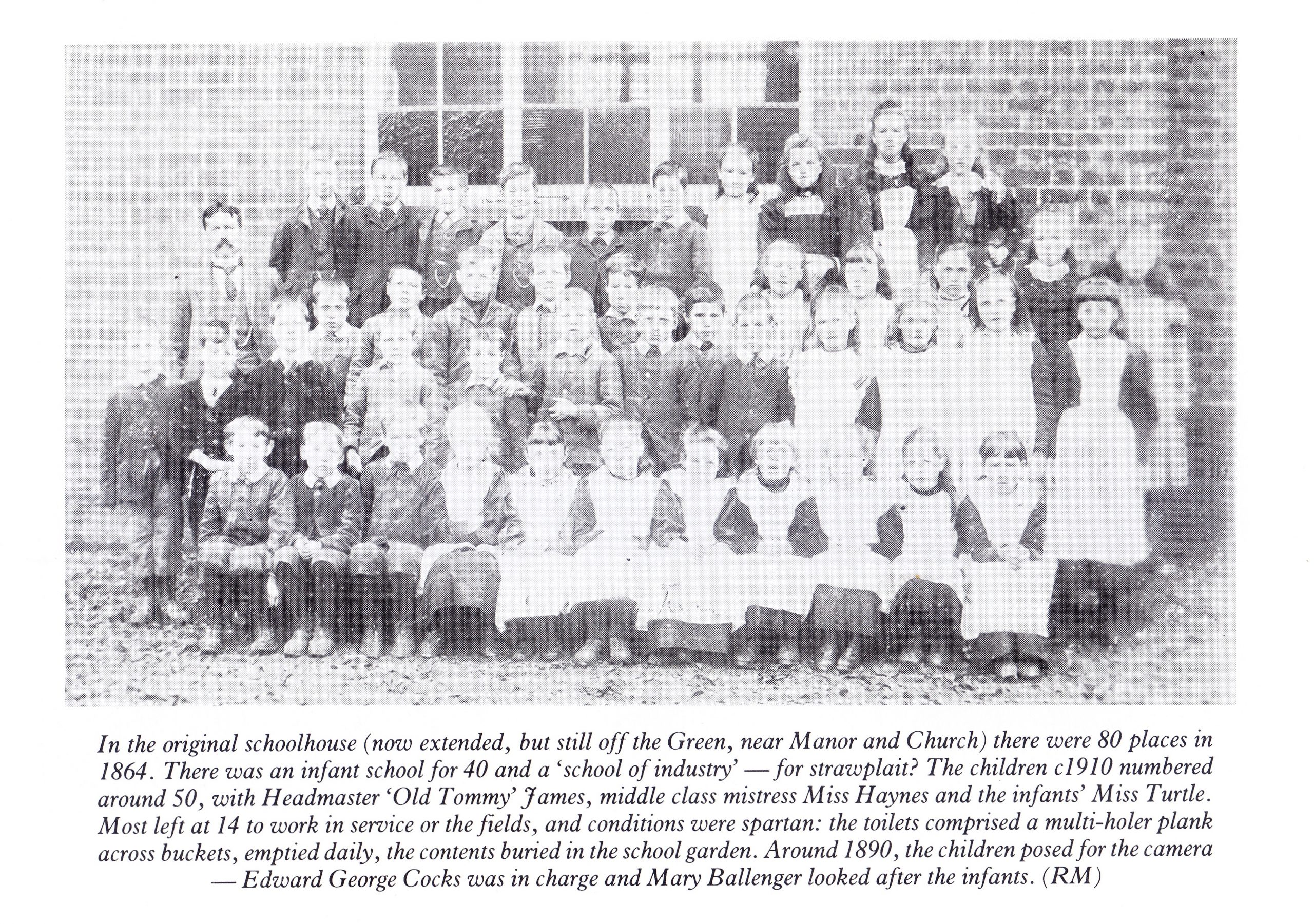
In addition, the behaviour of the children was described as exemplary. Mr. Dolman was able to report that corporal punishment had not been once inflicted during the year.
1885 – Edward G. Cocks takes over the Boy’s School. He was formerly a pupil teacher. “The Chenies Song Book” was later published with his name as author.
1887 – Miss Sophia Smith was appointed Headmistress from September 1st, under the new School Board. The children were now taught in one mixed school.
1893 – Thomas James was appointed Headteacher from 1st September 1893 and held the position for just over 28 years until December 1921.
Rose J Maling was a pupil at the school during this time, and she remembers drawing in a sand tray on her first day, and missing her cousin. She writes:
‘There were at one time between forty and fifty children in the school in three classes … We did not wear uniform but the girls wore white starched pinafores… Boys wore strong grey serge or corduroy knickerbockers buttoned just below the knee and long socks with turnover tops. A bell hung in a little turret on the roof …rung by a long rope hanging down inside. There was always a bit of competition to get to ring it. We all had to line up outside and march into school. We had drill on Monday mornings …The girls had sewing lessons. Boys were taught gardening, once very essential in the country where most of our vegetables were grown.
The cane was used quite frequently, mostly on the palm of the hands but sometimes if the Master was annoyed it would be across the legs as well. If he saw us making mistakes when he looked over our shoulder he would rap our knuckles with a ruler or box our ears. Another punishment was to stand in the corner of the room with the hands behind the back and sometimes we would see the culprit turn around and grin or wink.
At one stage we had to use slates and slate pencils for writing. I hated the sound they made … The inkwells were set into holes in the desks, they had to be washed out occasionally, this was a cold job as the tap was outside … the toilets … were across the playground, and consisted of wooden seats with a step in front and a bucket underneath which a man was paid to empty into a hole dug in the garden. Toilet paper was newspaper cut into squares and hung up on a loop of string. The classrooms were heated by huge iron stoves, but they never seemed warm enough in winter … Chilblains were a real nuisance. The average number of children at school was around 40 to 50 aged from 3 to 14, when we left school for good.’ (see more here).
1922 – H. Shersby was a Supply Headteacher for one term. Mrs. Daisy Ethel Beal was in post from April 3rd until March 31st 1926.
1926 – Kathleen Irene Cruickshank was in post for one term. Mrs. Emilie Life came to Chenies in July 1926 and retired 25 years later. She took the school through a very varied chapter of its history, seeing numbers rise from 16 to 175, and coping with the evacuees during the war years.
Emilie recalls:
Chenies School comprised four classrooms – two large and two small. One large room was used for lessons, the other as a hall for drill and dancing – the smaller rooms for dining and a stockroom office, respectively. There was no electric light! When I was appointed, there were only sixteen children on the roll, ages ranging from four to eleven and over. The older children in the village were taken by bus to Chesham. I believe I make a correct statement when I say this was the first school in the county to be ‘decapitated’. Emilie Life – retirement speech (edited transcript)
During the 1930s, the school roll had dropped to just 10 pupils, making Chenies the smallest in Buckinghamshire and placing it under threat of closure. Similar falling numbers were faced by other village schools in the area, and in the end Chenies survived by dint of its having buildings in better condition than its competitors. Chenies duly acquired 24 new children from Latimer, which subsequently rose to 50 by the outbreak of war in 1939, allowing the school to take on a second teacher to look after the class of infants.
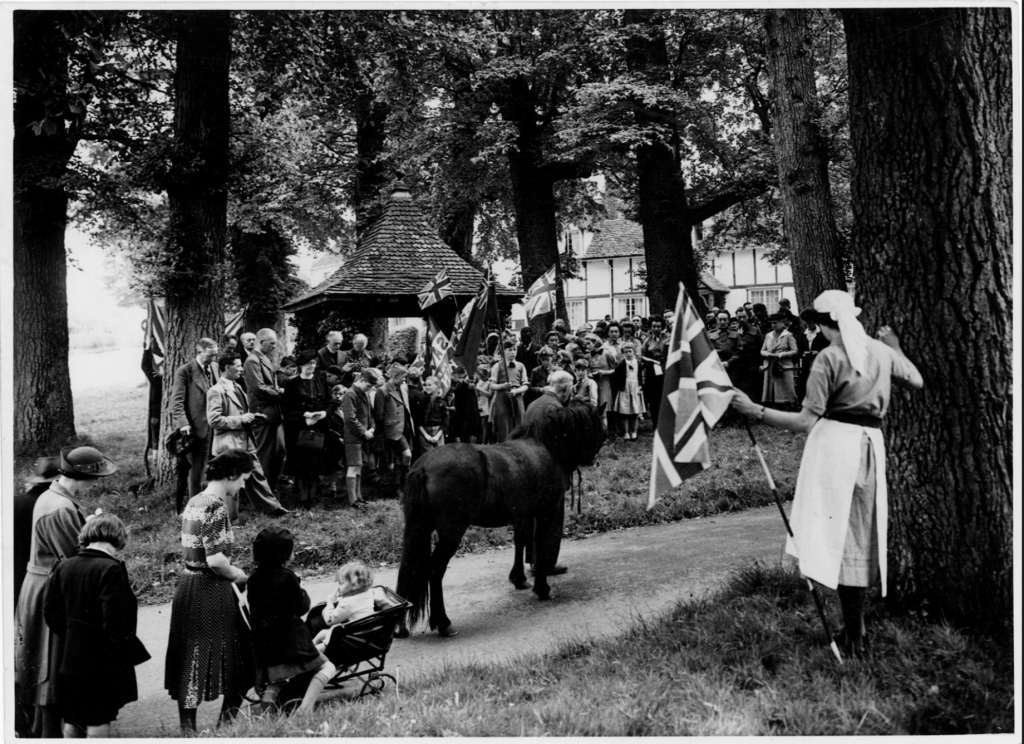
However, World War II brought new challenges, with the evacuation of children from London to the safer environment of Buckinghamshire. Emilie remembers:
‘Then came the war and evacuees and London (LCC) teachers. In one week, our numbers rose to 175 and the staff to six. In a room for 40 we packed 120 children, three in a desk, with two of us to instruct same. From September till May we struggled under those conditions. Perforce we had to take many combined lessons. Heretofore, the singing of my children had been rather weak and colourless. What a change when the LCC children joined in! Believe me everyone in Bucks could have known what we did to the drunken sailor!! No longer did any mistake in my accompaniment sound to high heaven….’ Emilie Life – retirement speech (edited transcript)
Despite the strains on accommodation at the school, the arrival of evacuees had its rewards. The Chenies staff became very fond of them, and their presence made a change from the pre-war routine, though student Joe Harrison remembers ‘we regarded them as interlopers and were rather un-sympathetic to the trauma they must have endured‘. Emilie had a deep affection for all her pupils, valuing the trust and privileged access she and the other teachers had to their personal lives: ‘One is made a member of their family – a kind of extra auntie’.
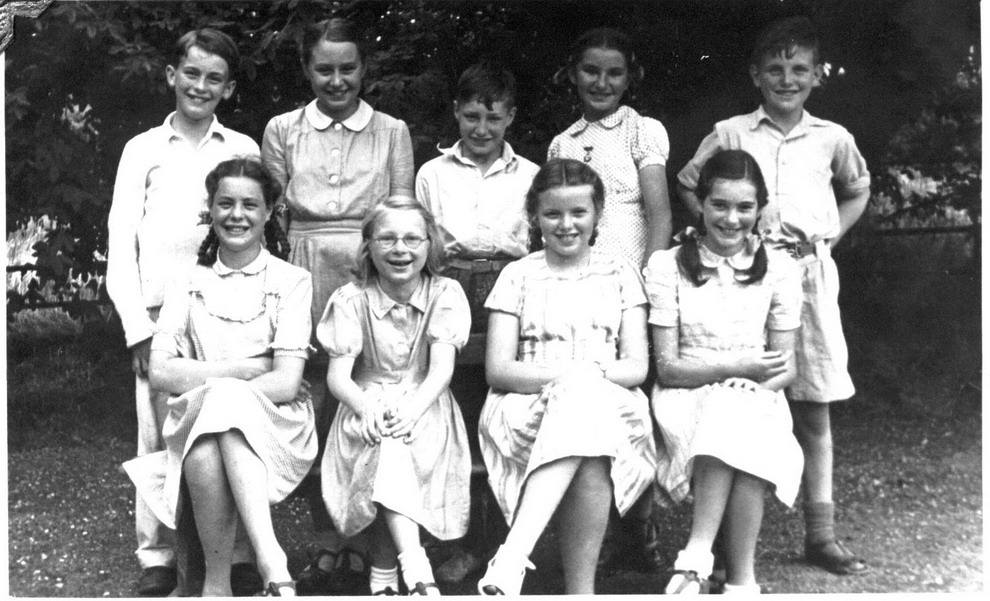
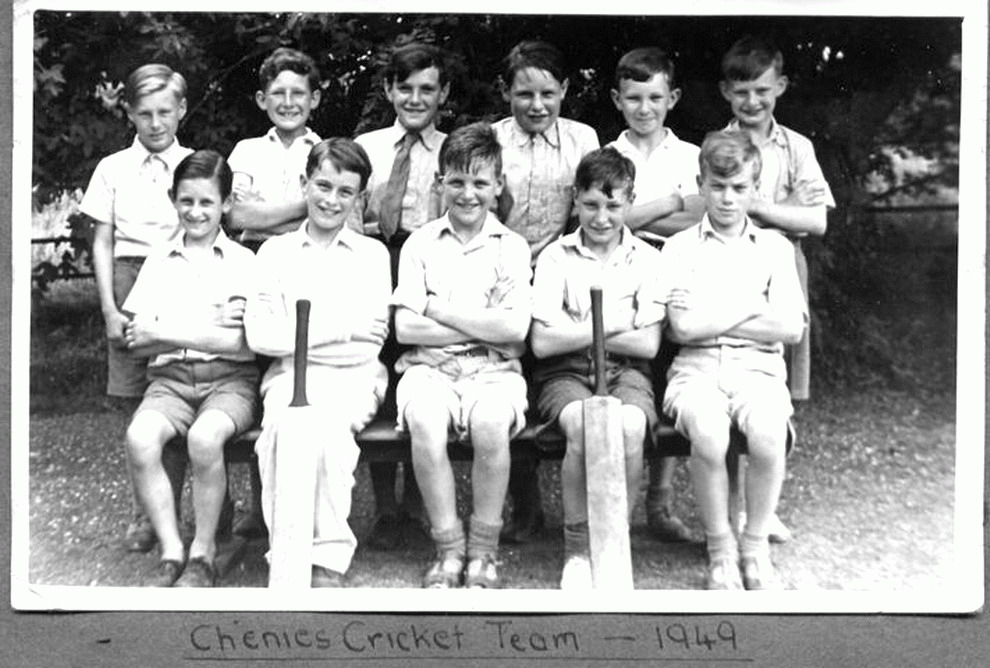
One former pupil, Tony Borton (see above photo) who attended the school during Emilie’s tenure recalls walking through the woods to school from Chorleywood. He remembers ,
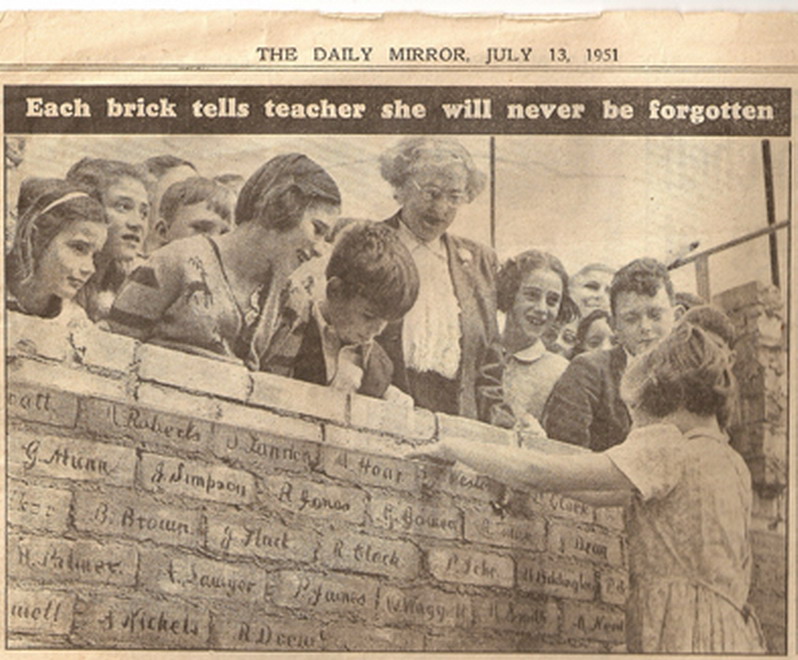
‘Not long after I started attending, the half dozen or so students from Chorley Wood were provided with transportation to and from school in the luxury of a Rolls Royce for the remainder of my time there. I still vividly remember walking up to the Manor for lunches every day after enjoying the free milk during the morning. Other memories like the huge sliding doors between classrooms and the school dental nurse who visited on a regular basis with her foot operated drill. I was one of the pupils that had my name engraved in a brick that was laid in the wall of Mrs. Life’s retirement home, not far from the school’
1951– Miss Alice Redit began her appointment on September 4th, 1951 and retired in July 1969 after 18 years.
1969 – Richard Leonard Crozier came to Chenies in September 1969 and sadly died on January 29th 1982 while still in post. He was looking forward to taking early retirement in the summer of 1982 as he had not been in excellent health for some time.
1982 – Mrs Joyce Gilding, the Deputy Headteacher, stepped into the breach as Acting Headteacher for two terms.
1982 – Frederick Norman John Reeves was introduced to the school, firstly as Acting Headteacher, and then was appointed as Headteacher. He steered the school through a period of change, with the challenges of falling roles, the introduction of the National Curriculum and the computer age. He retired after 17 very happy years, in July 1999.
1999 – Miss Mary Green arrived in September1999. During her time at the school she became Mrs Alderson and then, after 5 years, decided to re-train for a career in law.
2004 – Mrs Gill Walley was with the school for two terms from September 2004 to April 2005.
2010 – Mr.Richings came first to Chenies as Acting Headteacher, and then became Headteacher. Miss. Hannah Ewers was appointed Acting Head in September 2010 with the intention to appoint as substantive Head once having acquired an NPQH (National Professional Qualification for Headship). A very busy first year got the School on track financially, re-organised the staff and delivered school meals on a daily basis. Miss Ewers at the same time as completed her NPQH and found time to get married; she became Mrs. Burnett in April 2011. Mrs. Burnett was then made substantive Head in Sept 2011 with all the qualifications under her belt.
The current Head at Chenies School is Ms Rebecca Sutherland
Written Memories of Chenies School
- Rose Maling, 1910 – 1921
- Mrs. de Juene, 1923
- School Memories (unnamed), 1920’s
- Kath M Dolling (Smith),1939-1940
- Joe Harrison, 1939-1945
- Elizabeth ‘Betty’ Tye, 1942-1948
- School Memories (unnamed), 1950’s
- Emilie Life, 1951
content source: School records
contributor: Andy Homewood, Rachel Bishop
date published: 12/02/2026