

The Chilton family bore heavy losses as a result of the Great War. Two brothers, Frank and James Chilton both lost their lives along with their cousin Harold.
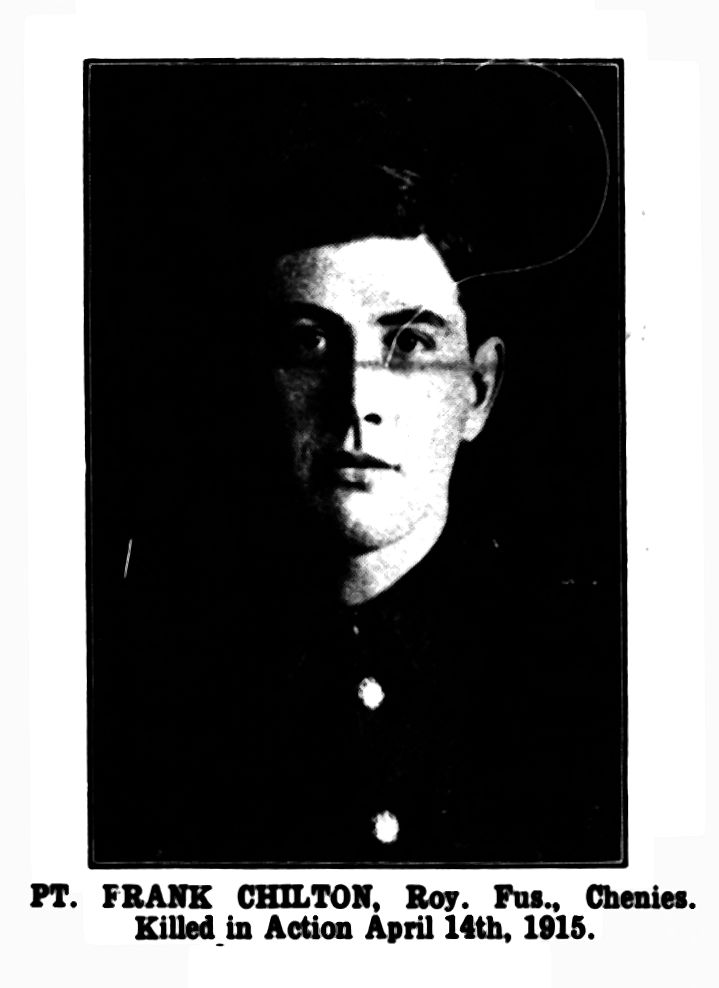
Private Frank Chilton of the 3rd BTN, Royal Fusiliers (City of London Regiment), was killed on 14th April 1915, aged 25, and is buried at Tyne Cot Cemetery, West Vlaanderer (Belgium). Born in Chenies, he was the son of John Chilton, a labourer on Chenies Estate, and the late Maria Chilton and resided at number 8, Chenies along with his father and brother.
A local newspaper reporting on his death states:
‘With much regret was the news received in of the death in Flanders of Frank Chilton. The fallen soldier, before enlisting in the Royal Fusiliers last August, had been gardener to the Hon. A. Capell for some years. Although a native of Chenies he had many friends in Chorley Wood, where the tall, smart young fellow was very popular‘. Buckinghamshire Examiner, 7 May 1915.
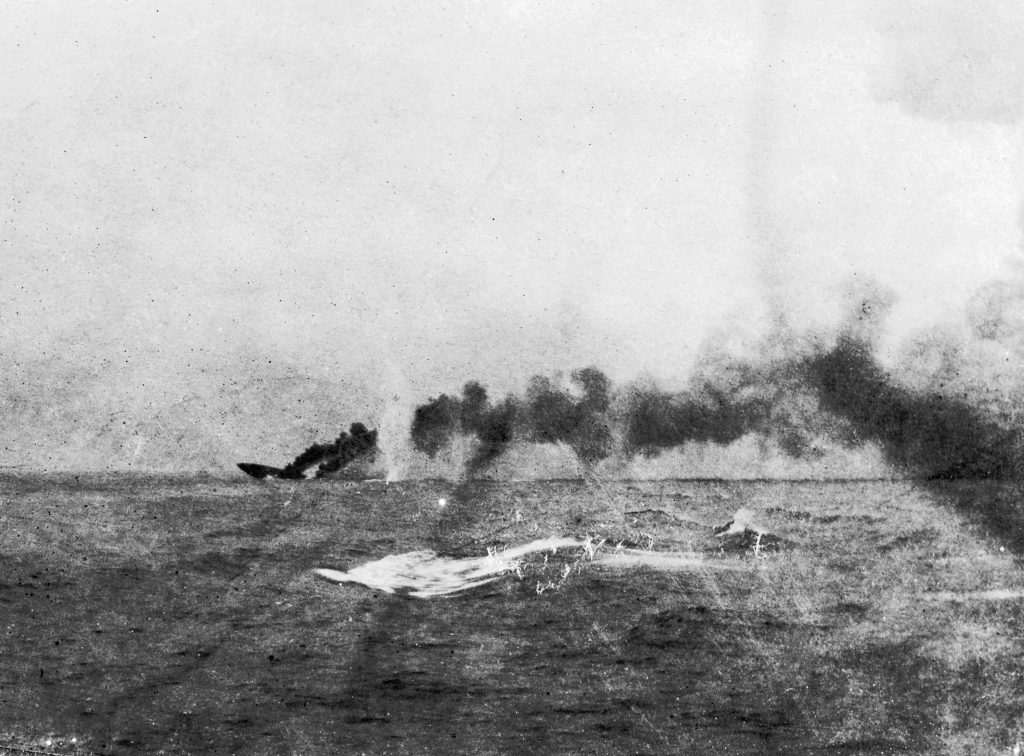
This photograph Q 64302 comes from the collections of the Imperial War Museums
(collection no. 3904-01)
Leading Stoker James Chilton of HMS Indefatigable was was killed on 31st May 1916, aged 28, and is buried at the Plymouth Naval Memorial, Devon.
HMS Indefatigable was sunk on 31 May 1916 during the Battle of Jutland. She was hit several times in the first minutes of the “Run to the South”, the opening phase of the battlecruiser action. Shells from the German battlecruiser Von der Tann caused an explosion, ripping a hole in her hull, and a second explosion hurled large pieces of the ship 200 feet (60 m) in the air. Only three of the crew of 1,018 survived.
James was born on the 1st July 1888, and entered into service with the Royal Navy on the 5th December 1914 at Marylebone.
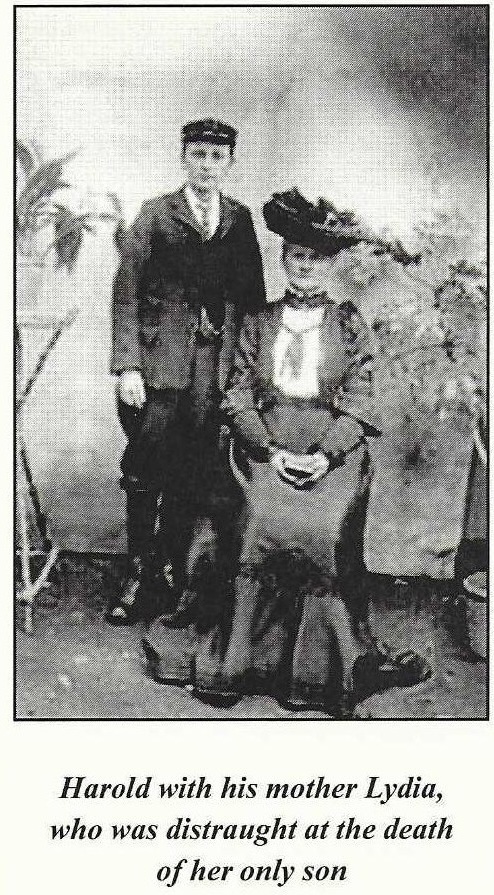
Private Harold Chilton of the 9th BTN, The Royal North Lancashire Regiment was killed on 3rd September 1916 aged 24 during one of the early attacks to capture the village of Ginchy, a forward position in the German defensive line during the Battle of the Somme. Initially enlisting at Watford, he is buried at Thievpval Memorial. He has no known grave but is commemorated at the Theipval Memorial, Somme, France.
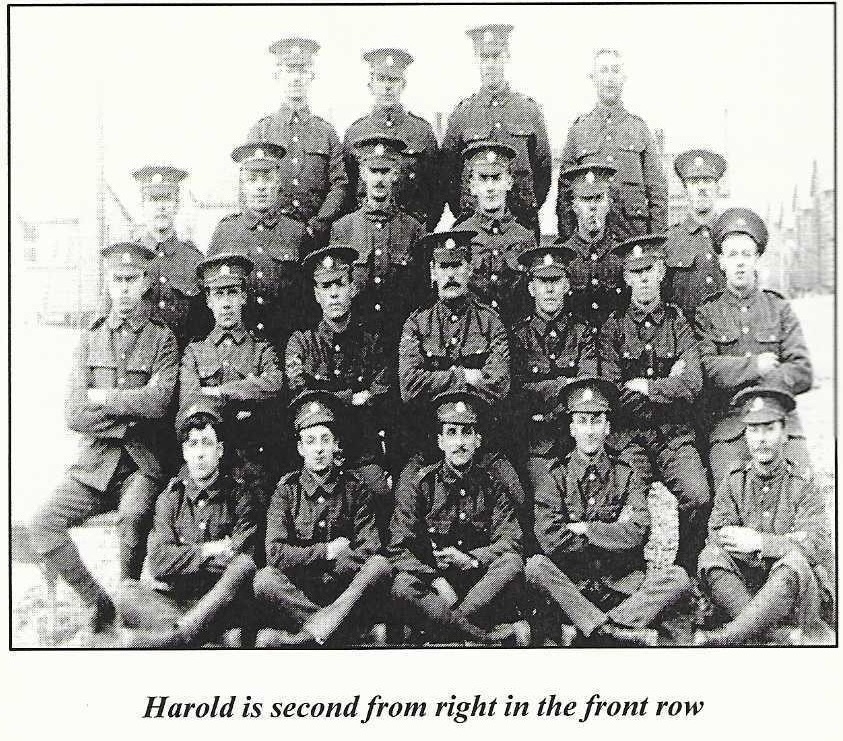
Harold was born towards the end of 1891, the youngest child of James, a farm herdsman for the Chenies Estate, and Lydia Chilton. He had three older sisters and in 1901 the family was living at Plough Cottage, 52 Rickmansworth Road, Chenies. Employed as a gardener, he enlisted at Watford after the Military Service Act was passed and conscription introduced. He reported to the Bedfordshire Regiment headquarters at Bedford on 8 February 1916 where he undertook training before being transferred to the Loyal North Lancashire Regiment, and then later the Manchester Regiment, 20th Battalion.
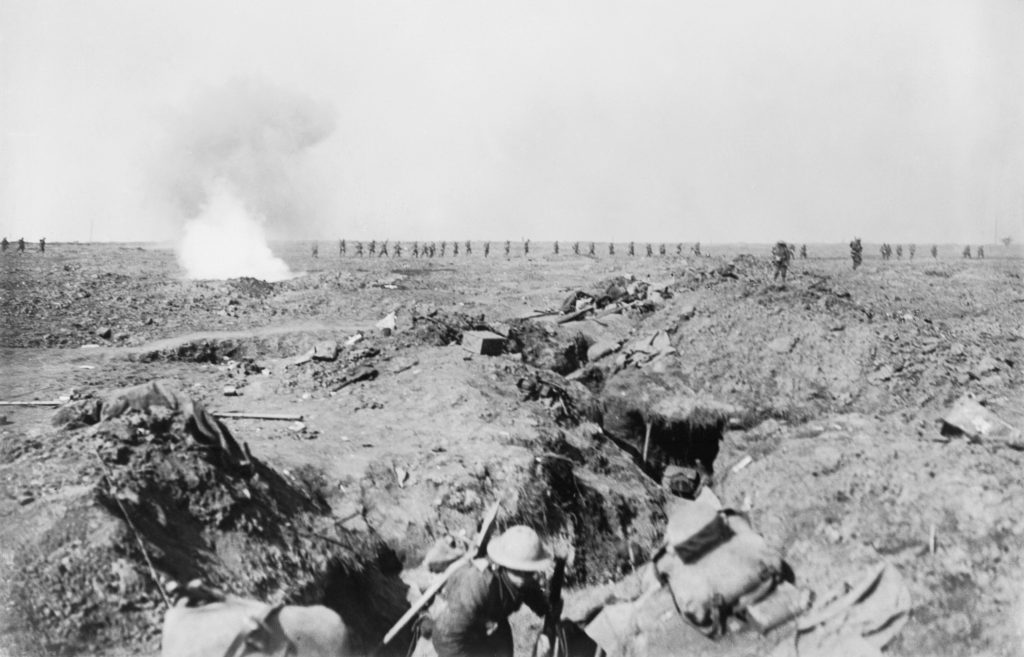
This photograph Q 1302 comes from the collections of the Imperial War Museums
Harold’s division was set the challenging task of capturing the heavily defended village of Ginchy which was protected by a crescent-shaped defence line. Making things even more difficult was the recent heavy rain, and the battle was protracted and fierce.
By the end of the day the Manchester Battalion had retired from the line and were replaced by the Royal Irish, who were able to occupy the village. The German artillery, however, was very heavy and by mid-evening the enemy had retaken it. Harold Chilton did not survive.
For several weeks he was listed as missing and unfortunately a letter was sent to his mother suggesting that he might have survived. Adeline, Duchess of Bedford, wife of the 10th Duke wrote to the War Office several times on his parents’ behalf. When the telegram arrived with news of Harold’s death, his mother fainted.
In 1922 his parents received Harold’s medals and the bronze memorial plaque popularly known as the “Dead Man’s Penny”. His mother was so grief-stricken that these were placed in a drawer never to be looked at again in her lifetime. Upon her death these and all the other documents in the box went to Harold’s niece with whom they stayed until her death in 2010.
Coral Sale, the grandaughter of Lydia and James, came to live at No. 52 with her mother in the 1920’s. Coral nursed them both until their deaths with the help of her aunt, and then in turned nursed both her mother and aunt.
content sources:
Some parts of this narrative were reproduced from Our Village in the Great War (published 2016) by kind permission of Chorleywood u3a.
Chenies Roll of Honour
contributor: Rachel Bishop
date published: 20/02/2026