

Introduction
Joy Atkins (1924-2019) was a long standing resident of Chenies Village. The audio memories below were captured when Joy gave a well attended fund raising talk for St Michael’s Church. They provide a fascinating and rich tapestry of social history and anecdotes from the first half of the 20th Century.
Track List
- Prelude, 4.53
- Horse Box to Chenies, 7.56
- Accommodation, 5.44
- The Railways, 4.23
- Chenies Estate, 8.44
- Estate Rules, 4.11
- Down the Village, 2.46
- The Rectory & more, 6.54
- The Red Lion, 5.04
- Beyond the Red Lion, 4.44
- Miss Palmer, 5.10
- The Post Office, 2.28
- The Bedford Arms, 4.48
- Mount Farm & more, 4.21
- Flash & Chenies House, 3.02
- St. Michaels’s Church, 7.25
- Mrs Kilby & others, 6.36
- Teeth, Fire and Cold, 4.06
- A House at last, 9.34
- The Cherry Orchard, 5.45
- Booker Hospital, 2.15
- The Tradesmen, 3.57
- Clay Pits and Lower Chenies, 5.48
- The Manor House, 5.12
- Horses part 1, 6.33
- Horses part 2 , 6.42
- Finale, 3.40
Prelude:
I thought I would start by just telling you how I came to live in Chenies, and just give you an idea of life then, and then go through the village and the different places, the different people that used to live here. My husband had lived in the village all his life and was 12 years older than me and used to give me little bits of information that had happened well before my time, and my father-in-law used to tell me things as well. Where I’ve picked up little odds and ends, oh yes there was Fred Smith who also had lived in the village most of his life and would give me little tidbits, and I keep thinking of these things and jotting it down.
My father was a parson in Herefordshire. We’d lived there for some years and when it came to the end of the war my father took the services of Thanksgiving for peace, and then about a fortnight later he was taken ill on the Sunday and died on the Tuesday. And this obviously was a terrible shock to my mother, and my brother who was at boarding school and myself – but there was worse to come, because when she notified the diocese that my father had died, the letter back came that she would have to be out of the rectory in six weeks, which as you might well imagine was a nightmare because there was nowhere to go. There wasn’t money to purchase anywhere or anything like that, there weren’t the council houses in the same way in those days or anything like that. So in that six weeks there had to be a decision as to what would happen to my mother, and it was decided that she would go to live with her parents who lived in Chorleywood. I would go into digs and carry on in the land army, my brother would leave school at the end of that term because there wouldn’t be any finance to keep him at school, but he would be sixteen and so he was going to go into the air force.
Then the next thing was what to do with the contents in the house. Now there were two very supportive farmers there, and one of them suggested that my mother sorted out a minimum of furniture that would just make a small home if she was ever likely to get one, and he would put it, store it in the attic of his farm house. So that was the decision, and the rest was to be sold. So then we were sorting through things and she had quite a lot of lovely china that had come down from my father’s family including a lovely dessert service -which I loved – which was Royal Worcester with a turquoise edging to it and a different bunch of flowers on each plate, and so you’d got the place sitting plates, and then as they used to have it the ones that went up in a tier like that for the middle, but as my mother said, ‘well you can’t keep anything like that, that’s got to go in the sale as well’.
So everything was sorted out, a nucleus of a home was kept, and then the auctioneers years came in and lotted it all, and an auction took place in the garden of the rectory. I shut my mother in the kitchen because obviously she was absolutely distraught. I was feeling pretty upset but there you are, I was the eldest, I had to get on with it, and I was there at least to answer questions, produce keys where necessary and all that sort of thing, and you watched your home disappearing down the drive on cart and horse or wagon or once or twice lorry, cars and two or three cases, barrows. And it all disappeared and then the rest was taken up and put into this farmhouse. And my mother came up to Chorleywood to live with her parents and I went into lodgings with the mistress, the junior mistress of the village school, and as I say my brother was to come out of school at the end of the term.
Horse Box to Chenies:
I left school at 16, and because I’d always played on the farm all my life in the holiday times, and loved it, and learned to milk and work with the horses, and this was at the beginning of the war, the obvious thing was to go into the land army. But of course, I wasn’t old enough. Eventually, at 16 and a half, I tried, and I was given a long interview, and because I had actually been working on the farm for some time, and because I was a bonnie girl, as they described it, they allowed me to go in at 16 and a half, instead of 17, which was the legal time, which was a great bonus, because I then got a uniform, which helped with the clothing and so that was absolutely great. So I worked through the war years in Herefordshire on a farm there, time went on. I obviously corresponded with my mother every week by letter. Weren’t phones, well, not with the likes of us anyway. Life was beginning to settle down and quieten down, and I’d got my friends round me. I’d got a very good boss, and I was beginning to settle down and feel quite happy, and when it got to the end of November, I had a letter from my mother saying that the farmer, Bill Simpson, who lived at the Manor House, wanted somebody to work in the sheds and also who had experience of general farm work for the rest of the time. For this, he would give us three rooms in the Manor as a tied cottage to myself. Well, I didn’t want to do that. I was beginning to settle down, I’d got my friends. I didn’t want to move on. But I was the eldest, I had responsibilities, so I came up and had an interview and accepted the job, and I had to give my notice in. I also had to notify the land army that I wanted a transfer. And this I did, and heard nothing, and heard nothing and heard nothing.
And about a fortnight later, Bill Simpson sent a message to say, move or forget it. So I made arrangements to move over here, and I had a little mare that I’d saved up for called Flash. And I’d saved for years, always wanted a horse of my own. She was out of a hunter mare by a well known horse of the day, Bunk Away, and she was only two years old, and she’d only been back twice, but she’d been out on the hills and she was in – she was pretty poor, so she hadn’t got a lot of buck in her. Although I could ride, I wouldn’t say I was a professional rider or anything like that. Anyway, we knocked the corners off each other and had a lot of fun together. I obviously didn’t want to be parted with her, so had to sort out and Bill Simpson had said, yes, I could bring her as well.
So I had to sort out – order a horse truck on the railway to take her from Worcester to Rickmansworth, and also order one of the cattle lorries from the village to take me into Worcester. The furniture was to be fetched from the farmhouse, and ‘please would I be in attendance’ at the time which I was, and as they were almost finishing loading up, the car of the previous man that I’d worked for drew up, and he came with four – I don’t know if anybody remembers them – the grape hampers that they used to have, which were about as big as that and round and about that high. They were made out of very thin strips of wood, and the grapes used to come in these, I believe, I’m not sure, in sawdust, but in something anyway. And there were four of these which were to be loaded up. And he said, that’s your 21st birthday present, which would have been just before Christmas. And eventually, when that was unpacked, it was the Worcester service which said, which was brilliant of them.
Anyway, the furniture went off and everything was sorted out. So I said goodbye to all my friends, and we went to Worcester and loaded Flash on the train. And there was just a compartment at the end with a wooden bench, no light, nothing else, just somewhere where you could sit and you could slide a thing along and look in to see if the horse was all right. And off we set. I can’t remember anything of that journey. I think I was so upset I probably grizzled most of the time. I certainly didn’t look out of the window much. As we got to that the middle of the afternoon, of course, being the middle of December, it was getting dark. Suddenly we were pushed into a siding, and it was an enormous goods yard that I could sort of see through the half light. And by that time, nature was calling, and I was desperate to relieve myself. So the engine had gone off, and I looked round, all across, and I could see in the distance, a lot -across a lot of rails – I could see some cattle pens and sheep pens. And I thought, can I reach there and do what’s necessary and get back before the engine. I had visions of the engine coming in, hooking up and going off and leaving me behind. So in the end, I dared myself, and I opened the door and I climbed down. And any of you who haven’t climbed out of a truck like that without a platform, it’s a heck of a long way down. I got down to the bottom and across the these rails. Oh, thank goodness for that! Beetle back again, and climbed up and got in and closed the door and heaved a sigh of relief I was back safe. And a few minutes later, the train came up again, hooked up, and off we went. Well, I think the relief of that exercise, I must have gone sound asleep on the bench, because the next thing I knew, I heard somebody saying, ‘Well, I know she’s here somewhere, because I saw her‘ and a Porter’s light was being shone through. ‘Oh, there she is. She’s in the corner there‘, and it was my mother and my aunt with one of the porters come to welcome me, and we were in Rickmansworth goods yard. So they took the cases and everything and unloaded Flash and saddled and bridled her, and set off out of the goods yard, up past the Victoria Hotel and up and along the top of the Common. Bearing in mind this is just after the war, so there’s no traffic to bother about at all, petrol rationing and everything. Bullcraft Corner down into Chenies, up the court, into the yard, where Bill Simpson came out and greeted me, and he put a loose box all ready for her and feed and everything for her, and we settled her for the night. And I said, ‘What time do you want me out in the morning? ‘And he said, ‘six o’clock‘, right. And I walked round the front of the Manor with my mother, and you got the front door. And as many of you will know, there’s a door at the side, and that was our front door.
Accommodation:
Queen Elizabeth’s room was our bedroom, the room next to that was our sitting room, and the staircase went up there. And opposite was our pantry. And to the left, which I believe is the library now, I’m not sure, was our kitchen, and also had a single bed in it for my brother when he was at home. I might tell you that the pantry when the MacLeod Matthews eventually started exploring in there, found that it was actually the long drop, and that was revealed when they took out some of the shelves. So that had been our pantry.
The water – we were allowed to use the cloak room, which was downstairs, and water was brought up for washing up and cooking, and we washed up with a bowl on the window sill and then took it down in a bucket, down to the cloak room. Down at the bottom of the stairs – it’s different now because it’s been cut through, but the passage finished there in what was our coal hole. So next morning, I’m up and out for six o’clock and it’s pitch dark, and I walk down the yard and no lights and no sound or anything, and I get down to the bottom where the dairy was, and I thought I could hear some noise round the back. So I went round, and there was a boiler house there for heating the water, for washing the utensils and everything. The boiler door was open because he was feeding wood into it, and there was a little chap there doing the fire. And he turned around, saw me at the door, and he said, ‘Oh, are you the new land girl‘, So I said ‘Yes‘. He said, ‘What do you come to this bloody place for?‘ I thought that’s a good kick off anyway. But that – that was Little Bertie. Little Bertie was very short, and he reached about to here on me, and if we were anywhere close, he would put his arm round, supposedly, my waist. But it came down much further. And he was a dear little chap. He was like a little monkey, you know, and he lived with the Coster family up at the Mount.
Now, I think next the best thing is to work round the village. I will start down Green Street at the bottom, because I know some of you have come from Chorleywood, and all of you will know Chorleywood, so I can just tell you one or two things about down there when I was a child, having my grandparents in Chorleywood. My grandparents in the first stage, had bought the old Berkeley kennels when they moved down to old Amersham, and my grandfather had gradually converted it. And as they converted a bit, so they lived in it, and then they converted the next bit and moved round. And they lived in the last bit for several years. And then they’d got a bit of ground right at the bottom. And my grandfather built a house there, which he called Old Berkeley, which I’m sure a whole lot of you know, along at the end of Homefield Road, and next to Old Berkeley was a farm, and they farmed all the what is now the houses along Green Street and Orchard Drive, wonderful fields for mushrooms. You could pick baskets full of mushrooms up there, and the Greens farmed and milked there. And as a youngster, I used to love going out with Mr. Green with the pony and float and the big copper churn there. And he’d go and fetch the jugs off the doorsteps and bail the milk out, or cream, or whatever the order was, and everything. And I used to love doing that, and that was once a year when we managed to get up to see my grandparents for a holiday. And the other treat was that the last day of the holiday, Mr. Green had a daughter, Brenda, and Brenda had a horse of her own for riding, and Mr. Green would take me for a ride, and we would go down the track, under the railway bridge, leaving Kingham’s, which was the only building on the right hand side, which I believe is a garden shop now, or something. The rest was all fields, right, Carpenter’s Wood and the Barrel Arches Wood. And that was all fields there, turn left and along the road, which gradually fizzled out at the end into a rough track. And of course, there was no council estate or anything like that at all. Young’s, I think, was the last shop on the left hand side, and that was a great treat to me. Just at the end of the farm track were two wooden huts. One was a newsagent, and the other one was a collecting point for laundry, which I can’t remember the name of it now, but anyway, they used to collect the laundry there. The old Green Street – you come down to the top of Green Street, and then, of course, it drops straight down – but originally, the old road used to go round to the right and then come along parallel with the railway.
The Railways:
Down there just one or two things that might interest you about the railway. Of course, it was all steam. An enormous amount of goods went through. And I can remember as a child standing on the bridge down- Clements Road, isn’t it? Standing on the bridge, and counting, over 100 trucks going through there, and they went through regularly. All the stations had big goods yards, coal yards, and all of them had cattle and sheep pens. Very, very active. A lot going on. And I can remember, even after we were married, we could write and order chicks on a certain place, and they would write back and say, they will be on such and such a train at Chorleywood and you went down and they were there. And absolutely incredible. And also, I can remember ordering something from a shop in London that some, I think it was bed linen or something, and ringing them up. And yes, they’d got what I wanted. And yes, that’s all right, it would be on such and such a train, which would be at Chorleywood at such and such a time. So you just biked down and picked it up. Absolutely brilliant, when you think of how things are, difficulties of getting things now, although we’re supposed to have moved on. Also another bit of interest from Amersham to Aylesbury, if you go on that line at all, you will realize at several points a bridge goes over the railway where a lane has come down from some village a little bit behind, and at those points, there were steps down from the bridge to a wooden platform, and certain local trains you could hail and they would stop and you could get on and go to Aylesbury, brilliant. All the railway embankments were cut regularly. Everything was kept down, scythed, or bill hooked, or whatever, there’d be gangs of men working the railway embankment. And it amused me.
Once there was a letter in the paper when there was all the episodes about the leaves on the line, and somebody is saying, Well, why did they plant these trees on the embankments? Well, they, of course, they didn’t plant them. It was just seeds that came from the trees, which would have been kept down when the embankments were cut. But of course, once the steam died out, then they didn’t bother about it so much. They did it because the steam, because of the danger of the sparks getting on to anything dry and catching fire, and then that could spread through to crops. But once the steam had gone, of course, they began to slacken off, and then you got this overgrowth on the embankment.
And one more thing that might amuse you was after we’d had the children and I’d got one, I think about, what, six, and baby in arms, the trains used to go through to Woodford Halse in those days, which was south west of Northampton. And we had some friends that lived in a village called Byfield, just outside Woodford Halse. And so I used to take the children up there at half term, and so go into the station and ask for the tickets. And I went in there one year and asked the tickets and the ticket man said, ‘Did ‘you do this journey last year‘? So I said, ‘‘Yes‘. So he said, ‘‘You didn’t pay enough‘. I said, ‘‘Well, I paid what I was asked‘. So he said, ‘Well, you didn’t pay the full lot‘. I said, of course, money was very short at the time, so I’m scratching about my purse. That’s what. ‘‘How much do I owe you? I don’t really know if I’ve got enough‘. He said, ‘Oh, all right, well, we’ll leave it for now, but I just thought ‘I’d tell you‘. So there must have been a notice up on the wall, must have been there from one year to the next, saying this woman with two children didn’t pay her proper fare last time. Incredible. Yeah, so that’s anyway. It’s a few things that happened with the railway line.
Chenies Estate:
Chenies, as you know, was a part of the Bedford estate and we had a steward who kept us all in order and there were certain rules and regulations that you had to abide by. And there were four men. Alf Holloway, Jim Atkins, John Biggs and Sammy Beeson. That’s right. Those were the four who worked actually on the estate and their responsibilities were keeping all the fencing in order, and all the boundary hedges were all cut by the estate. The rest of the hedges were cut by their tenants and all the grass down Green Street and the verges were cut by sythes by these men during the season and all kept tidy.
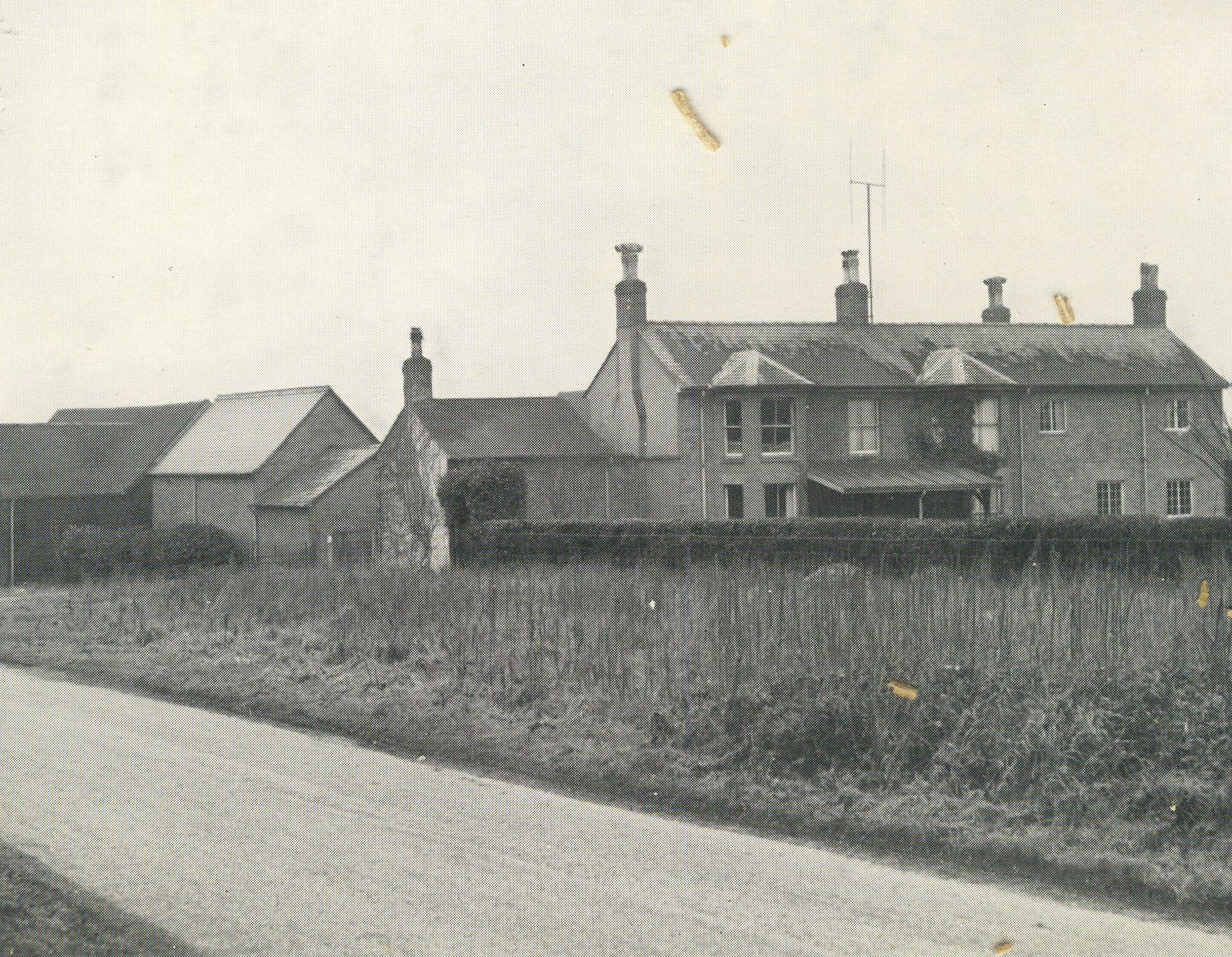
Photograph from the Chenies for Sale Catalogue
And you came up to Great Green Street Farm, which was Tom Dickens. And Tom Dickens was a very good farmer and won a lot of prizes with his stock and with his crops at the county show. He had a herd of short horns, which he milked and he also had a very good flock of sheep. And I can remember once coming along the road on my bike and I could see one of the sheep cast in the field and I leapt over the fence and ran over and tipped her up and held her there until she’d collected her wits and the bus that was going along the road stopped and the driver got out and said, are you all right? Now you can imagine that happening in this day and age. Uh, so that was Tom Dickens anyway, and there were no cottages opposite in those days. only Great Green Street Farm. And Fred Smith, who I mentioned to you earlier, told me that his father had worked on that farm many years before, and every year they walked the sheep up to Hyde Park and stayed up there for several weeks grazing. And then walk them back down again to Green Street. Yeah, it’s a bit interesting.
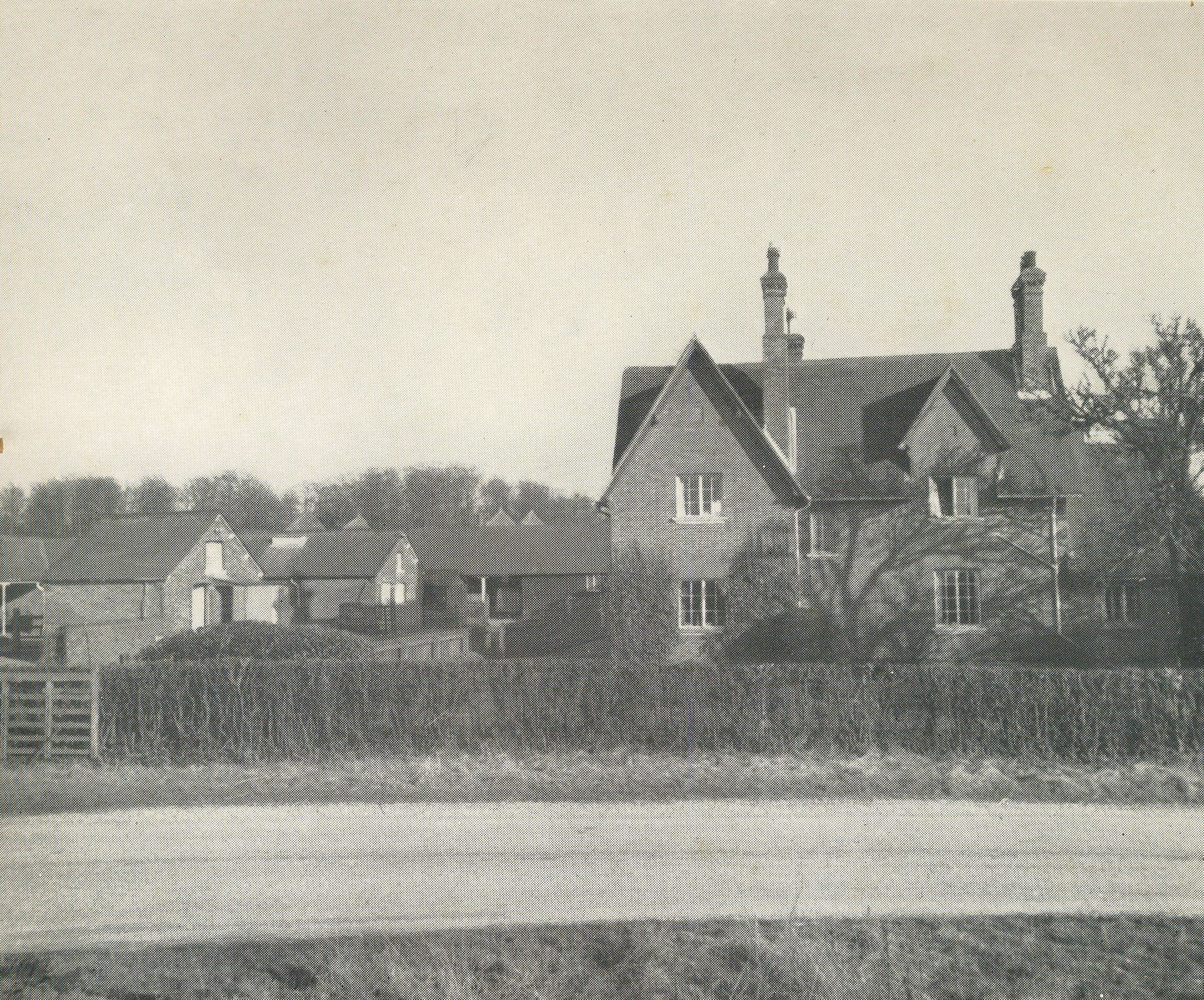
Photograph from the Chenies for Sale Catalogue
Then further up you come to Little Green Street Farm and that was Bob Dickens, who was Tom’s brother, somewhat smaller farm. And most of the ground was the other side of the road and went down right down to the river and along to Bullcroft Corner. And you went down just down the road as if heading for Chorleywood. And then you turn left in by the wood there down to what we termed Turvey Lane, which was next to Turvey Wood. And you went down there for most of the ground and eventually right down to the bottom, to two River Meadows where the dry stock were kept. And I can remember I used to love going down there. It was my job sometimes. ‘Oh, Joy, will you just go down, um, by the River Meadow as you’re going home tonight or at lunchtime or something? Just see the dry stock’s all right’? And in the spring the wild orchids there were absolutely beautiful. You could pick bunches of them and take them home. I went down there in more recent years and I couldn’t find any, and I, I don’t know if anybody’s been down, found any recently, but I think what happened was after it ceased to be the Bedford Estates, of course the dikes and ditches weren’t kept cleaned out after that, so the drainage wasn’t done. So of course it got more boggy and you’ve got the cloven hooves of the cattle that would be digging everything in, and I think that’s probably what ended them.
The fields down there, I’ve worked in a lot with various jobs. One time somebody let off a gun in the wood next to it and the horse bolted and went straight through a gate. Mercifully, the gate was pretty old and rotten, otherwise she might have damaged herself, but took the cart through as well. Yes, on the right hand side, as I was telling you, you turn off the main road to start to go down through the fields. There’s a small wood, and after the war, they created a camp there for the children out of London to come out and have a holiday. And there were two sheds which were presumably bucket toilets, and they used to have a large tent and that went on for several years. I’m not, I can’t tell you when it stopped, it just sort of suddenly seemed to disappear and die out. But they used to come there a lot.
Down in those fields. A bit of interest, I’m sure you all know there’s a gate opposite the water works and the Duke of Bedford, many years ago in my father-in-law’s time, used to like to come over here shooting and fishing, and he’d stay at the Bedford arms. And when he came over, he caught a train to Boxmoor, and then a horse and carriage would be waiting there for him, come down through Sarratt. And then one of the estate men, usually my father-in-law, had to unlock the gates and they came along through the top of that field, through the wood, up Holloway Lane, across the common and into the village to cut off the whole of the Bullcroft Corner. And of course, the gates were locked behind as well.
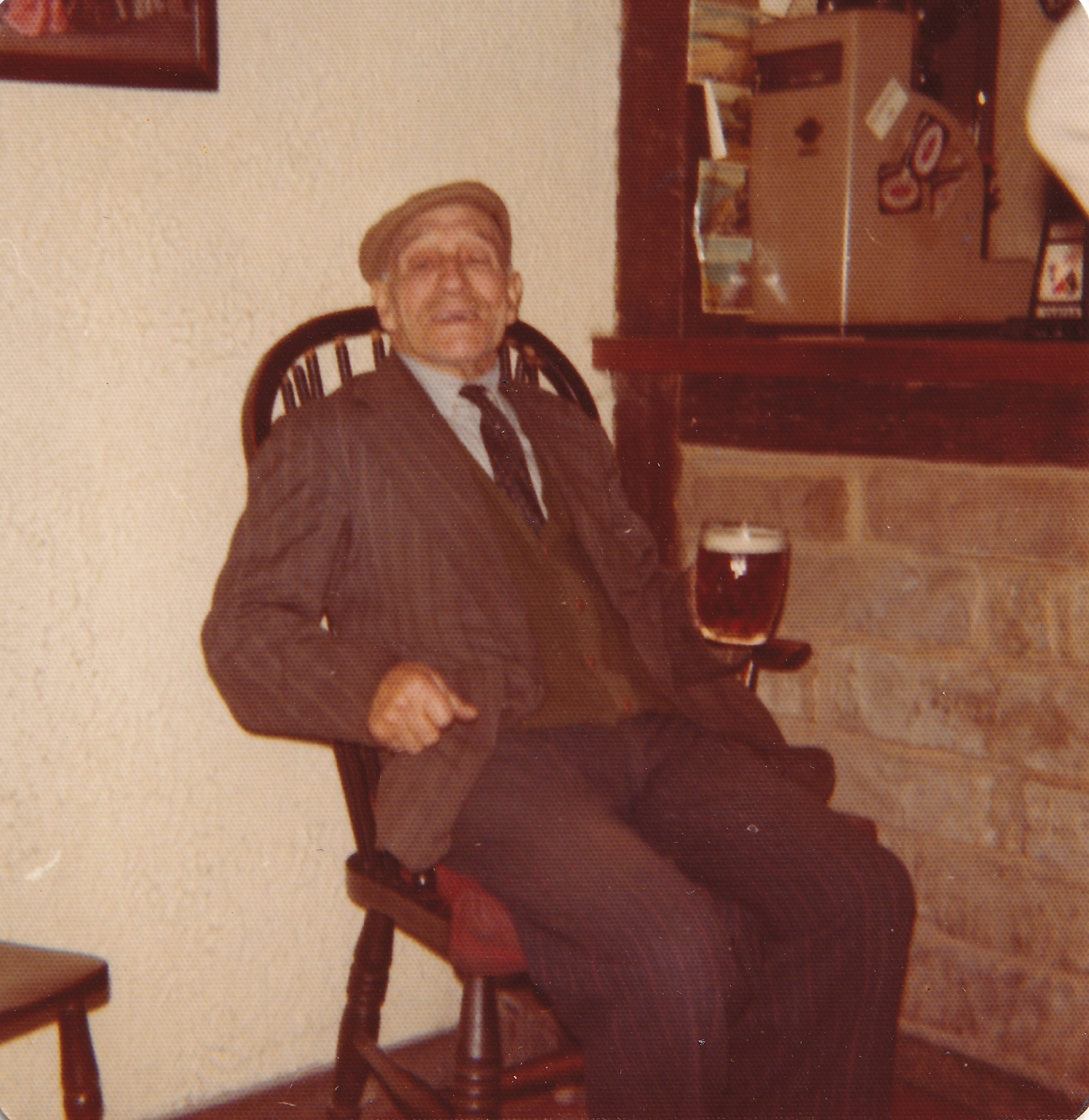
Also, I worked with Arthur Newns, one of the village characters. He was a 1914-18 war soldier and he punctuated about every fourth word with a swear word. I’ve got a wonderful vocabulary. I don’t use it, I hasten to add, but I bet I could beat any of you with it. I can remember we were coming up the lane one day, and of course it was in the winter and it was rutty and everything, and we got a load of hay from a haystack down there on, and I was driving the tractor and he was on the drawbar and he’s swearing away for all his work. In the end, I stopped. I said, ”Arthur, for goodness sake‘. And he said, ‘‘What‘? And I said, ‘Well, you don’t keep half, keep on, ‘don’t you‘? But I don’t think he realized. I think it was just his manner of speech. He didn’t realize what he was doing, but he was a great character.
Years afterwards when my daughter was doing a 20 mile walk for some charity down in Old Amersham. And so we were going round trying to get sponsor money and he sponsored her a bit and he said, ‘What are you gonna do about your feet? You wanna look about after your feet for doing that‘. And gave her one or two tips and everything. And she did this walk, and then we went round to collect the money afterwards, and he said, ‘And how many blisters have you got’? So she said, ‘I haven’t got any’. ‘You got no blisters’? So she said, ‘No, look’. ‘Well, you’ve done very well. I’ll give you sixpence more for that! That’s brilliant’. You’ll see a photo of him at the back there in his favourite spot at the Bedford Arms, but he, he was one of the characters of life.
Another little bit of interest. You’ve got Bullcroft Corner, the field there, and then you’ve got a hedge and they use, that’s the boundary, the the county boundary hedge. If it’s still there, it may not be there now. I don’t know. Anyway, and there was a deep ditch by this hedge, which always was kept dug out every year and cleaned out. That was always when it was Bedford Estates was always kept cleaned out. And then of course, when the estate was sold, because that didn’t happen, and it gradually began to fill up. And it went right across the road through the ground where Clement Danes is now and right down to a back, a sort of dip at at the end, well, the back of Homefield Road. And when they were building Clement Danes, they filled all that ditch up. And of course the old men in the village were saying, ‘Well, they’re gonna have trouble there. They’re gonna have flooding there‘. They filled that ditch up and sure enough they did. Next winter Bullcroft Corner was flooded and there was a real shemozzle there and they had to dig out again and put in big draining things and everything. And it’s quite surprising. I don’t know how many of you have found this, but I found through my life where the older people will visualize trouble in certain areas when they’re developing or something like that, but no, no, no. Nobody takes any notice. And then finally there is trouble, you know?
Estate Rules:
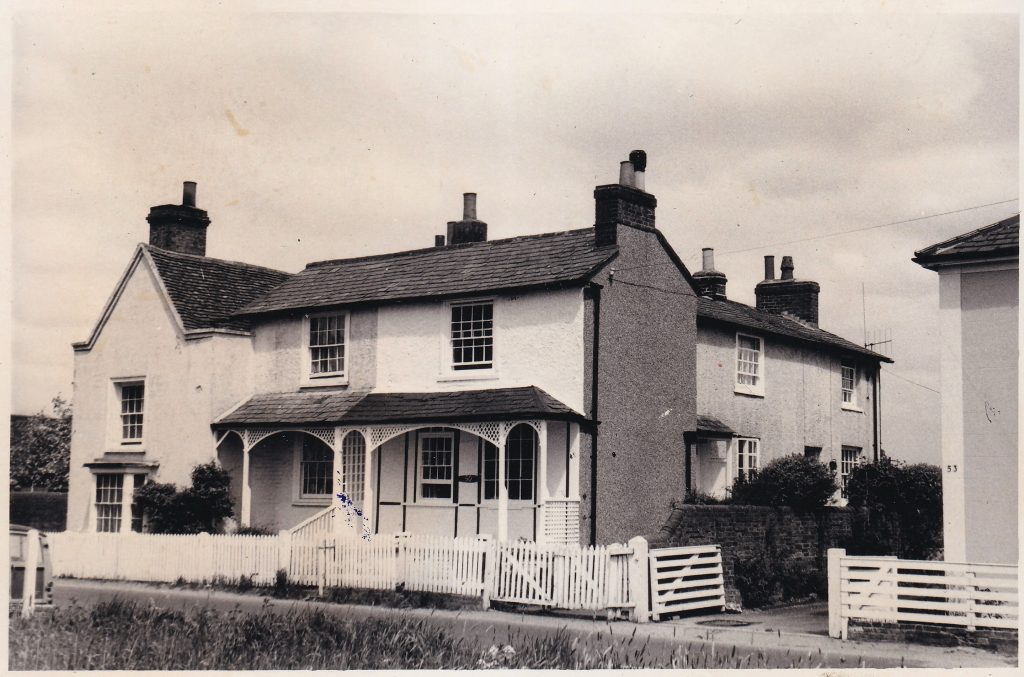
As I say, the little cottage that, uh, we lived in behind Nan Howe (Grafton Cottage, No 50), and Mr. and Mrs. Matthews and Ted lived in the front bit. We lived in the back (No. 51), one up, one down, and a little tiny bit where you could just get a single room in. There was a sink, but there was no running water. You had to fetch the water in from a tap out in the garden.
Down the bottom of the garden, all three of those cottages had an earth pit. I think they were the last ones in the village. I think most of the others had got buckets. And of course, one of the rulings of the estate was that these buckets had to be emptied discreetly, after dark and they were buried in the gardens, hence they had excellent gardens in Chenies. Another ruling was no washing on Sunday and certainly if you dare to do washing, you didn’t hang it out.
Another rule was that you could pick up wood providing you could reach it from the footpath, but you were not allowed to take wood otherwise. That would be collected and taken for the estate. And I can remember my father-in-law telling me that they had a steward, a Mr. McGregor, who lived up to the ‘Peter Rabbit’ Mr. McGregor, previous to Mr. Owen, and he was very, very strict. And one night my father-in-law, who, as I said, worked for the estate, was walking back home along the walks and through the woods, and he saw a lovely shoulder piece as he used to term it. He always used to come home with a shoulder piece and saw it up before he had his evening meal. And he saw this beautiful bit, but it wasn’t quite reachable from the path. But it was evening and who would know? So he comes up the church alley down the court, and as he’s about to cross the Green, Mr. McGregor appeared from behind one of the elm trees and he said, ”Jim. You didn’t pick that up from the footpath. Take it back where you found it‘ and you, you had to in those days or else. So he had to take it back where he found it and try and find another bit to bring home.\
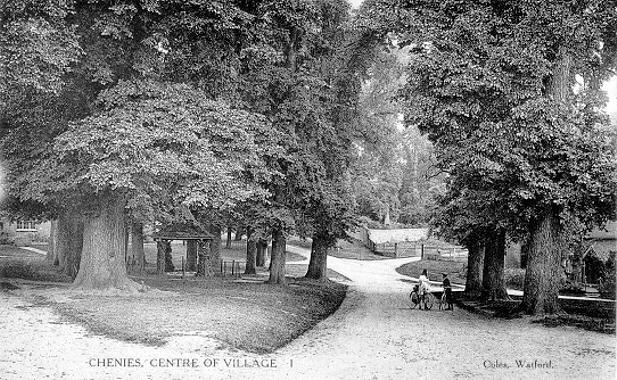
Oh, another ruling was that the Green, you’ve got the hill that goes down now, past Ince’s (The Lodge) and straight down, but there was another one that turned off to the left when you’d come round the corner and it lined up with the drive to go up to Chenies House. Of course, the idea would’ve been, you see with coaches and horses, you wanted to sweep round there and up. If you’d gone the other way and turn the angle, steep slope, alright, you had certain breaks, but very difficult to break the carriage and get the horses acutely round to go up the drive. The idea of going up the drive would be to go up to the end and round and then sweep up from the corner where the signpost is and then sweep up to the Manor. That road was filled up, I don’t know when. It was some years after I had come round here. And they filled that up and I do remember getting off the bus one night in the dark and going head over heels over the little bit of fence that they’d fixed across to stop people going down it anymore. I’d completely forgotten that it was there.
There was also a footpath from the bit opposite Ince’s, sort of the bottom of the court that went straight across to the cottages, the other side of the Green. And that footpath was there, so you weren’t supposed to walk on any of the other grass. That was one of the rulings also with the estate.
Down the Village:
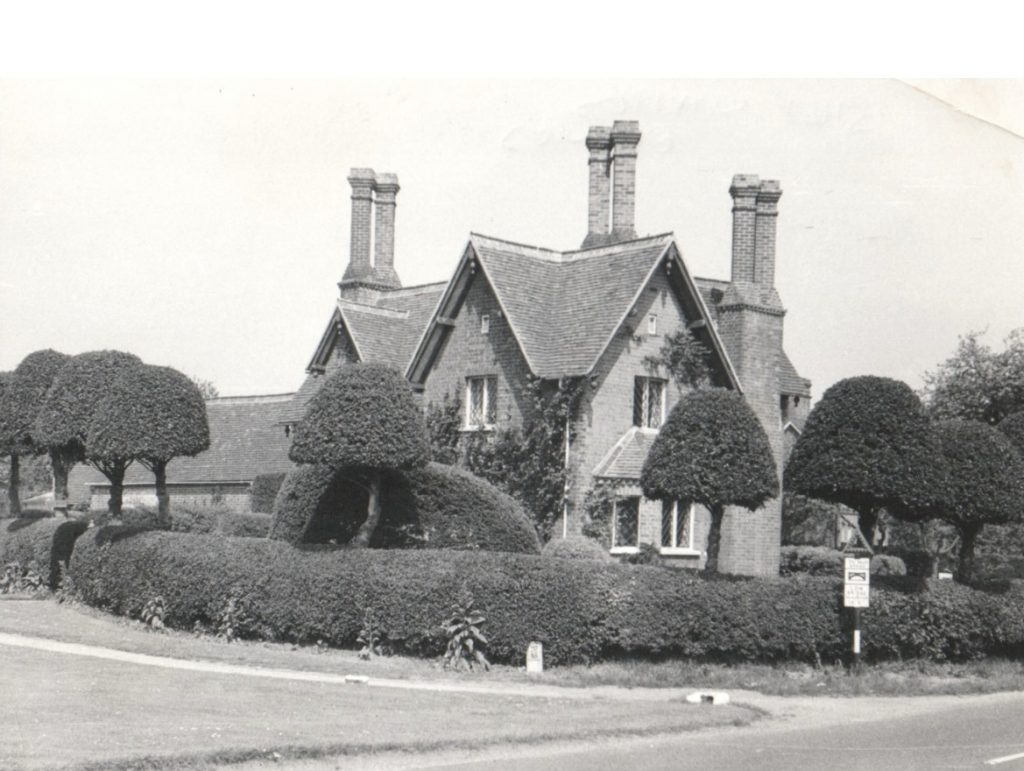
We will come along the road now to the steward’s house, which is Shep Whites now, I believe. And the estate offices were there, uh, the estate workshops and everything were there. Inside the orchard, which was just beyond, was a great big tank, enormous tank, where the posts and rails for fencing were put in this tank. It was filled up with creosote and then a big fire lit underneath, and all this wood was boiled in this creosote. Now, the wood would’ve been wood that was felled actually in the woods around the estate woods. And that was a lovely smell from a distance, but a killing smell when you were really close at hand. But that’s how all of this woodwork was preserved that was used around.
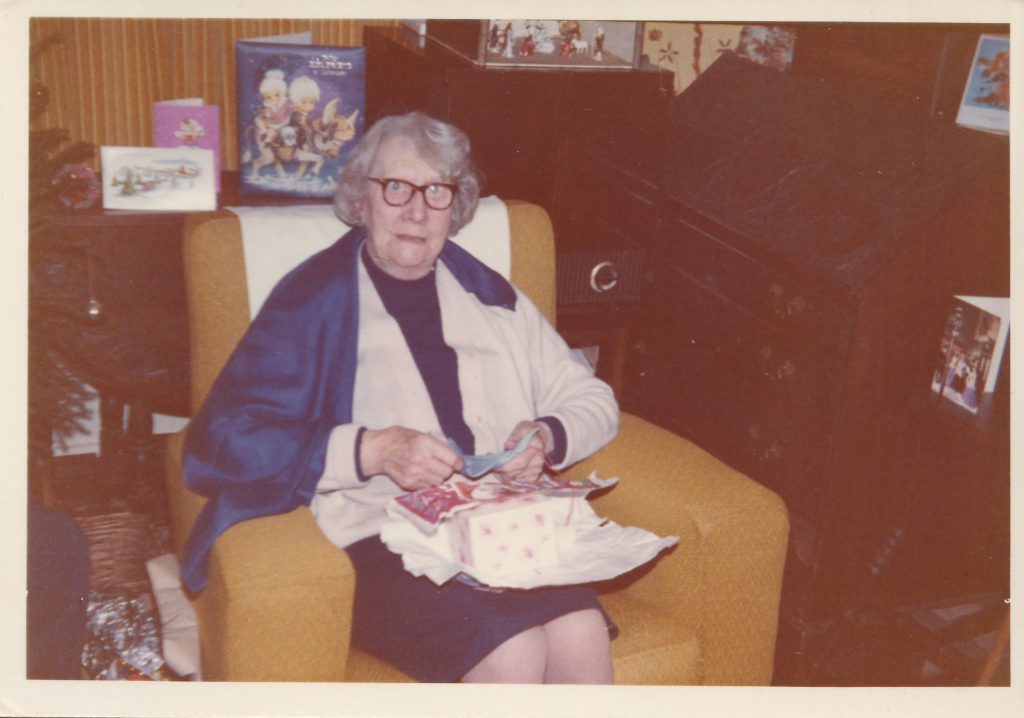
Now, Mr. Owen was a steward at the time when I came to the village. He was a very nice man. He was elderly and he actually died there, but he was the last steward. He died just before the estate was sold, and his wife, Mrs. Owen, retired and lived, uh, in one of the Claypit Cottages. And he started to make a wood surround for the fire place, and he’d carved three parts of it before he died. And Mrs. Owen gave it to us after he died and we had it for the whole our married life. And when I moved, I gave it to the Open Air Museum. So if anybody visits there anytime, keep your eyes open because you may see it. So it was Mr. Owen who carved it and, and didn’t quite finish it and the wood was cut in Carpenter’s Wood, Chorleywood. I was told there used to be saw mills there before it was made this estate, which is quite likely because there was a considerable amount of industry in the village in those days.
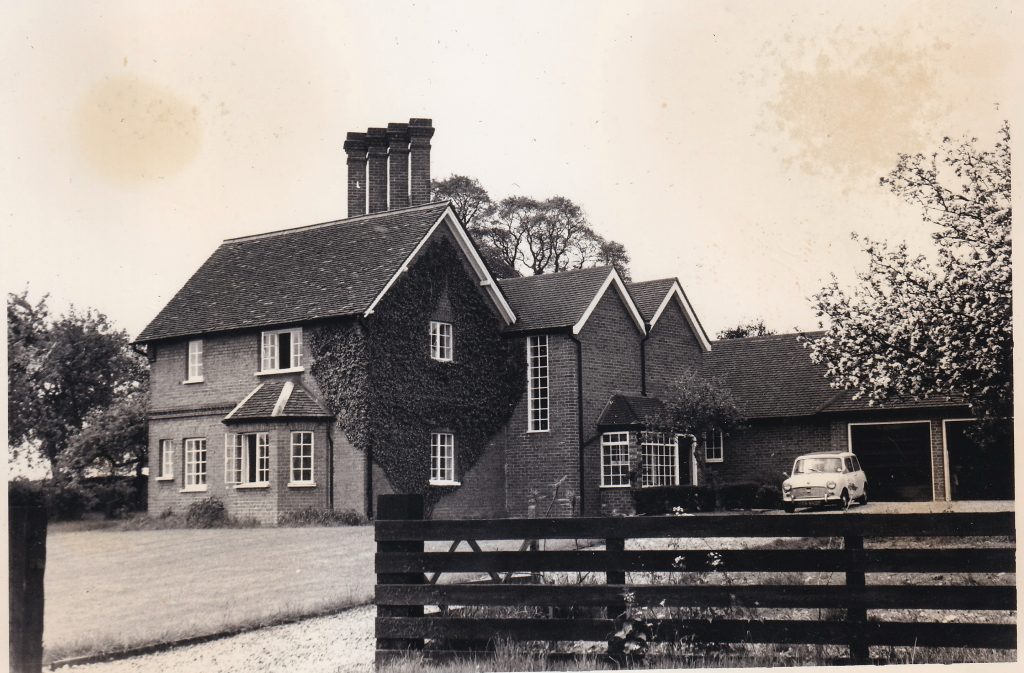
Next to it, Chess Croft was actually the bakery. Mr. Salmon, who had just retired when I came, Mr. Salmon had the most wonderful bed of Christmas roses. They were absolutely beautiful. I don’t know if the bed is still there, but they were really lovely in those days. We then come to the new cottages on the right hand side ( Nos 8 – 11). One of those was [a] Cottage for the Manor. One was Little Green Street. One was Great Green Street, and the other one was the River Bailiff who worked there.
The Rectory & more:
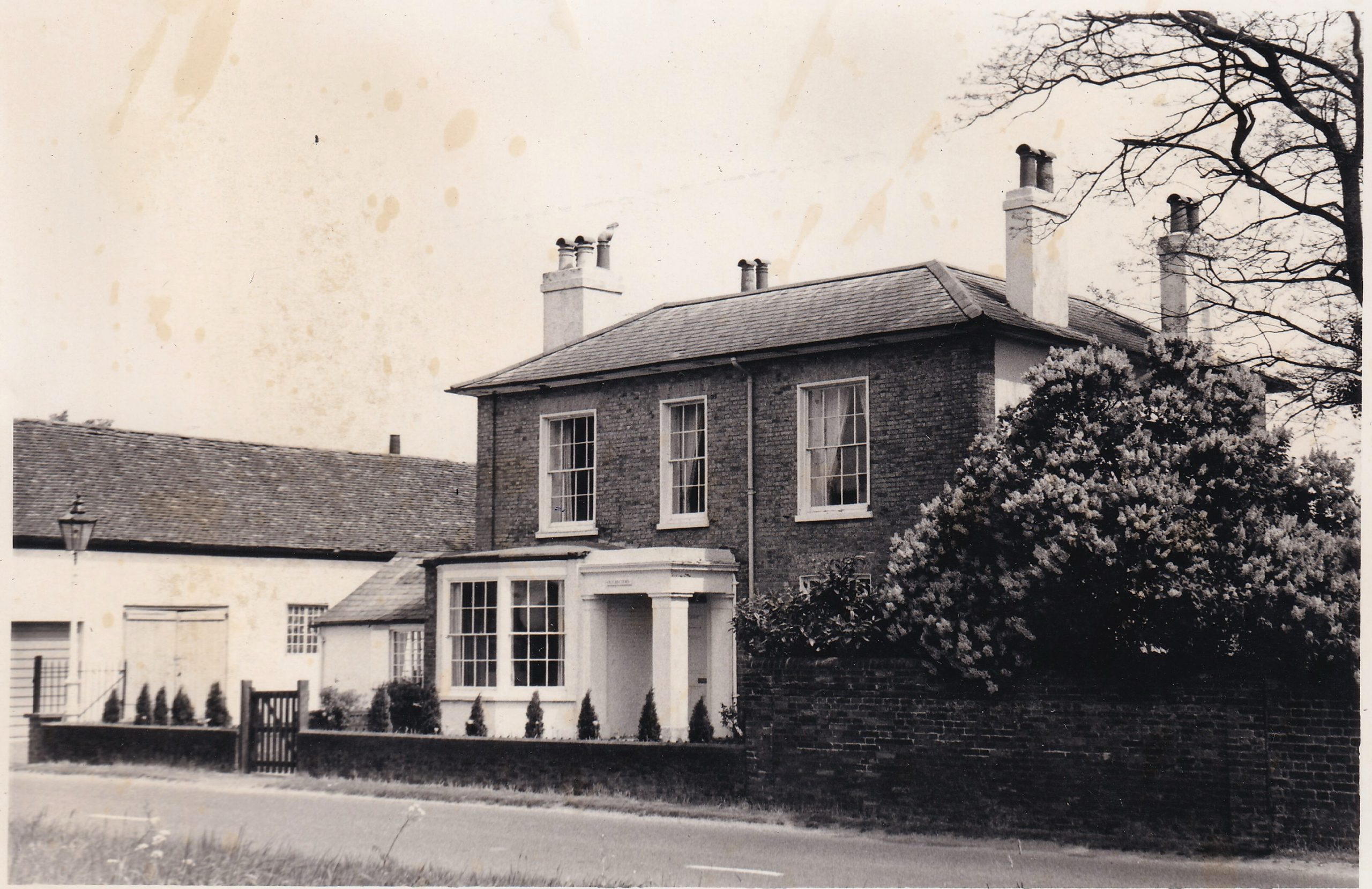
Then the Rectory, and in our time was the Reverend Smith followed later on by the Reverend Trevor Jones. And Reverend Trevor Jones had two sons. And we had a, a little bit of fun and games, uh, during that time because we had the local parish elections. And various people were being put up, and we had sort of homemade posters put up around the village and suddenly some were appearing, and you know, I’ve racked my brains. Can anybody remember, what was it? Was it Trog? ‘Mr. Chad‘? That’s it. Thank you very much. And quite a few of them were like that, with various rather near the knuckle comments. I can remember Colonel Matthews coming to our door one day and starting to talk about the local elections and saying, ‘Well, there are some very funny posters going up round the village’, and I said, ‘Yes, well, (I said), they’re really quite clever, some of them you see‘. And so he said, ‘Have you done them‘? And I said, ‘No‘. Well in a way I wish I had, because I said some of them are really quite clever and he said, ‘Oh, right. Well, some of them are on the telegraph poles and they shouldn’t be‘. Well, I know, I know. You shouldn’t put on notices on telegraph poles. I said, ‘Well, no, I, I didn’t do them’. And we never found out who did these until years afterwards when the eldest boy, who by that time was an adult, came back and visited the village and was going round, and he was talking to us and I was saying about this, we were reminiscing about the past, you know? And I said, ‘Oh, we never ever found out who did those posters‘. So he looked at me and winked and he said, ‘Well, it was me actually‘. So this was discovered years afterwards.
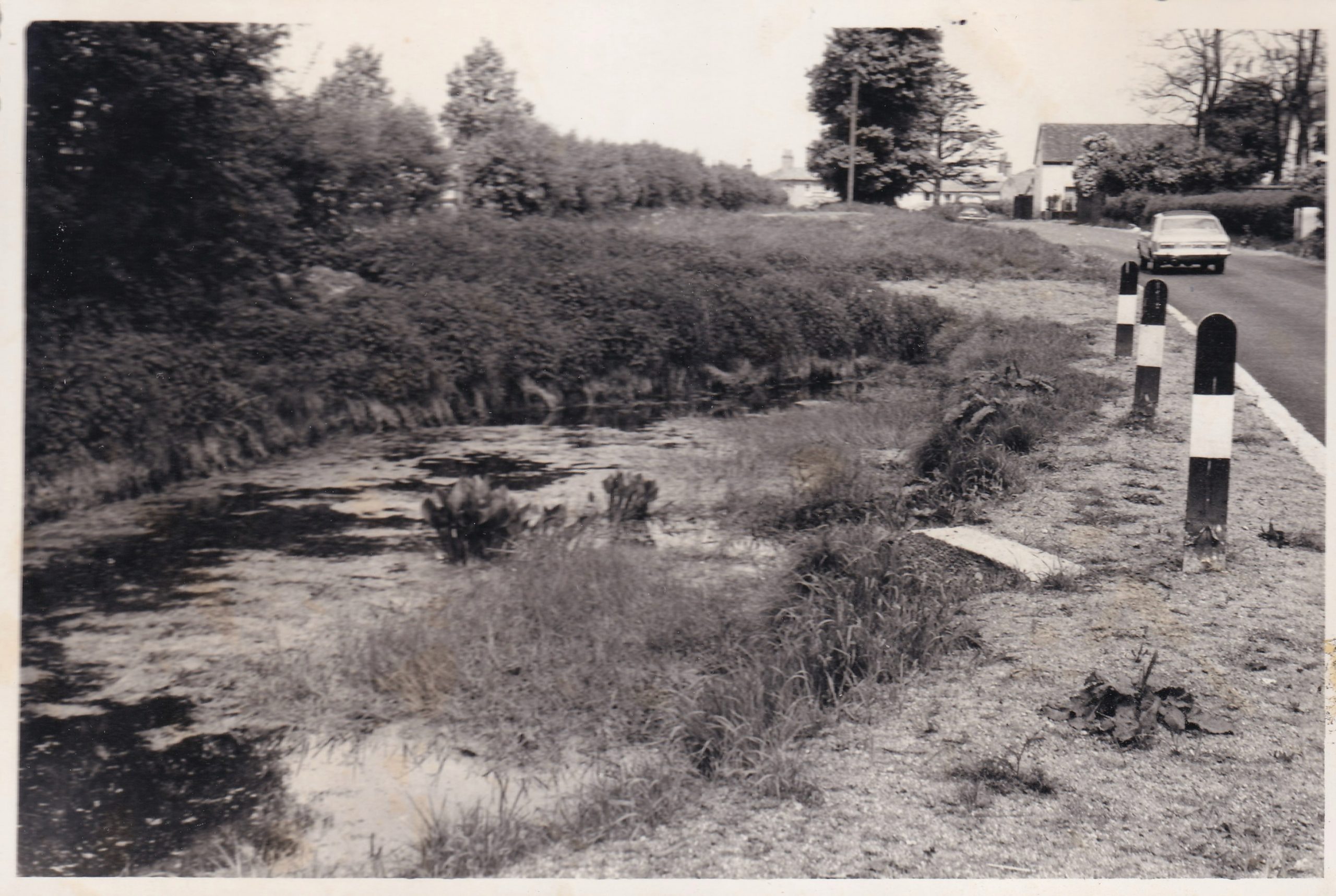
Just before the cricket pitch, there’s a pond there. Now the pond is not very deep now I notice, but it used to be very deep right up to the brim and Rod Coster, who still lives in the village down at the bottom, I don’t imagine he’s here, he used to work at the Manor when I worked there and one day we had orders. To take a couple of rope halters and go up to Little Green Street Farm because a couple of yearling heifers had broken out from the mount and got into Little Green Street. So off we went and got these, again, not much traffic about or anything, so we were leading them down. Rod had got past the pond and my little wretch thought it might be fun to have a paddle in the pond. So she dived in and I was at danger of going in after her and Rod was laughing his head off. And anybody that knows Rod, I dunno whether he’s got the laugh now, but when he was young, he had the most infectious laugh and you could be the opposite end of the buildings, and if you heard Rod laugh, everybody would be smiling. We didn’t know why he was laughing or what the joke was, but you’d all be laughing or smiling because it was such an infectious laugh. And of course he was laughing and when I was about at the brink, to go in, of course he’d, he relented and came back and helped me pull it out. And we continued our journey.
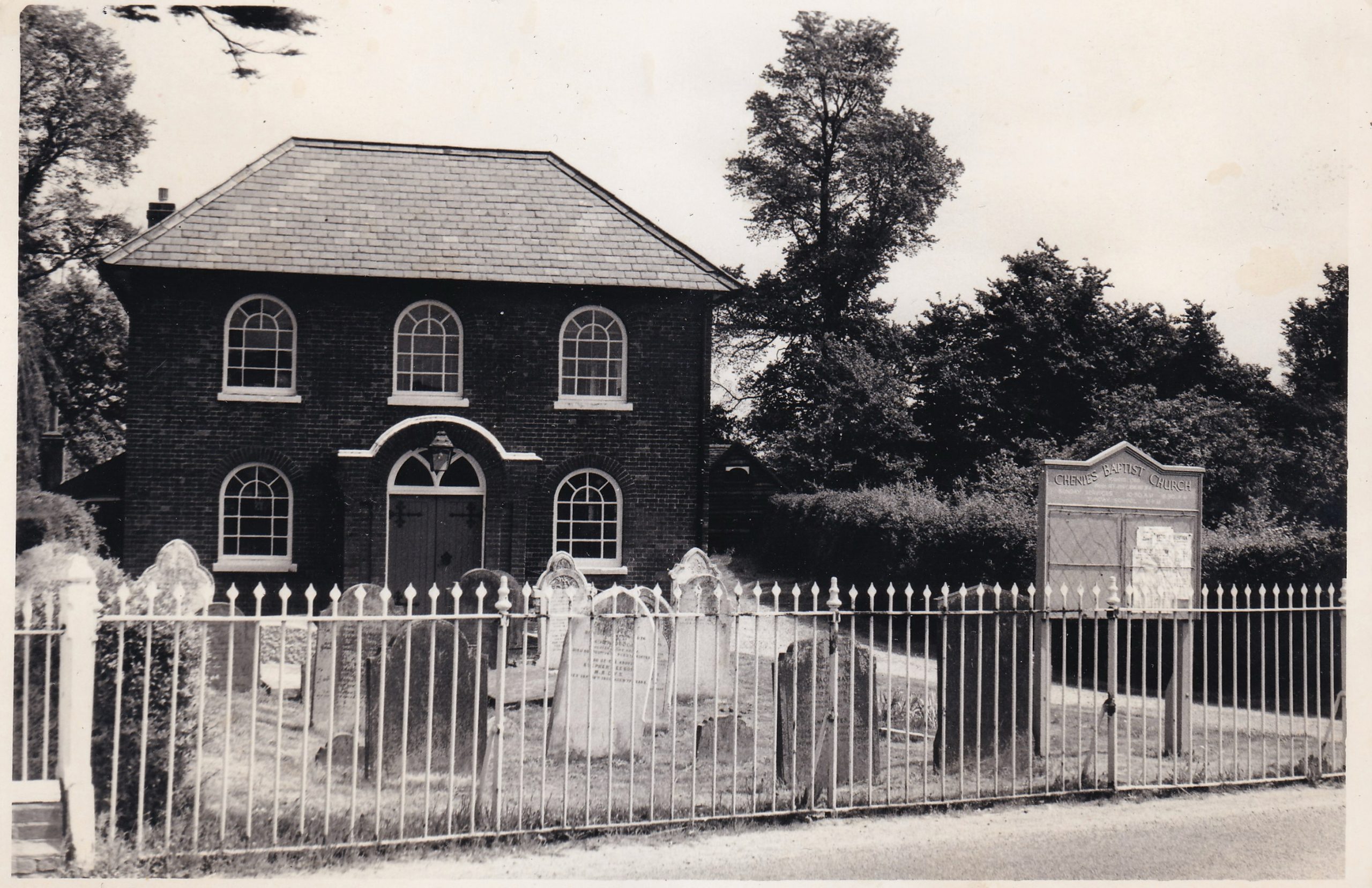
Then the cricket pitch was there, of course, but no cricket pavilion. And then you came down to the Chapel. The one story I was told about an old lady who used to come from Chorleywood, Pullins? Pullins shop – that used to be on the corner of Solesbridge Lane, and she used to come from there with a little pony and cart and bring the papers for, for houses in the village. And the story goes that the pony knew exactly where to go as they always did learn, the milkman’s pony, what, whatever. Always learned where they’d got to go, but that pony always knew Sunday and turned straight into the Chapel where his Mrs went to church and amazing how you, you get these sort of things happening and they’re perfectly true.
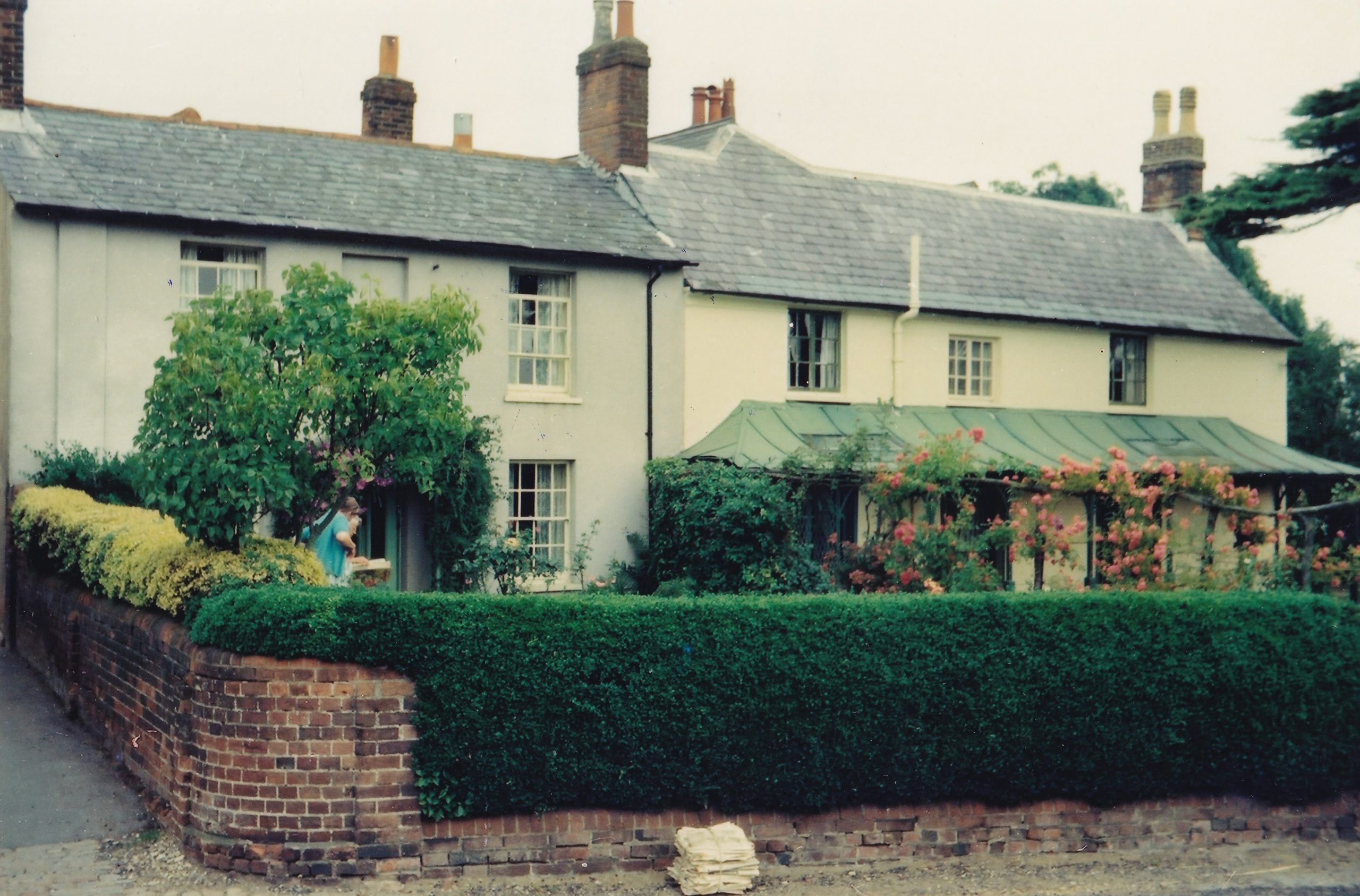
Mr. and Mrs. Durham were at The Manse (Rose Cottage), and then Kingscote was Mr. and Mrs. Maling. Mr. Maling had the cress beds down at the bottom road between the bottom houses and Latimer crossroads, so quite a lot of cress beds down there. He also had a horse and cart. And I believe I’m right in saying he used to take the cress to Rickmansworth. Both he and his wife were great gardeners and always had a garden full of vegetables, a greenhouse full of beautiful flowers. Very interesting couple. And at the back of their house is a small, or there was, I don’t whether it’s still there, a small building that used to be a Danes school, years ago.
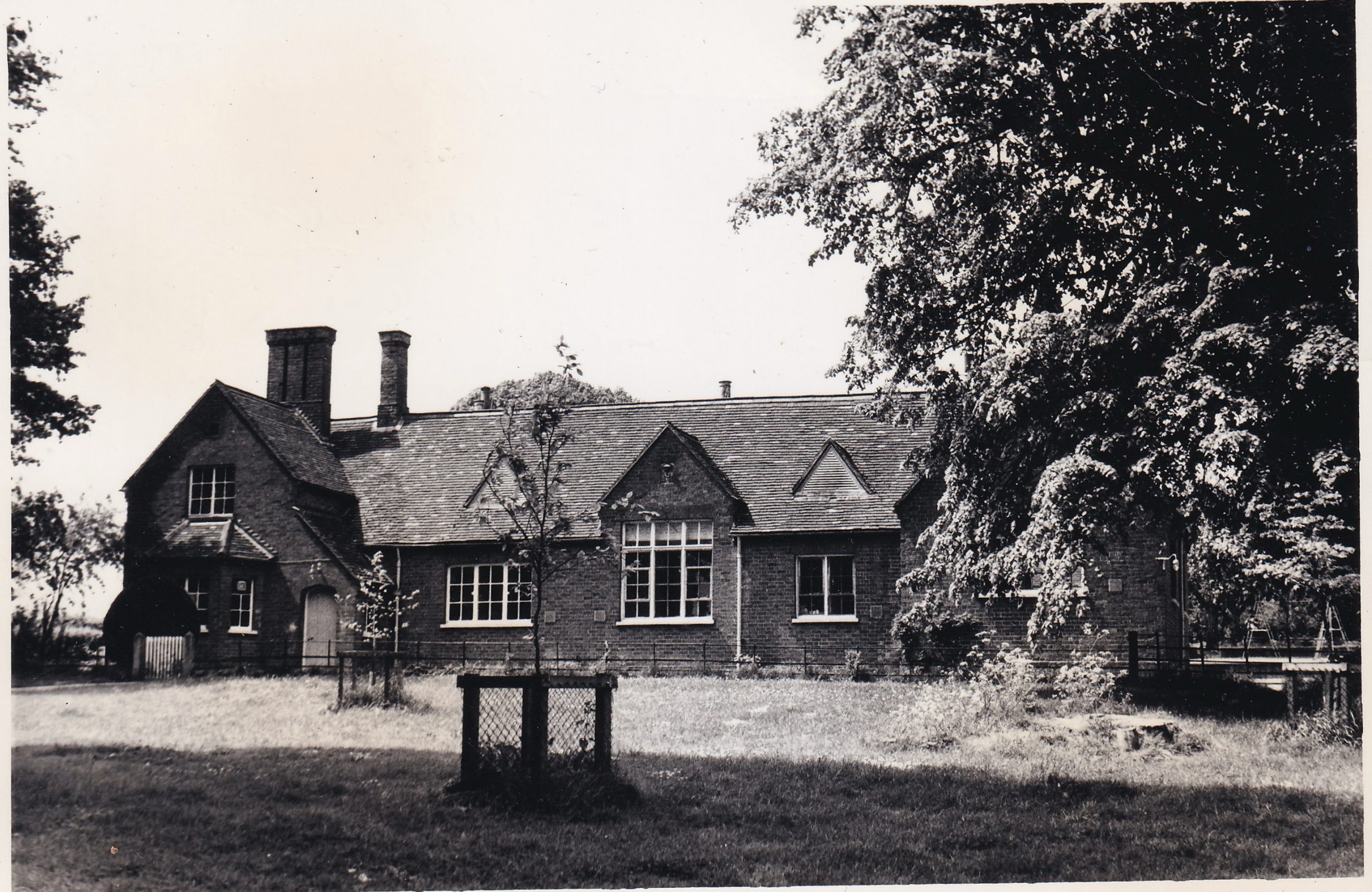
The School was Mr. and Mrs. Life. Mrs. Life was the head teacher. Of course there wasn’t this area of it. It was only the buildings, the other side. And my father-in-law did the beetle stoves, which was the form of heating in the classrooms. He lit them early every morning to give heat and got the fuel in and my mother-in-law cleaned the school. Now, the method of cleaning in those days, obviously you couldn’t, I mean, not floors like this, they were wooden floors, but you swept them with damp sand and that would clean off any mud or anything like that, and then they would be scrubbed once a year probably. I was told a story by Mr. Foot, who was the chauffeur for the Dowager Duchess of Bedford when she lived down at Woodside, that there was a teacher, a Mr. Dolman, who walked from Buckingham to Little Chalfont for a conference, and he was actually put up at Hughes, the butcher (Home Close) for the night. Imagine walking that distance now! The youngsters, when they went on to their next school, went to Germain’s in Chesham. And they’d walk from here to Chalfont to catch the train again. Can you imagine? Imagine youngsters doing that in this day and age?
The Red Lion:
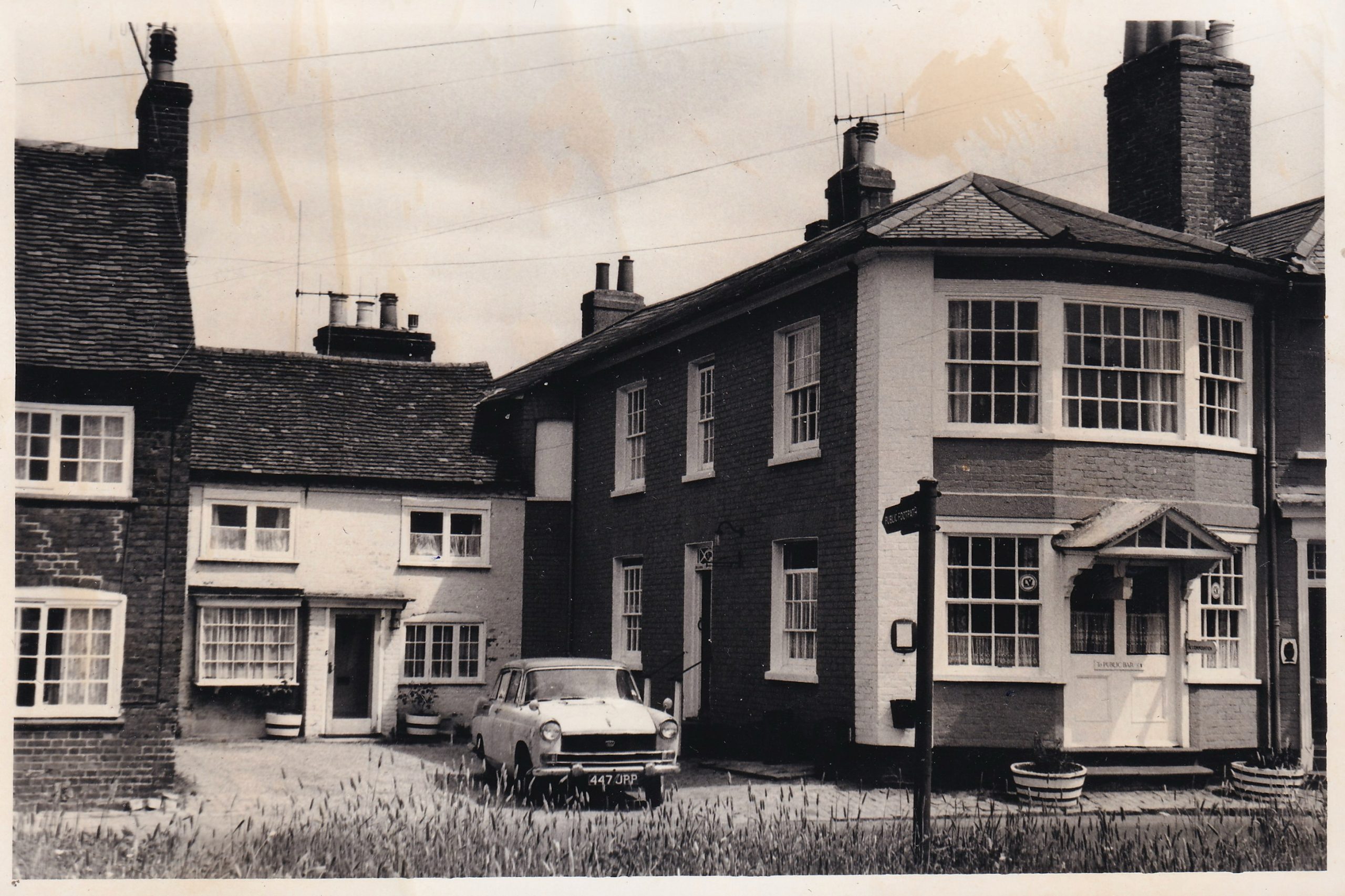
The Red Lion. The Red Lion was only a beer house in those days. Mr. And Mrs. Bateman, who were getting elderly managed it, and they had an elderly dog, which I understand, I didn’t go in there, but I understand this dog used to be sat on the bar and used to be given drops of beer in a saucer. And this dog would be taken out religiously for a walk every day. But of course, that got older and older and towards the end of its life, it was taken out in a push chair, and in the winter it would sit wrapped up in a shawl sitting there being taken out for its walk most religiously, right to the end. I think I’m right in saying, but I’m open to correction, that Mr. Bateman actually died and that’s when it changed hands. And then of course, modernization came into it.
In those days, as I say, it was a beer house and there was also a big hall, corrugated iron hall at the back where the Royal Order of Buffaloes would meet, and every year they had their annual service at the church, would march down with a band from the Red Lion down to the church for their service and march back up again. Now I don’t know why Banner Rest was called Banner Rest. The only explanation that I’ve ever managed to get was, was it anything to do with the Royal Order of Buffaloes? If anybody’s got any idea, say now.
My husband and I got married and our reception was up in this hall and Mrs. Bateman said that she would do some sandwiches and she would do some little rock buns. Rationing was still around and a friend of my mother’s managed to produce some wine, so that there could be a toast. And I think there were 25 of us and we had a service in the church and Whitaker Wilson was the organist. And I had asked him if he could play Greensleeves, which I love while uh, we were signing the register. But he said, ‘Indeed not. That’s not church music‘. So that was declined. Anyway, we had a very nice service in church. And then we travelled from the church, having come out under an archway of hay forks. We went up on a tractor and trailer sitting on bales of straw, which was not very warm. So it was January the first. But we got up there and I, as I say, I think there were 25 of us. And it cost three pounds, and the bill was, I don’t know whether Mike (Norris) may have changed it up there. I don’t know. I gave him the bill and he used to have it on, on the wall in the bar, but I, whether it’s there now, I don’t know, but that was three pounds, which of course was a lot of money in those days.
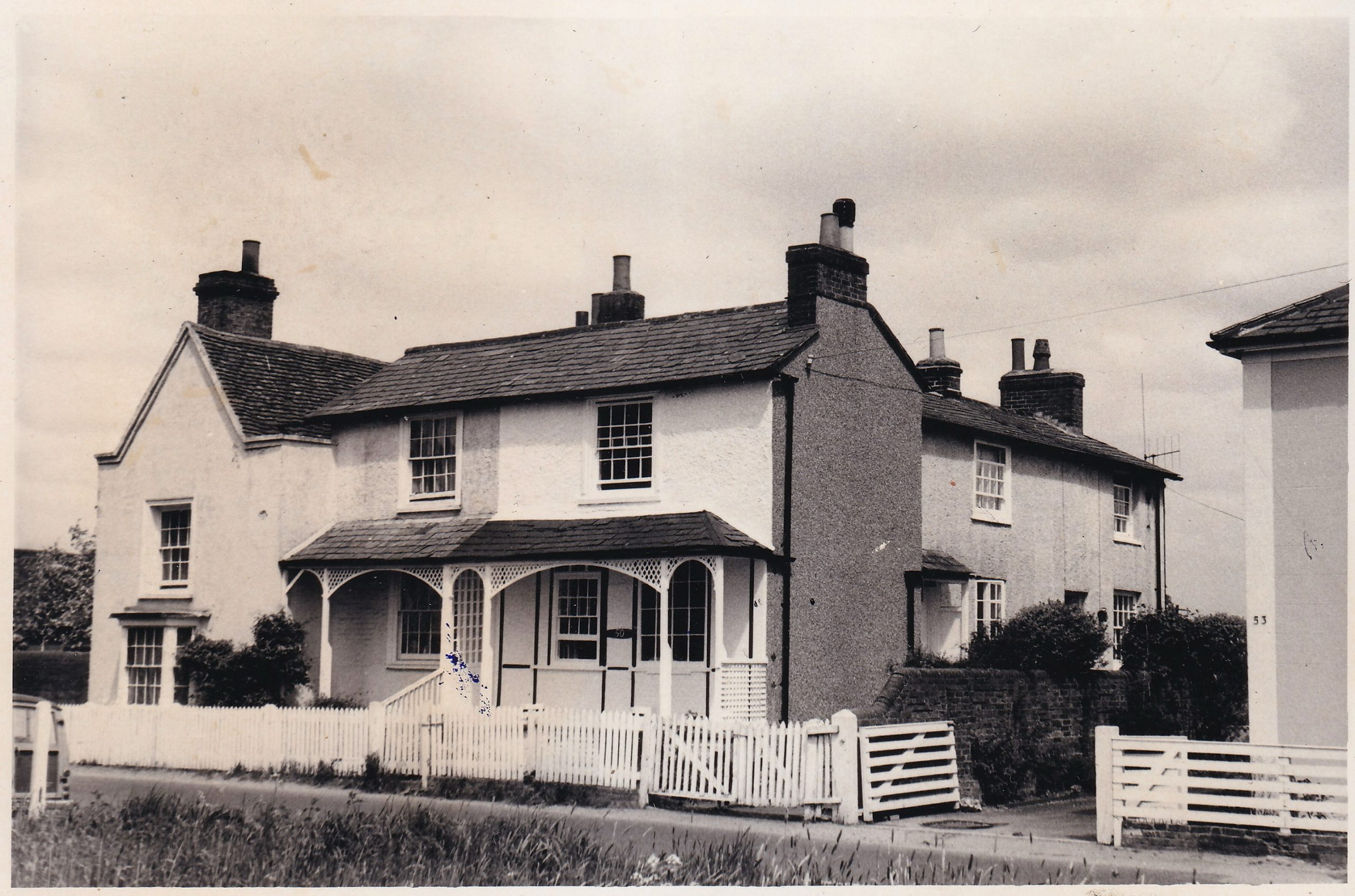
And also associated with that, my poor mother who was desperately short of money, as you will appreciate. By that time, we were living in the little cottage, which is now in with Nan Howes house (Grafton Cottage, No 50), but at the back (No. 51) there was a little one up, one down, and my mother and I were living in that And the, the baker came, only one cake, you didn’t have tiers. And my mother said, ‘How much‘? And he said, ‘12 pounds‘. And I saw the shock on her face, I thought for goodness sake. And I said, ‘Don’t worry, don’t worry. We, we’ll, we’ll try and help you. Don’t worry, it’s all right‘. But anyway, later in the evening after work, the chap turned out up again who delivered it to apologize that they’d made a mistake. Somebody had said, how much? And they’d said 12 pounds in weight and not the price of the cake. So, uh, we lived to tell the tale.
I can remember Mrs. Bateman doing her washing with a dolly tub outside the back door. You know, a dolly? Mm-hmm. Yep. One of the loveliest pictures that I have of the Red Lion was at one stage they were hauling out timber, I don’t know where from, but somewhere along the bottom road. And the horse limbers were coming up the hill and they’d have a spare horse which they’d hook up to bring it up the hill and then the horse would go back down for the next one. And I can remember seeing, it was a lovely sunny day, a row of limbers outside the Red Lion. All the horses with their nose bags on, and the men with their pints and their doggy bag. It was a lovely sight, I can tell you.
Beyond the Red Lion:
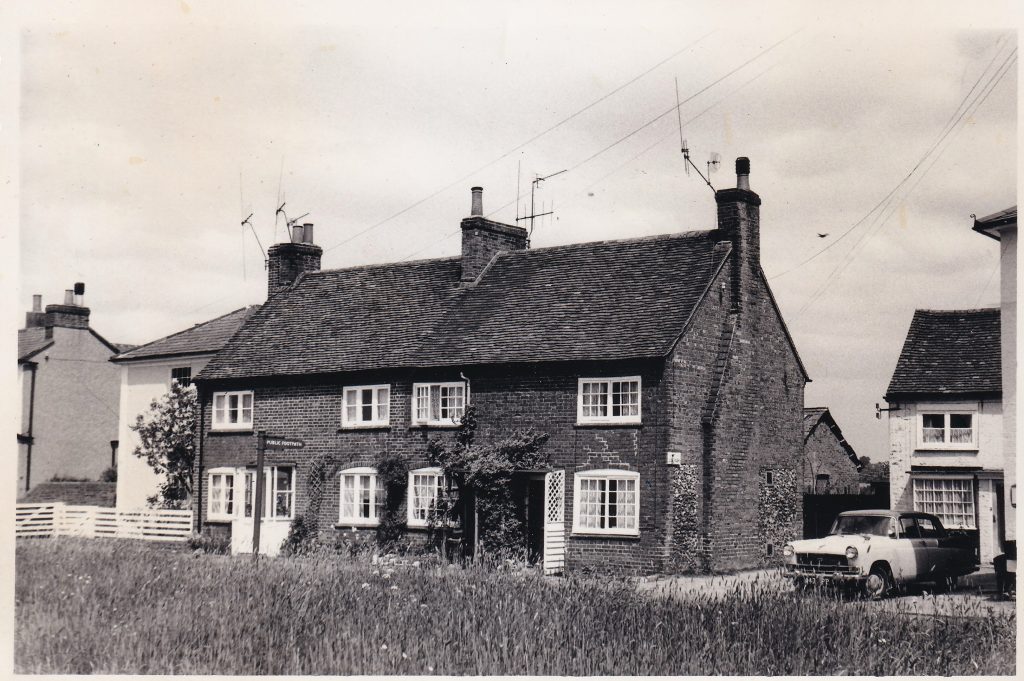
Next to that were the two cottages (Nos. 1 & 2 Red Lion Cottages) which belonged, well, were rented to the Red Lion and Mrs. Bateman retired to one I know. And then the house was Mr. Biggs, the estate worker, and there was Mrs. Biggs and Mrs. Biggs Jr. who was the son John’s wife. John was actually a prisoner of war on the Burma railway and didn’t get out for quite some time, but they were eventually allocated one of the council houses (Bedford Close). She was there with, I think it was two small children and there was another boy Ben, though it must have been quite full up, but then that wouldn’t have been unusual in those days. It wasn’t quite so bad then, but my husband could remember sleeping top to bottom with his brother in a bed, and that’s what a lot of them did. Sometimes, you know, four or five in a bed. And the idea was that when a family, as they grew up, then the older ones, if they didn’t marry, they would move out and they’d go and live as lodgers with an old couple whose family had grown on and, and left homes. So there was always a, a circle of people going round in the village. You didn’t stray too far away from the nest in those days. In fact, Bill, my husband had hardly gone anywhere until we had the children, and I persuaded him it might be nice if we could try and take them to the sea. But he’d been born in Chenies, he was happy in Chenies, and that was fine. There was no necessity to go anywhere else.
Then the next house was the carrier’s house (No. 53). Had been prior to when I came there, when Len Buck married Connie Hughes, who was Jack Hughes, the butcher’s daughter, and they married and they lived in there, but it used to be the carrier’s yard and the carrier would go up twice a week up to London and apparently would take up the silver from Lord Chesham if he was having a dinner or something up there. And he would take it up hidden in the laundry baskets. Another little story that I was told that this carrier had a rather old mare. And of course when they finished their work, these men with these heavy days as they were in those days, they usually went to the pub before making for home. And the horses brought them home and that horse would turn straight in, and as you well know, it’s an acute turn to go into that yard. The horse would turn itself in there, knew exactly where to go, and finally she went blind. And yet she would still bring him home safely and turn into the yard.
There used to be more cottages round at the back of both the Red Lion cottages, demolished ages ago, and also behind Nan Howe’s (Grafton Cottage, No. 50) and Coral’s (Plough Cottage No. 52) and all, all the way around the back there. Of course a lot of you will remember Coral. I’m so pleased to see the house done up at last. It was that house, her father came there in in the early 1900s, and there again, there was a soil thing down at the bottom of the garden until, I think it was after the estate was sold, and then they, they had to put a flush toilet in there, which was quite exciting. They put it in at the back of the back door. but I can remember it was awful if you had to go down in the middle of the night because you could hear the rats running around. And although it was a long way down, you had this ghastly feeling that they might jump up and nip you while you, while you were sitting there.
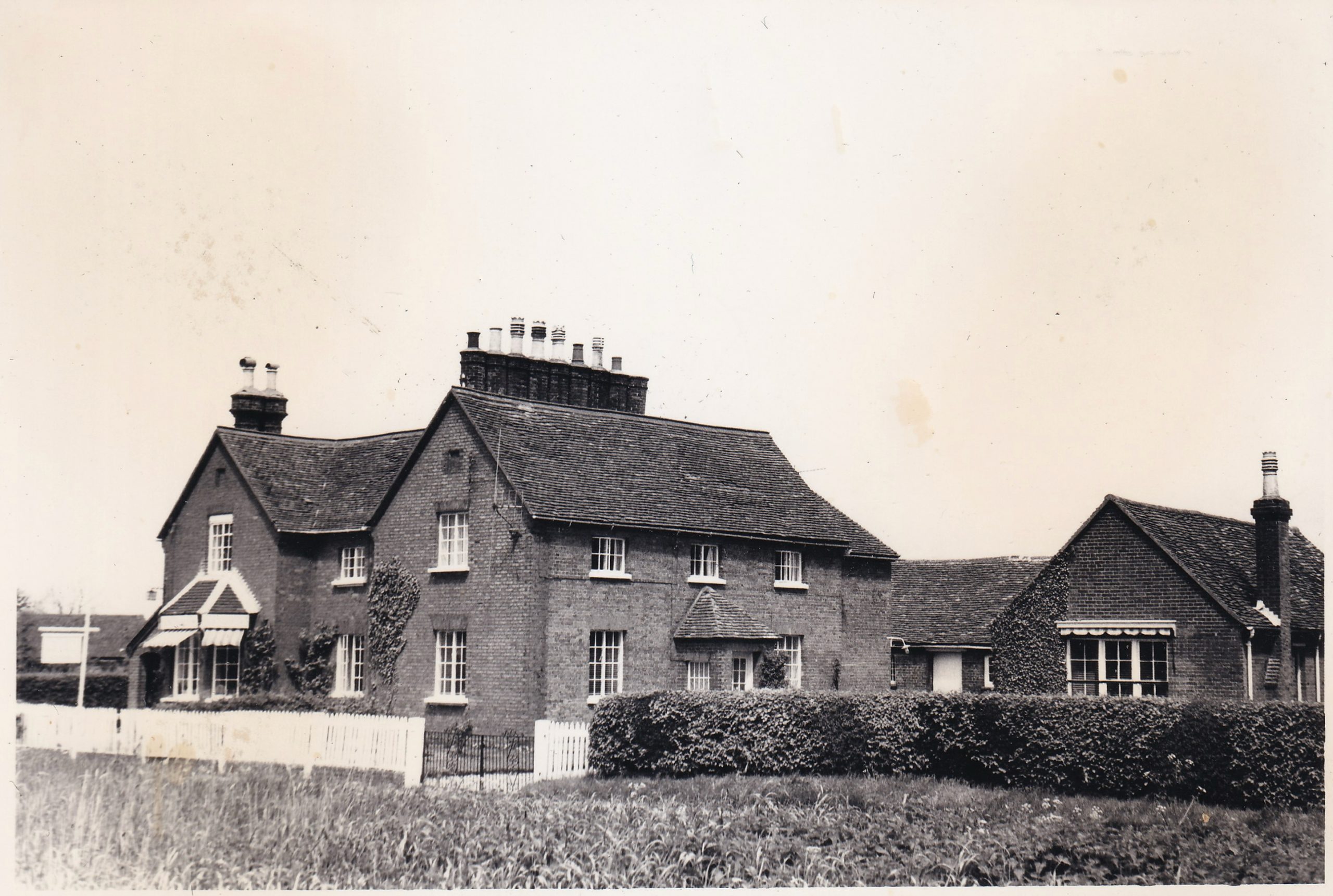
Then there was the village shop, Home Close, which was Jack Hughes (John Martin Hughes), the butcher, and he used to slaughter there, but that had finished by the time I came. But he used to milk, I think, it was six to eight cows. And at one time I did help out there and worked there for a period of time. He had the last working horse in Chenies, Brown Jack. And Brown Jack was retired and lived for a year or two, but then unfortunately his teeth went and he couldn’t feed properly, so they had to put him down. There’s a photo at the back of Brown Jack.
Miss Palmer:
There was a Miss Palmer who was a school mistress here, and she had been down to the station and been somewhere for the day and coming back in the dark up Green Street. And there were some gypsies up there. Now they were the true gypsies in those days, the Romany gypsies. They didn’t interfere with you or anything like that, and you would never know where they’d been except that they trampled the grass down. And she walked past them and kept, kept on up Green Street, and then she suddenly could hear a chain chinking behind her. She couldn’t hear anything else. Just this chain. And this apparently completely spooked her. Uh, and she, she started thinking she’d got a ghost behind, and so she walked faster and faster and the chain came, kept coming faster and faster. And when she nearly got to the top of Green Street, when she met somebody from the village. He said, ‘What’s the matter? What’s the matter? You seem to be upset‘. And she said ‘I don’t know what’s behind me. There’s something chinking with a chain or something behind me‘ and he said ‘Where?’ She said, ‘I don’t know. I haven’t looked‘. And so he walked behind and it was one of the gypsy donkeys that had managed to break its chain and was walking up behind her. Poor Miss Palmer.
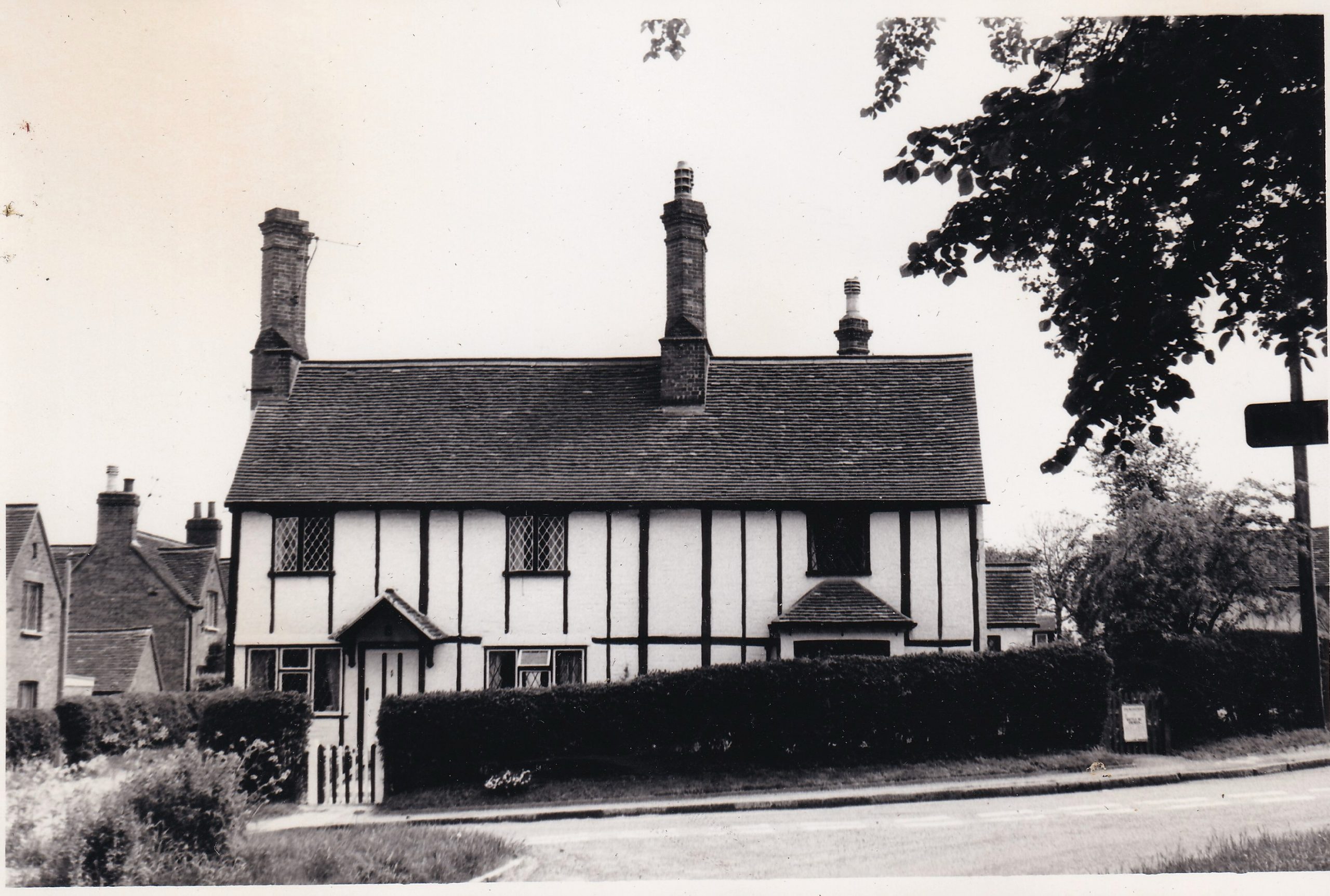
Miss Palmer’s sight began to go. And so Lady Russell, who as I say, lived at Chenies House, which was the Rectory, paid for her to have lessons to make baskets, and she was moved into the house right on the corner, the other side, where the Jackman’s lived (No. 29). And she lived there and she used to have a big hat stand out in the garden and hang her baskets and things on there so people could see them as they went by. People could go in and buy them if they wanted them. Then her sight went further and so she was moved over to the last cottage at the end of the cottages, along the top of the, the green (Old Well Cottage, No 42). And she finally went almost totally blind. She could just about see what she was doing in the place, but I got to know her quite well because I was going round to my in-laws one day and she was at the back door and she said ‘Who’s that’? And I said ‘It’s Joy‘. And she said ‘ Can you read this letter book for me‘? Which I did from then on. I did all her correspondence and dealt with her letters.
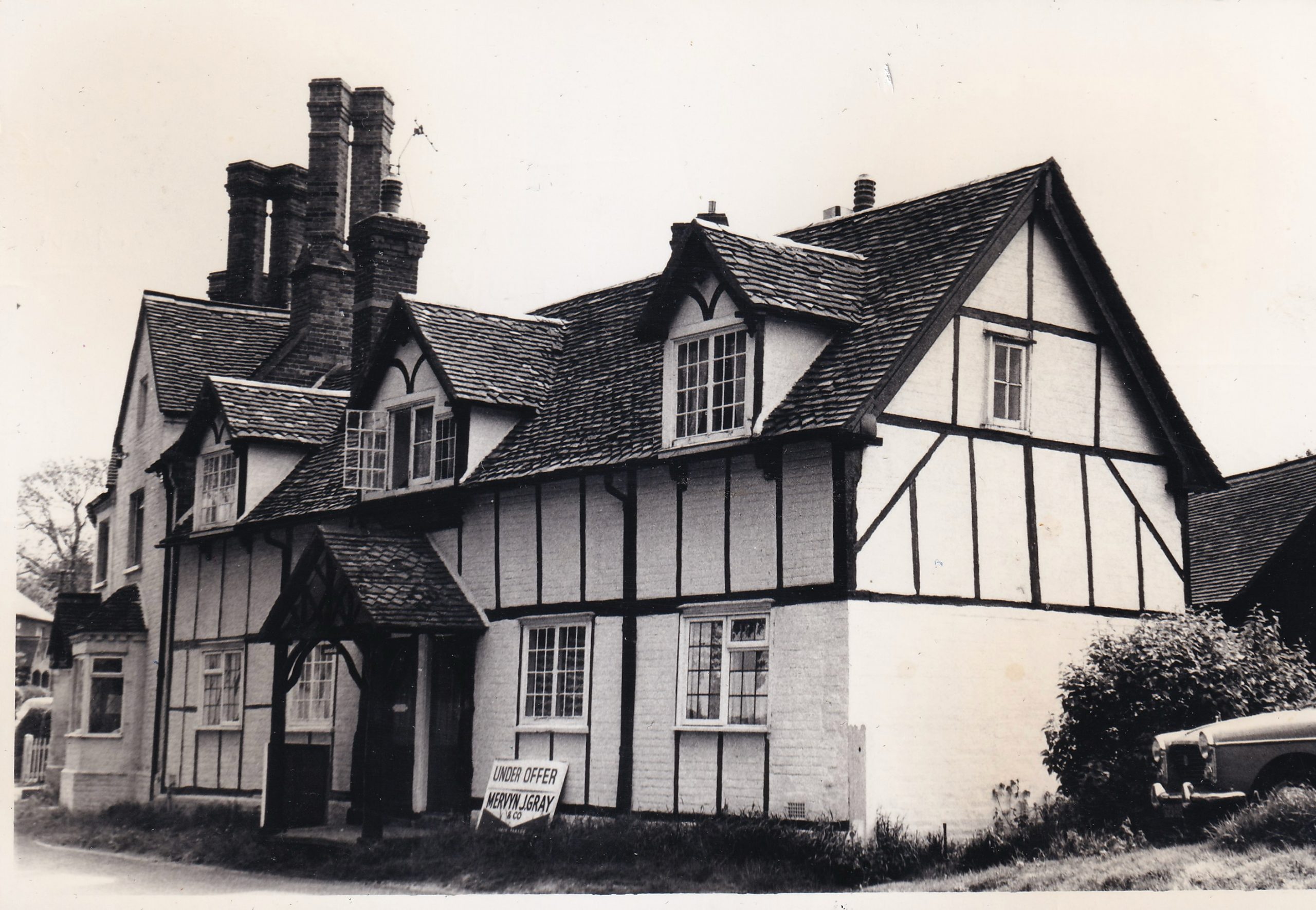
One interesting thing, which shows you a time of life. She had always said she wanted to be cremated and that was her wish. Now she only had a niece and a very distant niece who she only saw once in a a blue moon. She had showed me where the money was. She hadn’t got any insurance or anything, but there was 50 pounds in this drawer, and she wanted to be cremated. And when she eventually died, the niece turned up and the undertaker turned up and I said, ‘Well, she’d always expressed the wish that she wanted to be cremated‘. Well, that wasn’t possible for that price. However, the undertaker, bless his heart, said ‘Well, look, if you just have a cardboard coffin, I could probably do it for you. I’ll do it for you for that money‘. And of course, one had to go up to Golders Green in those days for cremation. So this coffin was one of those, you know, flat pack, you know, and, and, and you just built it up round. So she was taken off and then I can’t remember how I got up to Golders Green, but anyway, I got up to Golders Green. Oh terrible, those four chapels. I don’t know what it’s like now, but, um, anyway, trying to find the one that you were supposed to be at and finally found it, went in and the coffin actually went out to the side. And so we had the service and then the time came for the coffin to go out and the mechanism and the rollers was absolutely dreadful. So all the cracks and everything were gaping, and one had this horror that the thing was going to suddenly collapse altogether, but it did go out safely. And it was some months later that I read that Golders Green had got to have all their mechanisation redone. About time too, I think, but she got her wish, so that was the main thing.
The Post Office:
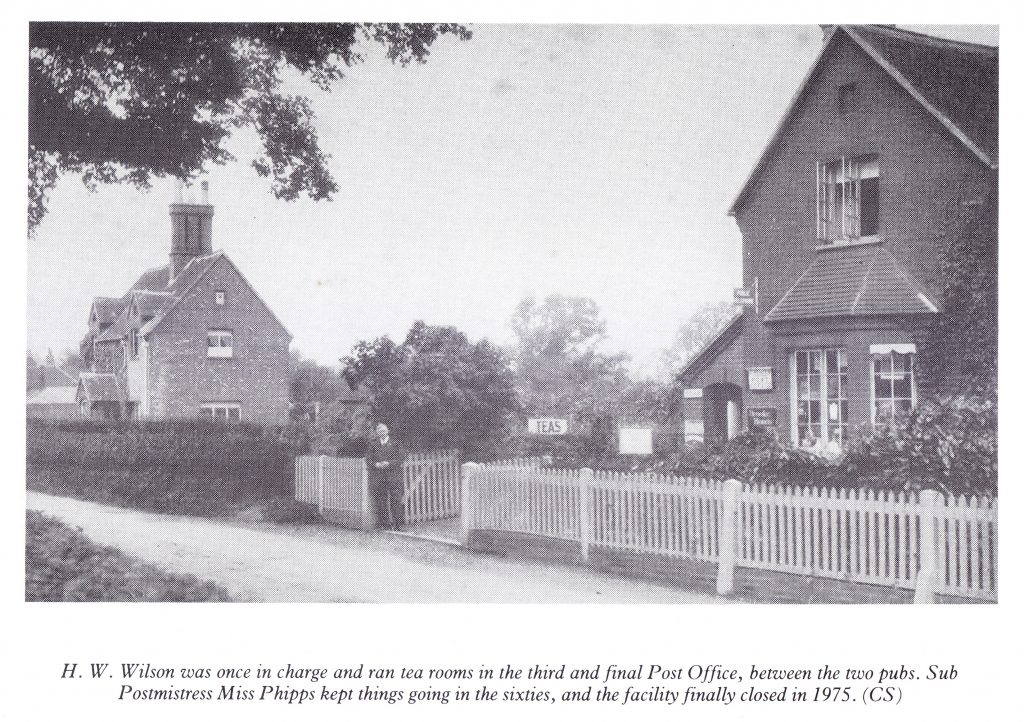
Next to that was the village shop (Old Village Shop), and Mr. And Mrs. Wilson lived there. Mrs. Wilson used to do teas in the gardens. Mr. Wilson had a very good shop in there and had the Post Office. They were known for quite a distance for their home cured hams that they used to do there, and people would come quite a distance to get this ham. And then a tragedy occurred. Mrs. Wilson walked into the latch of their door. You know how the cottage latch sticks out from the door, walked into it, and it killed her. Terrible tragedy and poor old Harry struggled on for quite a long time. Eventually he was beginning to fail and the shop was beginning to fail and, and finally that finished. The Post Office then went to Field Cottage for a little while with George Tomlin and then he gave up and it looked as though we were going to lose the Post Office, but Trevor Jones, who was the Parson, took it on, and I think if I remember rightly, for a couple of mornings, uh, a week, he would run the Post Office up at the Rectory and you could go up there and, you know, get pensions, stamps and the necessities of life from there. But of course, when he left, then the Post Office went and, and that, that was it.
Christine Leach: ‘Joy, can I come in’?
Joy:‘Yes do‘,
Christine Leach: ‘I can add to that. Unwittingly, we moved into the village in 1961. You had milk tokens when, when you became pregnant. I used to have to go up to the Rectory to get my stamps, and he was never there. I wrote to Watford GPO and said, could they please tell me what times I should go to the Rectory. So I was pushing the pram up when he wasn’t there and they came down on him like a ton of bricks. He should have been there. And they took the license away from him and gave it back to the village shop. He wasn’t doing his job properly‘.
Joy: ‘Oh, that’s interesting‘.
The Bedford Arms:
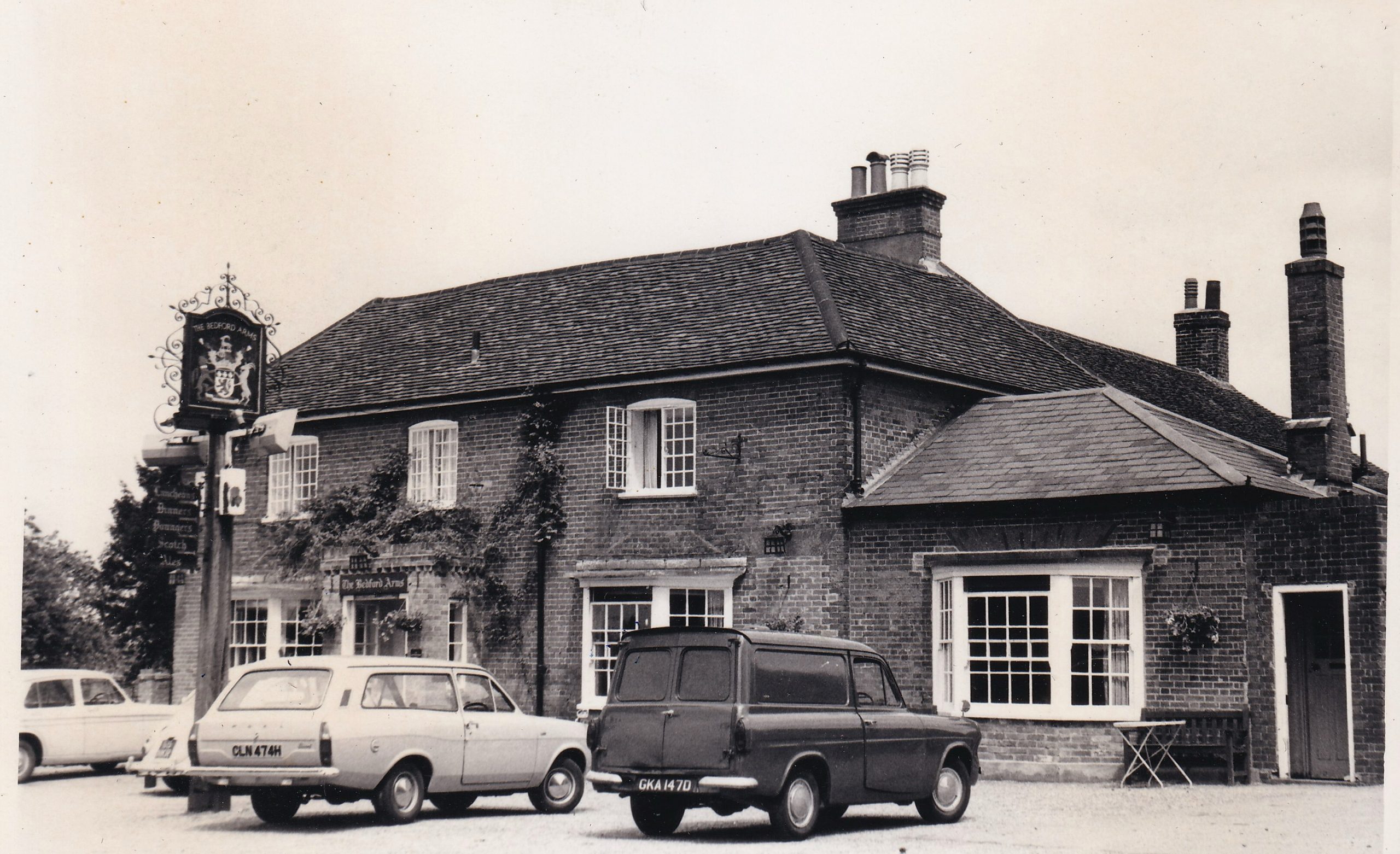
Then the Bedford Arms, Mr. and Mrs. Hockley, Mr. Hockley kept a couple of Jersey cows and he used to put them in the field opposite the Bedford arms, lead them out on the end of a halter and put them out there. And I can remember at one time he kept one of the heifer calves. Obviously, I suppose one of the cows was getting elderly, so he used to have a young heifer as well that went down. He also used to take them down sometimes to the paddock just at the top of the hill below the Le Neve Fosters (Hillside Cottage, No. 18), that little paddock there and he used to put them in there sometimes. The field opposite the Bedford Arms. At one point somewhere I read it, and I’m sorry, I’d never actually recorded where I read it, the rent for that small field, at one time, was enough rushes to light the church for a year. Think how much they would have to produce. When the railway came through, after that, they used to have a Brougham and a horse at the Bedford Arms to take people down to the station. As I said to you, the Duke of Bedford used to stay there sometimes as well.
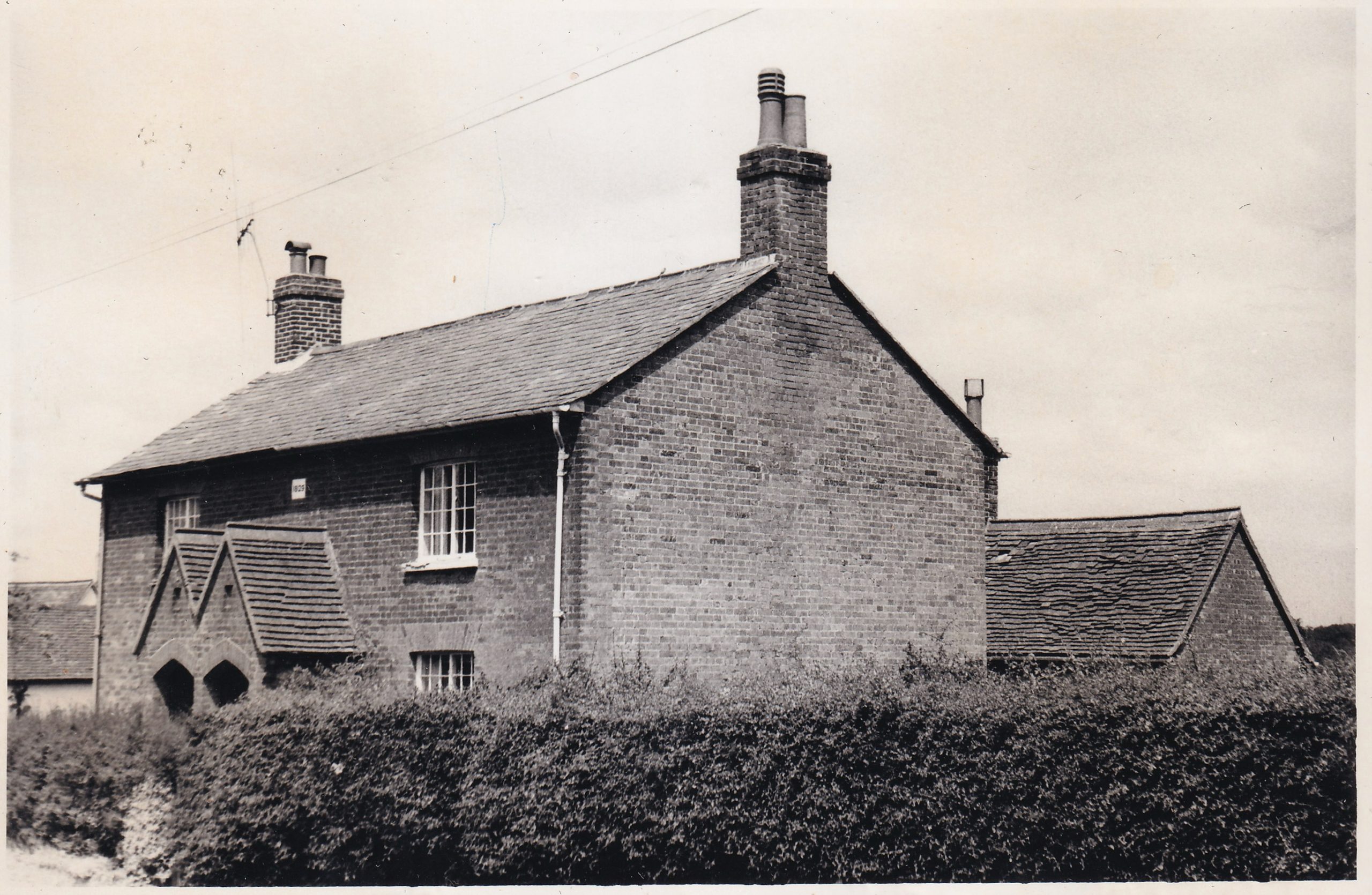
If you come on down on the right (No. 31) was Mrs. Puddephat, who was the widow of Mr. Puddephat who had been head gardener at Chenies House and would obviously lived in the, the Lodge in those days. And Mrs. Holloway, who’s husband was one of the estate workers and that cottage (No. 30) was the Post Office at one time as well.
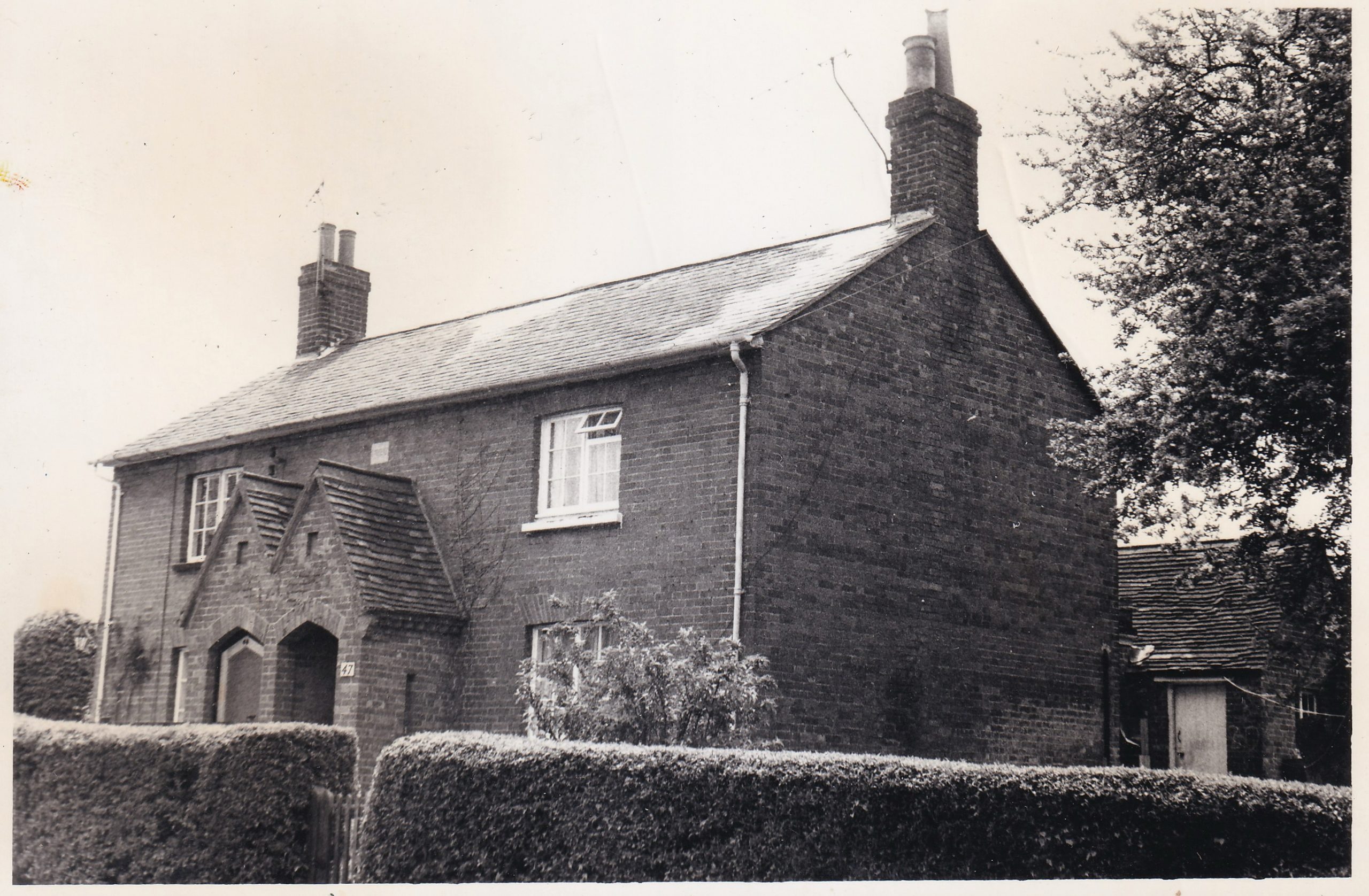
On the left, as you come down from the Bedford Arms, there was a retired couple there (No. 48), and I’ve racked and racked my brains try and remember their name and I can’t remember. But she used to wait on him hand and foot and do everything for him indoors, which, okay, we did. And years ago, the wife was responsible for the house. The husband was outside. She waited on him hand and foot, and she became ill and eventually died. Everybody was saying, ‘I don’t know what he’s going to do now. He’s on his own, you know, he’ll never manage‘ And the house was always spotless and he cooked for himself and everything. So he rose to the occasion when it was necessary. The next cottage (No. 47) was attached to the Manor House, one of their cottages. I remember there was one time, there was one of the German prisoners of war there with his wife and actually, I still correspond with them.
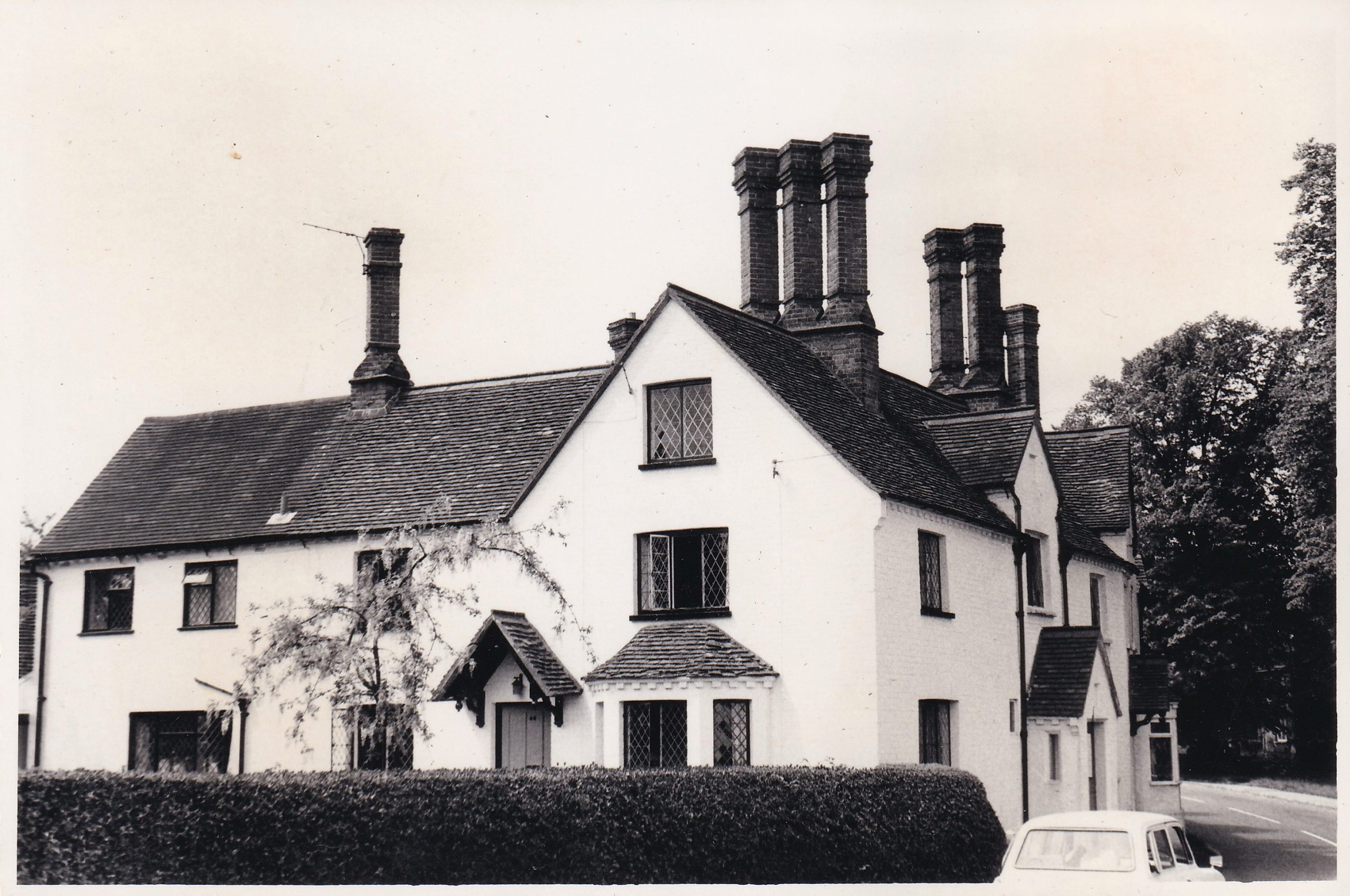
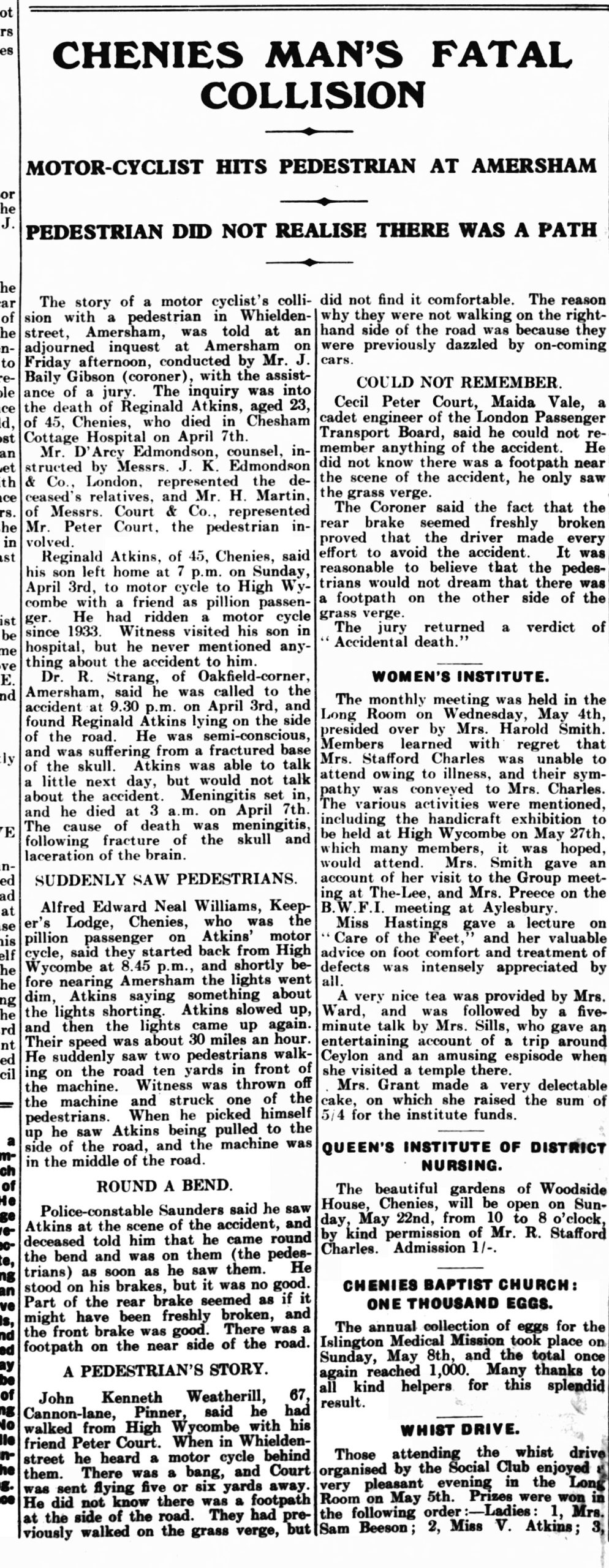
At the top of the green was Mr. And Mrs. Barden (No. 46). Mr. Barden, I believe, was in wood or timber down at Chesham. And of course, Chesham in those days was full of wood turners doing the legs and everything for the chairs, High Wycombe, so forth. If you went round any of the little back lanes, you could see them working in their huts at the bottom of the garden. Next to that were Mr. And Mrs. Atkins (No. 45), who became my in-laws. They still had a pump over the sink for their water. The bath was a tin bath that was brought in on Saturday night, and there was a copper that served the whole yard, so you had to take it in turn for hot water for the copper to do the bath. They had son Bill, who I eventually married. They had another son, Reg, who unfortunately was killed in a, a motorbike accident when he was 21. And a daughter, Vera, who was the mother of Gwen, who I’m sure you all know. She was there with the twins, Gwen and Michael, which was very, very exciting because people hadn’t had twins in the village in living memory so that was very exciting. So that cottage was well full.
And Mr. And Mrs. Cant who worked at Tom Dickens’, they lived in the next one (No. 44). And then he retired and moved into Back Lane as you go up to the Mount. And Tom Dickens’ son married and lived there for quite a time. Then there was Miss Austin (one half of Old Well Cottage, No. 42) and Miss Austin had worked for the Russells’ who lived up the old Rectory up here, the old one, Chenies House.
Mount Farm & more:
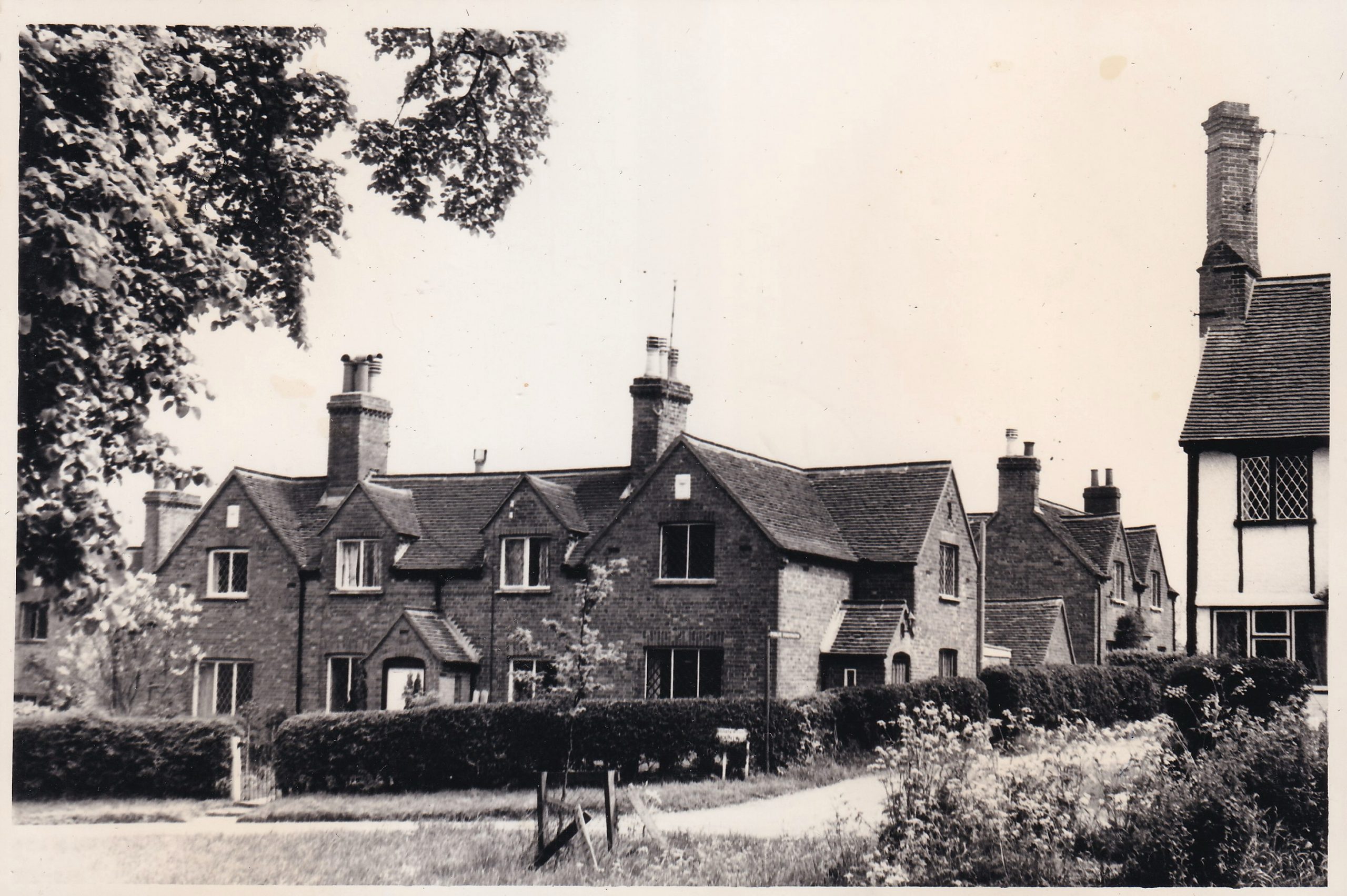
Then the house that I said to you where Ms. Palmer lived at the top (No. 29), also at one time, had a black shirt, one of Mosley’s’ followers living there. Can’t remember his name, but it caused quite a stir in the village for a period of time. He eventually disappeared, but he was there for a period of time. And then the next house was Stan Pickton’s (No. 28).
Then Mount Lane was Mrs. Body and Miss Body (No. 26). I think Mrs. Body was a seamstress, Miss Body played the organ at the chapel. I hope I’ve got it right. And Mr. And Mrs. Cant moved over, as I told you, from the cottages at the top and moved in there.
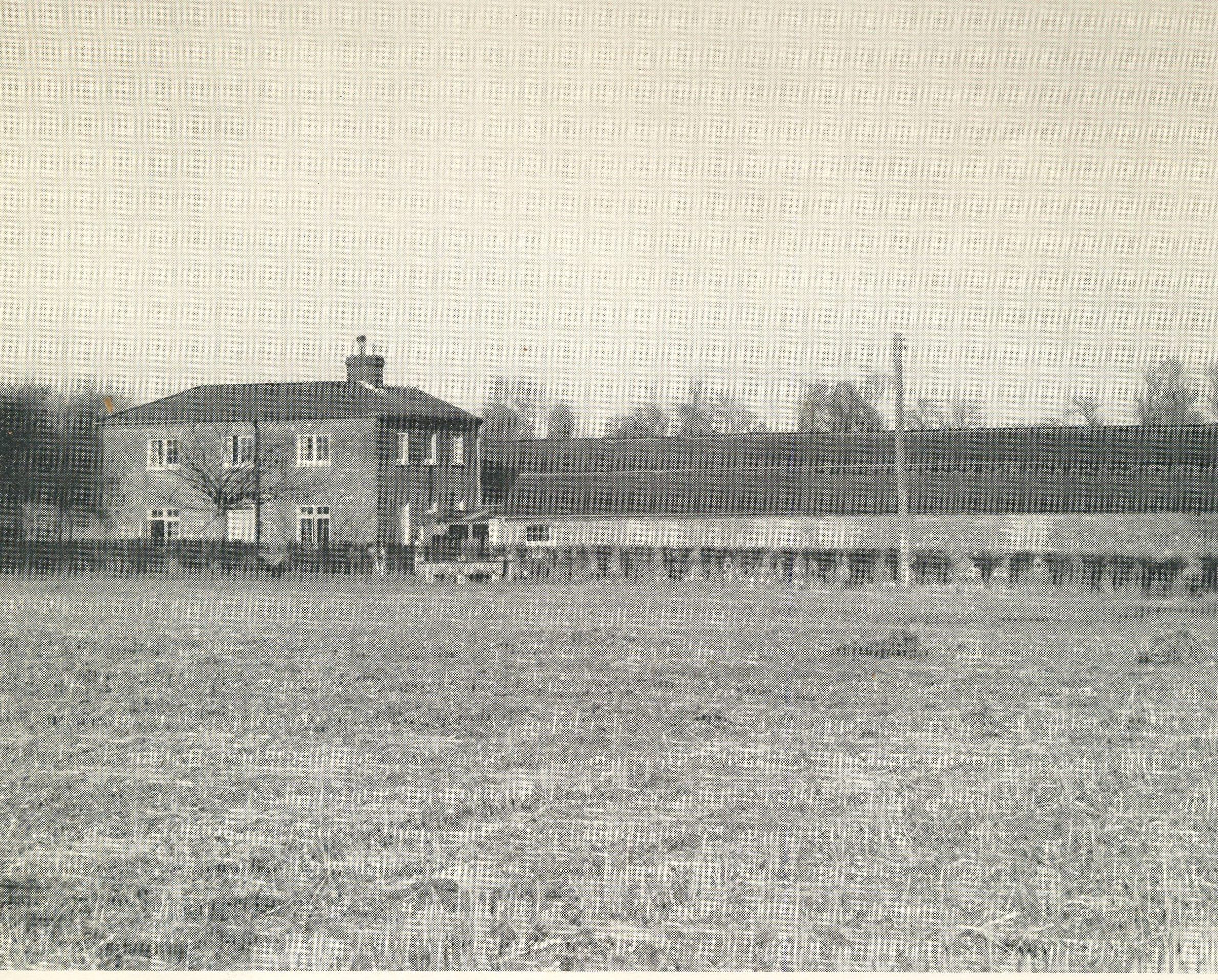
Photograph from the Chenies for Sale Catalogue
Mount Farm was right at the top. I milked up at the Mount for some time and I used to love milking up there because, especially sort of in the, the springtime when the cows had been let out in the fields and you’d go up there and the world was yours. There was no sound of traffic or anything. Only nature sounds, the birds and animals, and I used to love milking up there. And then of course I used to have to come down, as I say, to bring the milk down to the Manor House. So that was working up there. We did have one episode there where we had the top door of a loose box fell off its hinges, and had been tucked away in the corner of the loose box, actually before I started working there. And then we had a batch of calves in there, which were being bucket fed and one died and there didn’t seem to be any explanation. And then another one died, so an investigation had to be gone into, and it was found that the calves had been licking this door that had been at the top. And of course wasn’t knocked around like the lower door was, there was lead in the paint and, and that’s what had killed them. One of the, the mysteries that you, uh, come across.
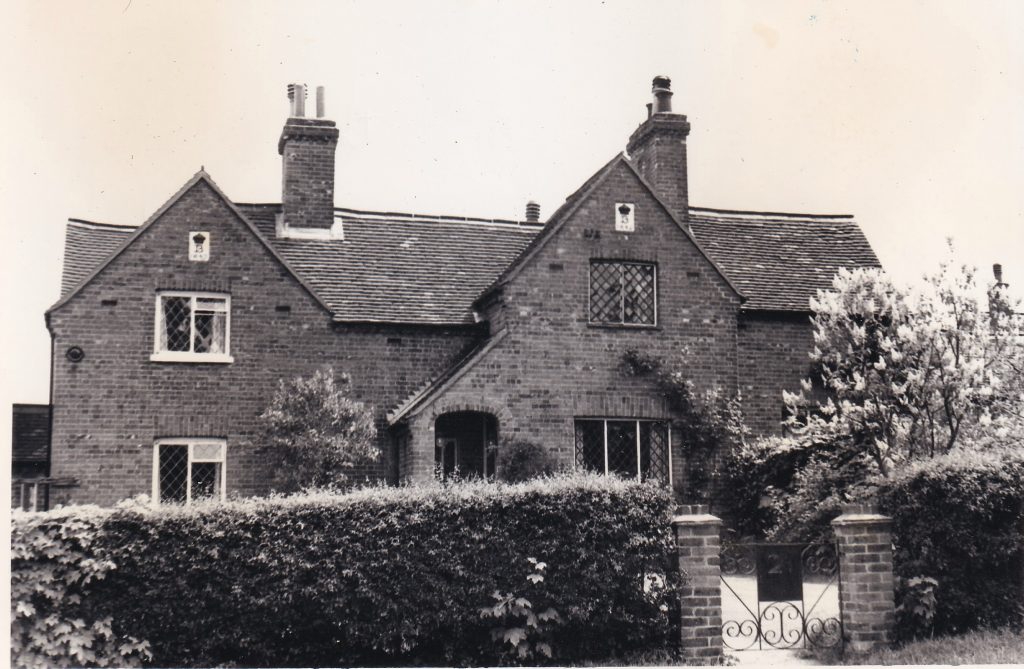
And we come back down the lane and the house on the right (No. 25) was Sammy Beeson and his wife and Len Beeson, the one on the, on the corner at the bottom of Mount Lane. And Flo Beeson, his sister, took next door (No. 24). And then you went on down those houses and Charlie Simmonds and his family were in the bottom cottage, the last cottage down there (No. 20). Charlie was cowman at Fitches (Mill Farm) and milked down there, and they had two teenage youngsters. In one of those cottages, old Smith had told me that there was an old lady who used to make gloves out of leather for the men when they were shocking thistly corn, so that their hands didn’t get too raw with the thistles, so she used to make these gloves.
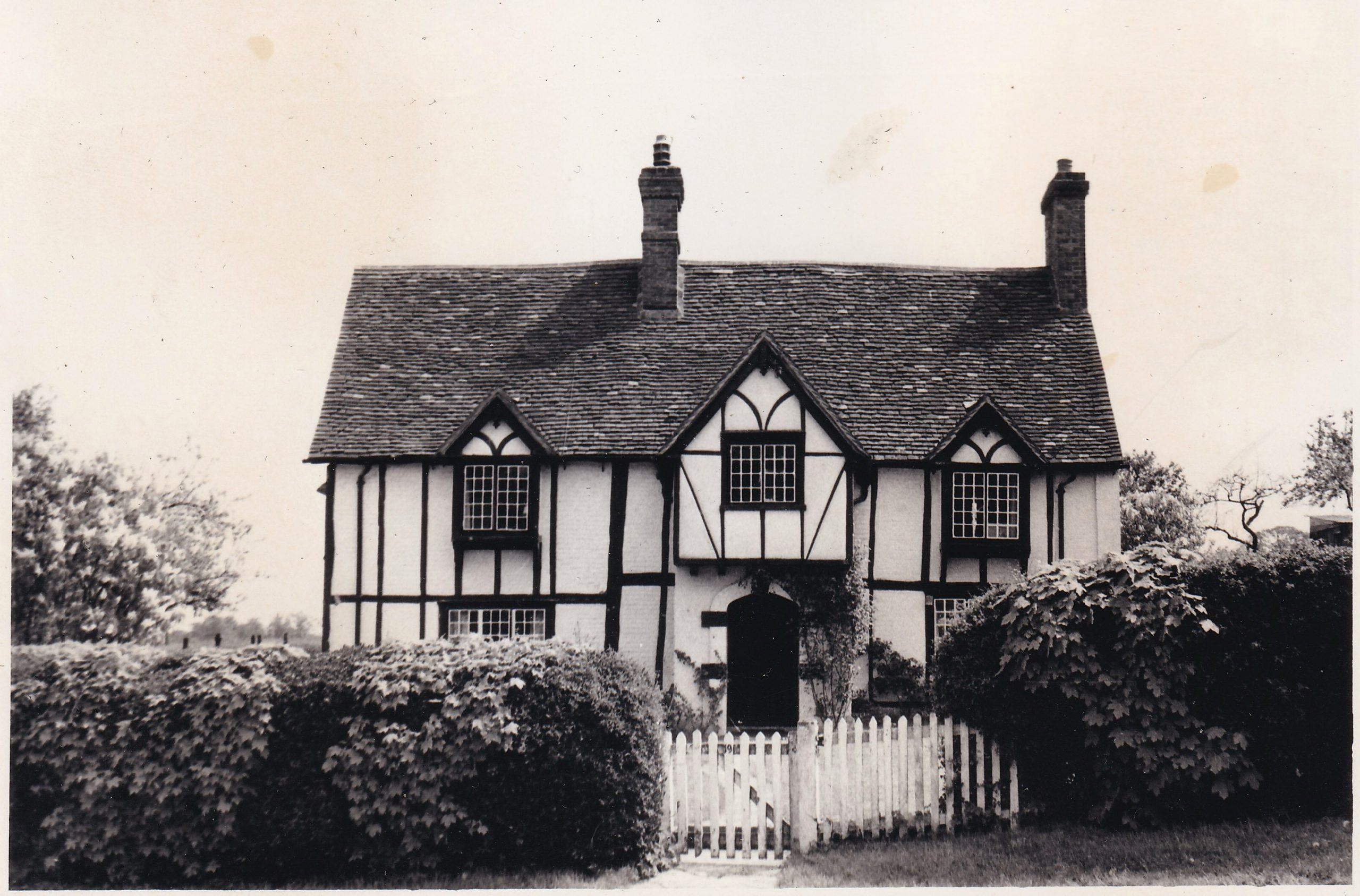
The house that’s Le Neve Fosters, two cottages (now No 18, Hillside Cottage). The one that looked out over the valley was Mr. and Mrs. Hounslow and their son Walt. Mr. and Mrs. Hounslow died, and Walt eventually went into one of the flats up at Bedford (Close). But he was the village roadman, and kept all the road and all the ditches tidy. Another of the characters. Sadly, he was coming home from the Bedford Arms one night and nobody quite knows what happened, whether he slipped off the curb as you go round the corner or something like that. But anyway, somebody hit him and, um, broke one of his legs and he dragged himself back to the flat. But eventually had to have it amputated, which was rather sad. He was actually discovered, somebody saw him up the staircase to where…
Nigel Ince: ‘There was a window. Yes. Saw him waving‘,
Joy: ‘Yes. I had ah, had an idea it was you‘,
Nigel: ‘I just used to take him whiskey when he was in hospital‘,
Joy: ‘Ah, right‘.
Flash & Chenies House:
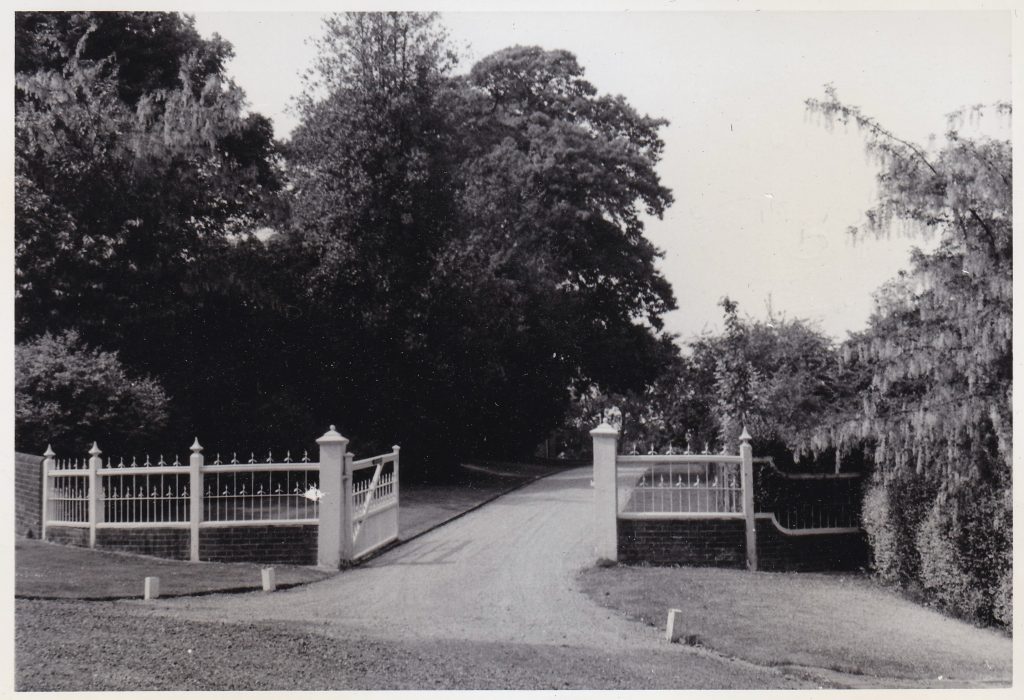
I had Flash, as I told you, and she was allowed to go in the park at the back of Chenies House, but there was no water there, so I was to go up to the kitchens of the, the old Rectory, Chenies House to get the water. So I would knock on the back door and the cook would say ‘Come in‘. And I’d say ‘Can I have some water, please‘? And he’d say ‘Yes‘. And one day he said ”I can’t, I don’t understand why you come up and fetch it. Why don’t you bring her to fetch her own water’? You see? Joking. So I took him up on it and I took my halter down the next time. And Flash could be very, very good and very quiet until her blood came up, you know? So I took her to the back door. ‘Come in’, ‘can I have some water, please’? ‘Yes‘. So I walked in with her behind and he turned around. ‘What you got there‘? I said, ‘Well you told me to bring her to get, get her own water‘. So anyway, she ended up being fed with carrots and porridge oats. She was having a whale of a time when one of the other doors over at the back opened and in came an officer, ‘What’s this horse doing in a kitchen‘? So I turned around and slunk out. And I took her back to the field and I thought, well, I shall have to go back because I can’t let him have a telling off. It was my fault for going in there and taking him up like that. And so I slunk back again and knocked on the door and went in and I said ‘Have you got into trouble‘? And he said, ‘Well, he was a bit wild‘. So I said, ‘Well, where can I go? Tell me where to go and I’ll tell him it was my fault. Why I did it‘, you see? He said, ‘No, no, no. Don’t worry about that‘. And I said, ‘No, I’m not, not having you getting into trouble over it‘. He said, ‘That’s all right. It’s dying down now. Don’t worry‘ he said, and so we got away with it. I hope he didn’t have too much punishment for it anyway.
And of course after they left there, the house was then in infested with dry rot, and I think the idea was to do it up and then like again, a lot of these old houses all over the country, after the war, the people couldn’t afford to put them right afterwards. The, you know, money had gone down the drain and eventually it was sold and demolished and another house put there, and again, it has been replaced again . I have to say, that house they’ve got there now, it is very clever. It reminds me so much of the old house. Yes, it’s new. Obviously it needs to be weathered and that, but it reminds me very much of the original house, which was a lovely house.
St. Michaels’s Church:
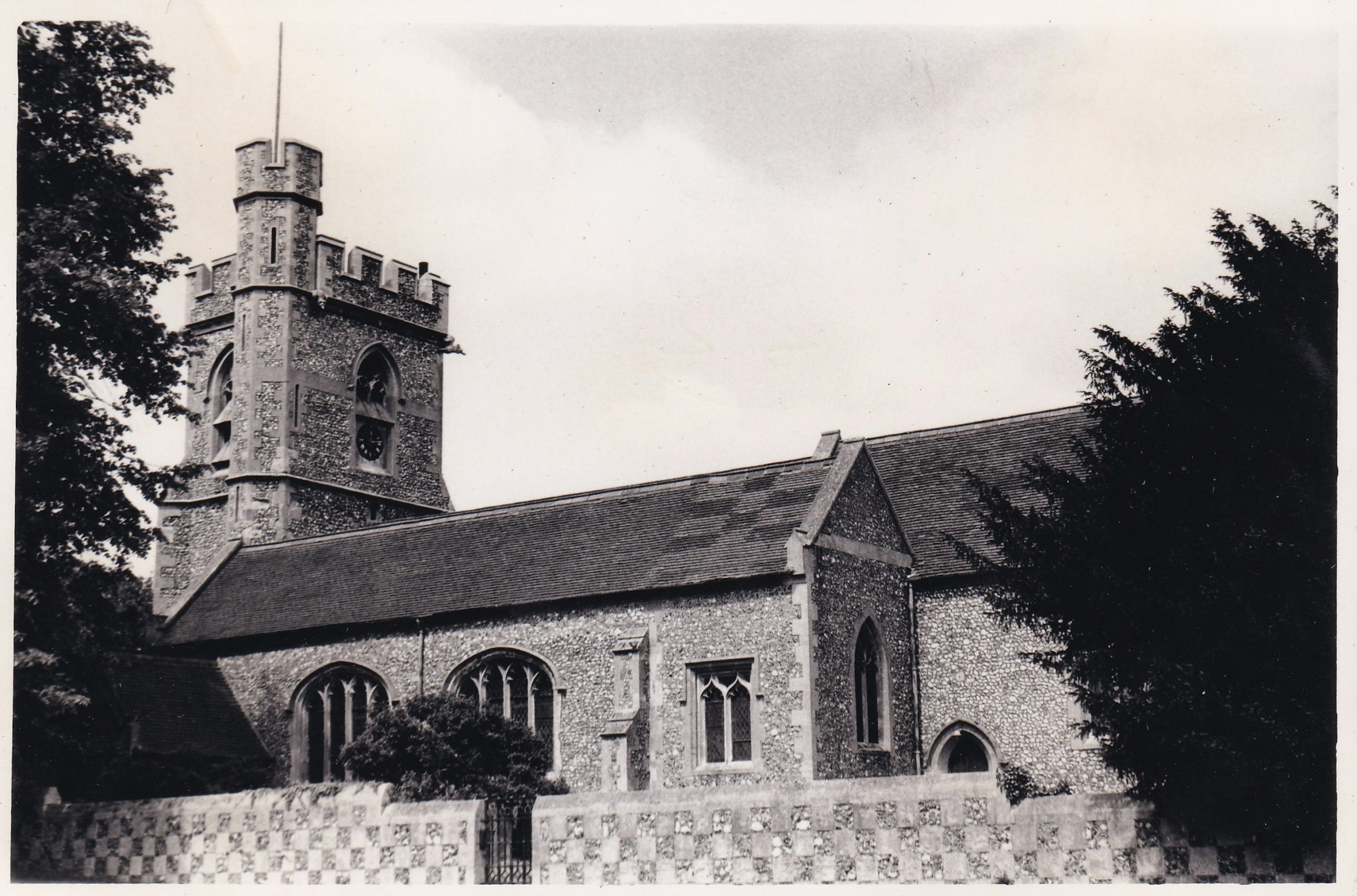
The church is much about the same as it was in those days but the organ pipes now, are in front of the ringing gallery. In our days that was open so you rang up there openly, and you could watch when the bride came in. And I remember once seeing a bride come in and there was a big radiator at the back of the pews with the big tap at the bottom and the bride turned the corner and her veil caught on this and she was suddenly back. Of course we could see this from the gallery you know. Oh dear.
But old Fred Smith told me that Lady Ela Russell used to come over from Chorleywood House to church and would come in from the chancel door and the choir sat in the front pews of the church. I mean let’s face it, you didn’t mix with the riffraff. So the choir had to sit in the front pews of the church and there would be a chair at the end of the pews where the bowler hats were piled of men of the choir.
Archie Grover was one of the bell ringers. Archie Grover used to cycle from Amersham every Sunday to church and go to church afterwards but Archie used to come with the old oxford shirt. Many of you will remember, cotton shirt with a sort of a black stripe in it which didn’t have a collar on it, you added the collar. Well the working men very rarely added the collar and Archie would come to church in his shirt without a collar and tie and one of the then church wardens said to me one day ‘I think it’s disgusting the way Archie comes to church and hasn’t got a collar and tie on‘. I said ‘Well at least he comes to church, and many collars and ties are walking around and they never come to church‘ but he always came and was very regular.
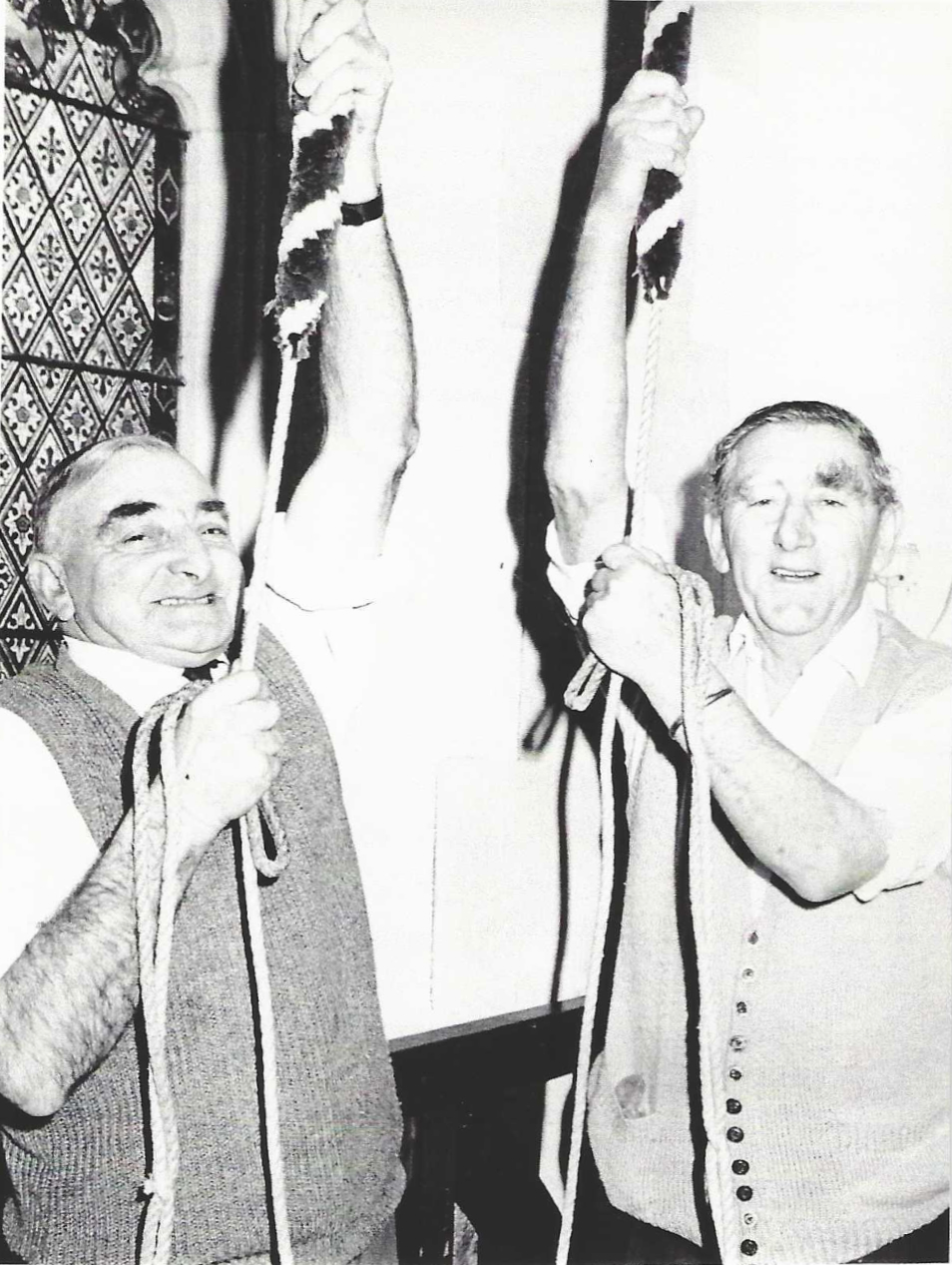
Likewise Joe Goodman who lived at Common Wood never failed to come to church. He, if he couldn’t bike, he walked across the fields hail, rain, sunshine, snow, whatever, Joe would be there to ring the bells. And he did that for many many, years. And we used to ring the New Year in and Joe would go to the Bedford Arms before he came up there. And we rang the New Year in one time and then said cheerio to everybody and went home and the next, we were married by then, next day, about middle of the morning there’s a knock on the front door and there’s Joe, and so‘Hello Joe what’s the problem‘? so he said ‘Well I thought I’d better come over‘ he said ‘Because you were the only woman in the belfry last night’ he said ‘and I apologise for what I said‘ Well, l I haven’t a clue what Joe said. He probably swore, I don’t know. I didn’t hear it and anyway, having worked with Arthur Newns, he wouldn’t have said anything I hadn’t already got in my vocabulary. And I always had the greatest respect for Joe, because, for him, I’ve had some quite well educated people be quite rude to me through the years and that man would bother to walk over from Common Wood to apologise for that. I took my hat off to him. He died recently. Another great character, very faithful, that man. Bill Bastin from Chorleywood was bell captain for a while and then, that was after the war because of course no bells during the war, and the Home Guard used the tower as their watching point obviously. And after Bill Bastin ceased to be captain, Bill (Atkins) took over and after Bill died, Joe took over and then Joe retired and went up to Norwich to be near family.
All the woods on the estate were marked with iron markers, like that, with the date when they were planted, and one piece was planted the year I was born and that’s down the church alley and the sort of triangular bit that goes like that with the one path goes along the top one goes down there. Right. That was the year I was born and the sign was there and I often wish I’d kept it. Goodness knows what happened to them. I expect they got buried in the soil or pinched or what, I don’t know, after the estate went but I always remember that and that’s grown quite well like this old thing has.
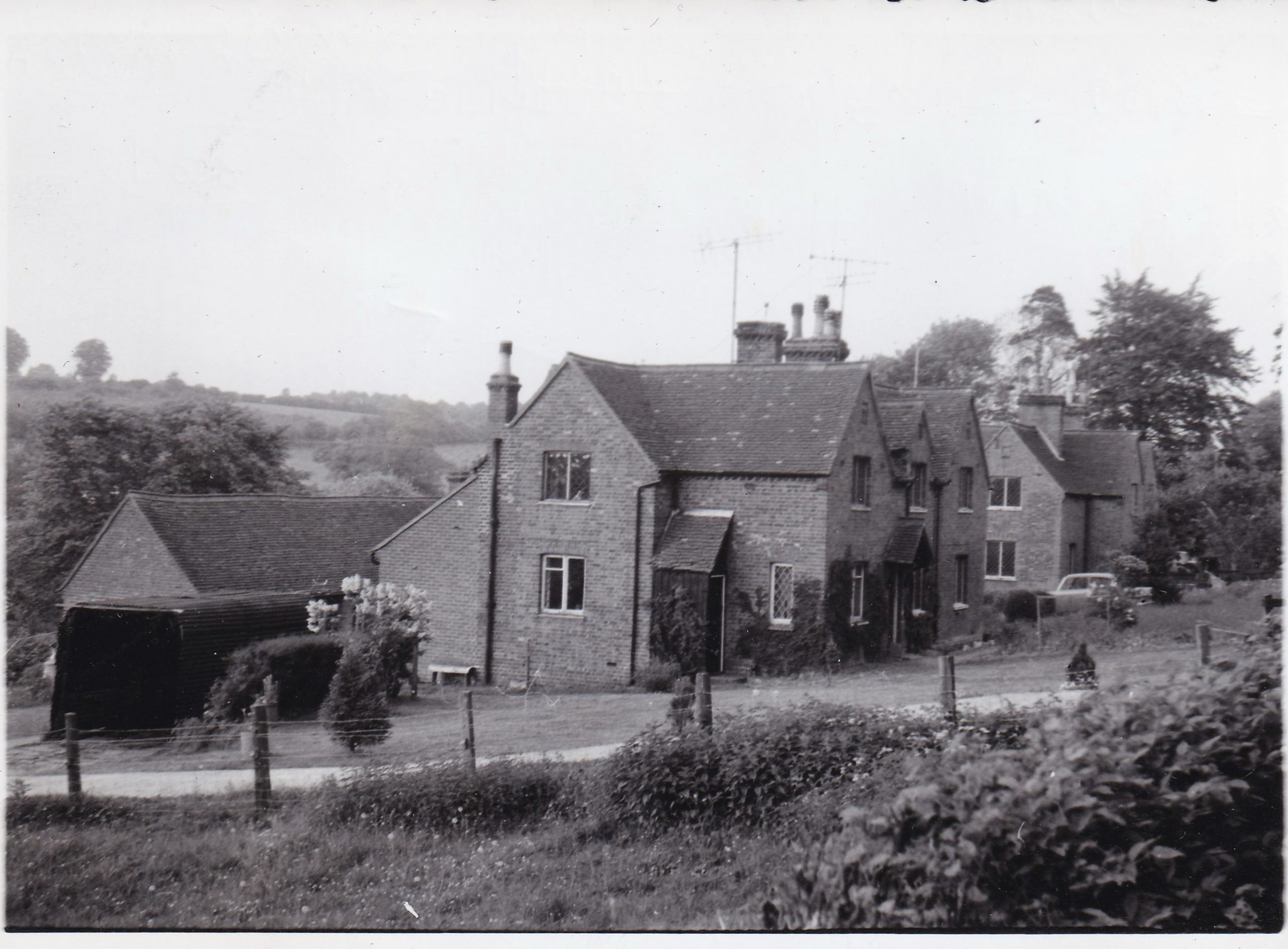
There was one old chap who lived down in the cottages at the bottom called Bill Mason, and Bill Mason worked on the Manor House as well. He was long retired but came back for the war effort and everything and poor old Bill, one day I’d taken some milk down to the dairy and we’d let the cows out and he was washing down. And as I walked through the door, he threw, he didn’t realise I was coming through, he threw a bucket of water and completely drowned me. And the poor old chap was so embarrassed by it I can remember. Anyway when he died he hadn’t got any relatives or no relatives in evidence anyway and so he was cremated but what to do with the ashes. So it was decided between different people that his ashes should be sprinkled down in the wood which is usual route coming up through the wood to go to the Bedford Arms.
The cemetery, you may be interested to know, used to be many years ago, the fish pond for the Manor and there were buildings along the back of it. And that was eventually filled in and then of course, years afterwards, that was given for the cemetery and my father-in-law used to do a certain amount of the grave digging at one point. And he told me once that he’d almost finished digging a grave one time, he’d got the ladder down into it, when suddenly it started to fall in because it’s all made up ground you know, started to fall in. he managed to get out just in time but lost the ladder. That was still in there. And babies were buried under one of the trees in the churchyard if they died very young and and he said he could always remember his father carrying the coffin and taking it out there. I was told this by my husband because, he had a younger sister who died, quite, I think about at the age of two or something like that.
Mrs Kilby & others:
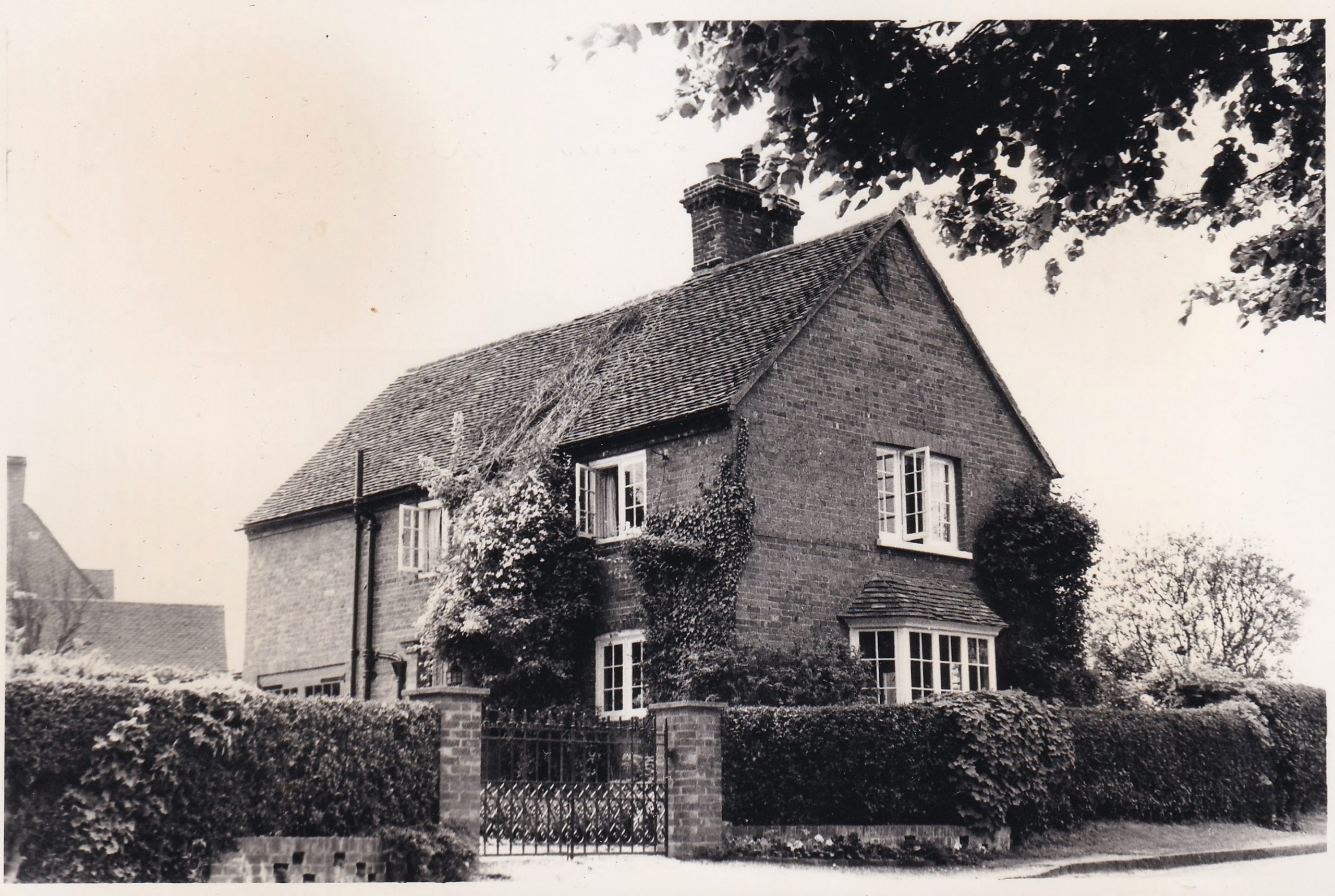
Number 41 was Mrs. Kilby and Mrs. Goodson. Mrs. Goodson was a widow of a previous landlord at the Bedford Arms. Mrs. Kilby was the widow of the last footman at Chenies House when the Russell’s were there. And my husband, uh, as a young man, uh, well boy and young man, he used to go over there before he went to work, to scare the birds out because they had the orchard as well when the, the cherries were getting ripe. And he also, I think towards the end of Mr. Kilby’s life, used to go in and help shave him and, and that sort of thing. And a long time ago, that was a foundry and there used to be, in the village, I don’t know whether they’re still around, but there were two troughs that were actually made at that iron foundry. I had the name on and everything, whether they’re still around, I don’t know. The Watlington’s was one of the names that was there, and one of the Watlington’s was the grandfather of Coral’s mother. So the, there’s a connection there.
I did have one funny thing happen. We used to have roadsters in those days, men who would come round, and there was one particular roadster called Irish Mike, who was, would walk down from London, I don’t know whether it was from the Whitechapel area or where they, you know, deal with a lot of these travellers. But he would walk down and he had definite places where he would do little jobs. And I know a couple of people along Devonshire Avenue that would give him a meal and he’d do work for them in the garden. And one night I’d come up to do something in the church. It was after dark and I’d locked the church door and suddenly there was a knock on the door. And so ‘I wonder who that is’. So I opened the door and there was Irish Mike sitting there. And so I said, ‘Hello Mike, what’s the trouble’?, he said, ‘Well, um, where’s his Reverence‘? So I said, ‘Well, he is on holiday. I’m afraid‘. So he said, ‘Oh gosh. Oh, cause I want somewhere for the night and he would’ve seen to me‘. So I’m thinking, what can I do with him for the night? Because we’ve long gone where you could say to somebody, can you sleep in your barn for the night? Or something like that. And haystacks had long since disappeared, otherwise they could, you know, get in under the haystacks for warmth and everything. So I wracked brains, what could I do? He said ‘I missed the last bus. If I could get to Chesham Bois, the Rector there will allow me to sleep in the old school‘. Well, we never had a car, so I couldn’t do anything about that. So I said, ‘Well, you had better come home and have a meal’. So I took him home and we gave him a meal, and in the end I went round to Andrew Life and explained the situation to him and said, ‘Would you be willing to take him over to Chesham Bois‘? I think Andrew was a little bit dubious about the situation, but in the end he agreed and so off went Mike with Andrew and Andrew gave us a knock on way back and he said ‘It’s alright. That was fine‘. He said, ‘I waited until he went up to the front door, opened the front door and the rector said it’s alright that’s fine, down the drive’. So we knew that we’d sorted out Irish Mike. No doubt. Irish Mike is long time gone, but he was a, a regular one along the top road.
The Manor Cottage at the end of the Manor just up here by the church was the Miss Norths lived there, two elderly sisters who did the school dinners in the Long Room. And the Long Room in those days was, as you might say, the Village Hall. Everything took place in the Long Room and in the room above was the billiard room and all the men of the village could go there and play billiards, so that was quite useful. The Miss Norths did these wonderful dinners and everything. They had a little fox terrier, who, as Fox terriers often are, was a devil’s disciple. And there was a lady at Chorleywood who had two deerhounds. And she would drive up and park the car at the bottom of the court and then go up and take them through the woods for a good old run. But if this little devil was out there, it would fly out and catch them under their tummies, like they did, you see? And the poor woman in the end had to give up doing it because these dogs were absolutely terrified. You, if you happened to be there, you would see them going up, shaking all over, going up the drive. It was too, too cruel.
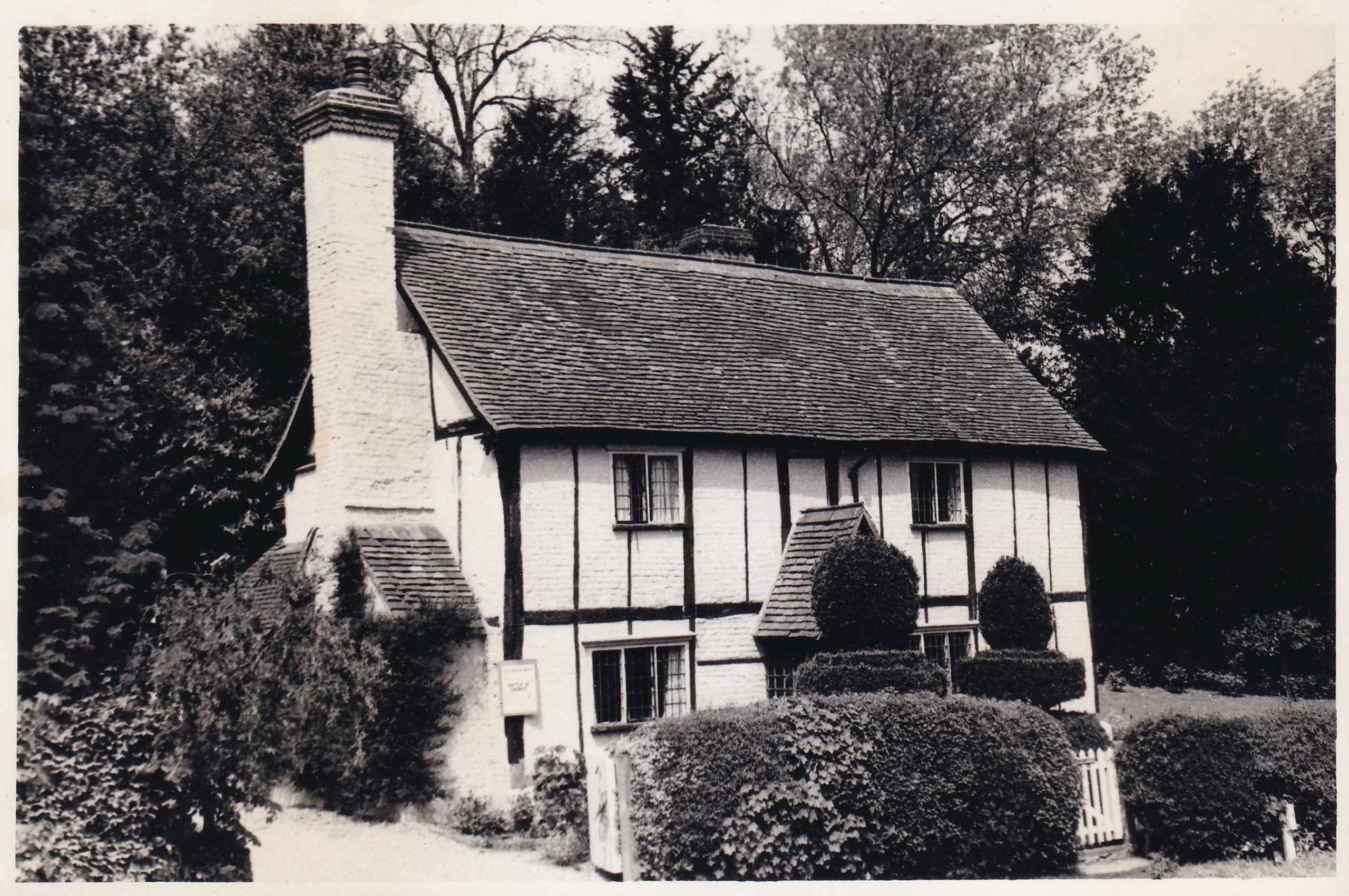
The house that’s the Le Neve Fosters (Hillside Cottage), the other part of the cottage was Mrs. Hawkes, who was nursemaid to the Spearman’s. She had actually come over as a child from Czechoslovakia and used to tell me that she worked at the age of eight on a loom. She worked during the week, right through the hours, and on Saturday had to go in and clean the loom. You imagine, this is an 8-year-old. If any of you have got eight year olds, have a look at it and see if they could do that, in this day and age. I doubt if my 12-year-old would able to do. The other side of the road at the top of the hill was Franklin’s (Whitehill Cottage) who did building and then followed by the Ridout’s (Whitehill Cottage), and then you come up and the Ince’s who live and still live at The Lodge. But I can remember a period of time when the Marquess of Tavistock lived in there with their children and some ponies were kept up at the Manor House. And they used to go up and, and ride them there.
Teeth, Fire and Cold:
Photograph from the Chenies for Sale Catalogue
At Little Green Street farm in the middle of the yards up there, they used to have a tank, where all the slurry would run down into this tank, and then, sort of in the springtime, there were pumps there with cups. And you would pump all this water out into a tank pulled by a horse and taken out into the field. And there was one old chap working on this job, and he’d got the most dreadful cough. And while he was coughing, he coughed out his false teeth. And of course, I mean, it was an absolute disaster, you know? Anyway, out he went onto the field to put on the field, and behold, these teeth suddenly appeared. And so he goes back to the yard later in the evening when the men are finishing work, you see? And they’re all in the yard, and he’s telling them what’s happened. They, ‘Thank God, what did you do’? He said, ‘Oh, I just washed them under the tap and popped them back in again. Well, they’re not damaged or anything’.
At Little Green Street farm, now, this, I think must have been probably in the sixties. They had a terrific fire up there, and I can remember living in Bedford Close, we could hear these explosions and we couldn’t understand what it was. And Bill got up to go out to investigate, and of course we’d got the children, so I stayed behind. And what it turned out to be was that the, the big barns that were up there then, had asbestos sheeting all up over the top. And the, um full of bales and hay, and of course the terrific heat went up, was blowing these sheets out up there. But Arthur Newns, who I spoke about, the the real character, the 1914-18 character of the big vocabulary, I can remember when in the Little Green Street Farm, of course, there weren’t barns there, it was all done into stacks. And I can remember these stacks all along there and Arthur Newns had thatched them all and they used to look beautiful in those days.
Another amazing thing, one winter, we had a very, very hard winter and we really couldn’t do anything out on the land. That was when I was working at Little Green Street. We couldn’t do anything much out on the land and we were painting some of the, the implements. And we ran out of turps. So I was sent down to Chorleywood to get some more turps, and I’m carrying this large bottle up from Chorleywood, and it was so cold that it actually split the bottle. Amazing. I, I mean, I thought, what have I done? What have I hit it with? And one year we had an enormous amount of snow. And Bullcroft corner got all sort of snow, really almost up to the top of the hedges. Terrific amount of snow, but I can’t remember which year that was. And all along the main road, of course, which isn’t protected very much and there was very high snow there. In fact, at one time, after one year, they actually put up snow screens along the side of the main road from the Claypits turn down to Chenies and along to Latimer Lane, which were there for quite, well several years.
A House at last:
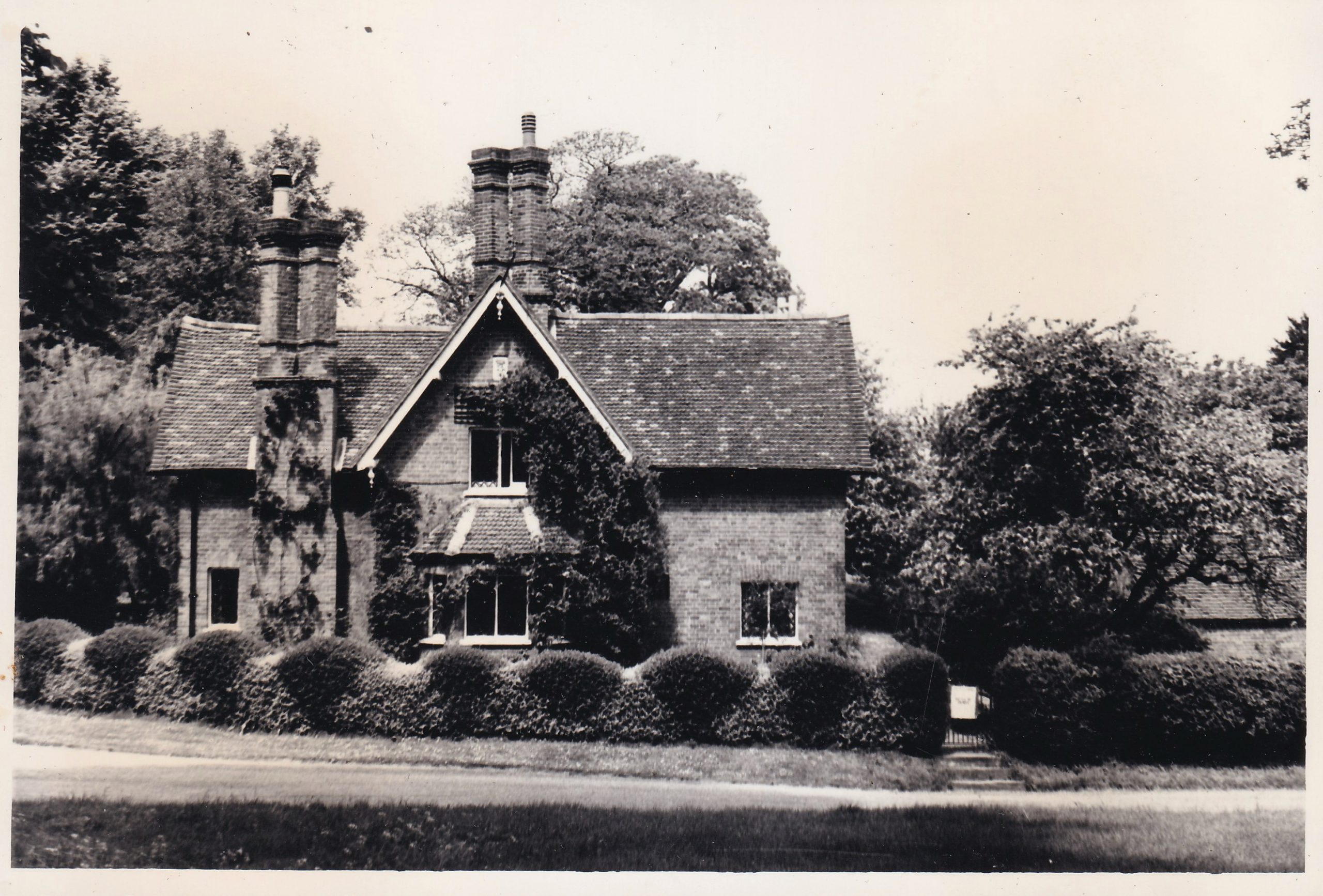
Mr. Puddephat had been the last head gardener and had lived in The Lodge, and he was head gardener of what is now Chenies House, and my husband, at the age of 14, left school and went there as gardener’s boy and worked up until he was head gardener. there. And it’s now, it’s bricked up, but up that wall that goes up there, you can see where there was a doorway and their gardeners had to go in through there. And he used to tell me that when he just started work there, when he heard the children out playing in the the playground and playing with their footballs and everything, he used to open the door a crack and look through and wish he could go out and join them. He worked up, as I say, there, until he was head gardener.
When the war started, many of these big houses around the countryside was taken over and it became a dispersal point for wounded officers. And the people who’d lived there were called Lobel. And I don’t know where they went, but Bill wasn’t allowed to stay on in gardening. That wasn’t good enough, so he went to sign up, but that wasn’t allowed either because of his knowledge, he was to work on the farm and so he got a job up at the Manor House and worked there. And of course was quite useful when you had, if you had land girls coming in there or you had people coming in who knew nothing about agriculture or horticulture ’cause they used to grow sprouts and, and that sort of thing up there. And of course he was able to teach them how to do that. He also was asked if he would try and keep the gardens a bit tidy and so at weekends or in the evenings he would go over there and work in the gardens and try and keep some sort of order there.
And we met up at the farmhouse, but quite a bit of our courting, I don’t think you court now, do you? But we did in those days, uh, it was done in that garden with me sitting there talking to him while he dug and, and that sort of thing. Or walking around the woods no matter what the weather you went out for a walk or something like that. And Holloway Lane, that steep bit of Holloway Lane down there. On the right hand side as you are looking down, there used to be the most wonderful display of glow worms there years ago. Don’t suppose anybody goes down there now, do they at night? Anybody courting? No. Uh, but, uh, they wonderful. I’ve never seen glow worms like it anywhere else. They were, they were absolutely marvellous down there. Or we sat under the lime trees at the back there where the cottage was eventually built, and we used to sit under there and talk. And so those were our courting days.
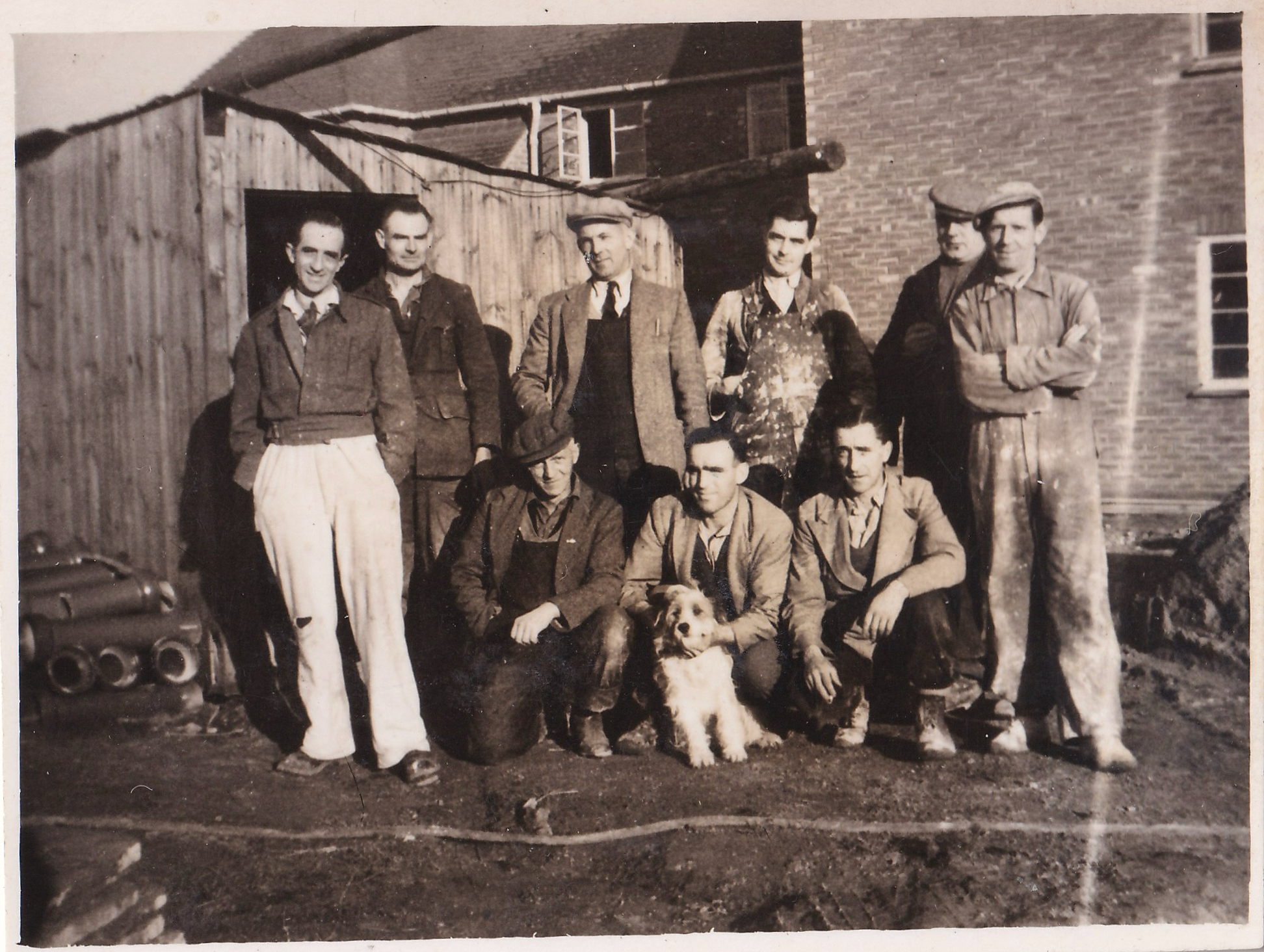
And in 1948 it was decided, which was happening all over the place, there’d be batches of council houses to be built, and it was decided that council houses were to be built on that field. So it was to be 15 units and it was to be a horseshoe. And the first two houses at each end of the horseshoe were to be priority for agriculture. Or obviously if there was some higher priority, then alright, so be it. So, of course we were both, we, we’d been talking about getting married, but there was absolutely no chance because there was no room where my mother and I were living was one up, one down. Where Bill was living, that was full of the, uh, sister with the twins, and the husband was still in the army. And there was no other means of finding anywhere to live. So we’d had our name down on the council list for ages, but of course, because you weren’t married, you lost a lot of points, but we couldn’t get married and make them up. However, this was a chance. We were both agriculture, so fine. So, we used to go up when we were courting and have a look at these houses progressing and wonder and wish and hope and this, that and the other.
And eventually they were allocated. One was to be the Buttery’s, which was Bill’s sister and her husband and the twins, which was a priority. Not agriculture, but he was a horticulture when, you know, if he, prior to going into the army. The next one to it, the two bedroom, one to be Charlie Simmonds who lived down on, on the right down the green, was cowman at Fitches (Mill Farm). They would have that. And the other end it was to be John Biggs who lived up the the village. And I told you the father lived up there. John Biggs was the Burma railway and his wife with two children lived with in laws up there. They would have the other house. And Joyce Rolf and her husband, Joyce Rolf was secretary at the Manor House, so that was that. We’d lost that one. So we were a bit down and everything.
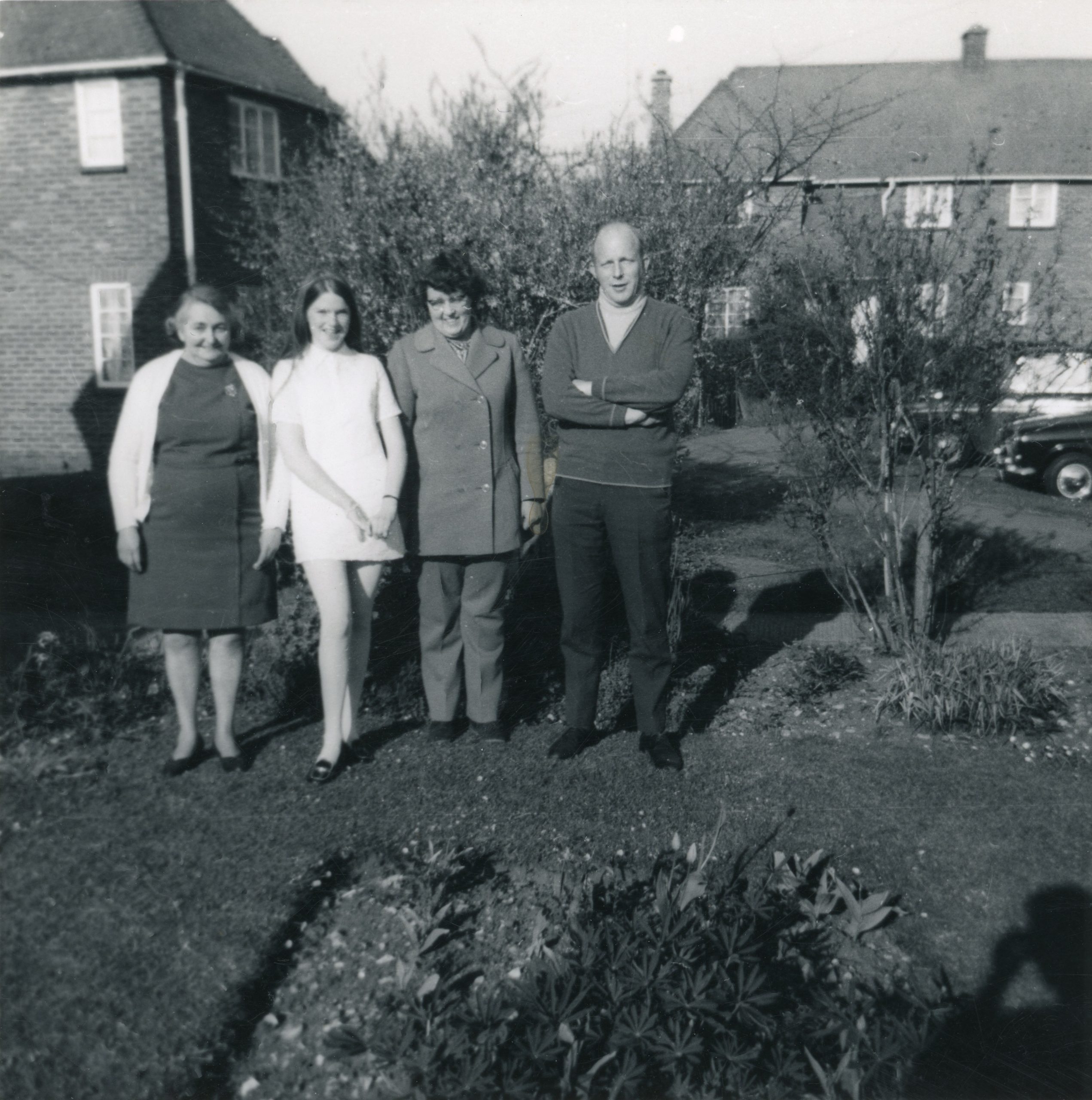
Anyway, a week or two later, there was a knock on Bill’s parents’ front door and they went and it was the district counsellor. And apparently there had been a meeting because Charlie Simmonds and his wife had decided that they couldn’t afford the rent. Now they lived in one of the estate cottages, which was four shillings a week, and he was a cowman who earned more than Bill, who was general farm work. And they got two teenagers and they decided that they couldn’t afford the council rent, which was £15 and four pence. So they were giving the house up and the district counsellor, unbeknown to us, had put our lot forward and said, ‘Well, you know, the man has lived in the village all his life and always ‘done horticulture or agriculture, and the wife is agricultural as well‘. And they agreed that we should have the house, but, we were not to have the key until we were married. And they would give us six weeks. So you can imagine, imagine the chitchat round the village. Ah, yeah. Yeah. And because I didn’t produce for, I think it was six years, it obviously we decided it was a small elephant, but, and, uh. Anyway, we really had to get things rolling pretty quick. Well, it wasn’t gonna be a white wedding or anything fancy because we couldn’t afford that, but I did have a new dress and a new coat, which was pretty exciting and everything. And I told you about the wedding and everything. And in six weeks, uh, we were married and able to move in. We actually moved in and the house wasn’t quite finished. They were still doing skirting boards and last minute fittings and everything in there, but we got our house. It was quite a struggle, £15 and four pence out of five pounds a week, which was Bill’s wage. So it was quite a struggle, but never mind we’d got it.
One of the best buys I found after I’d got the children was to buy a pig’s head, which cost five shillings. And out of that, you could get the brains, which I gave to Bill for supper on Saturday. Now, there was a tradition that he always had supper on Saturday night. Baked beans on toast, you see? So I inherited that. So I thought, well, right, I’ll give him a change, you see? So I did these brains up, put them in front of him, and he said, ‘What’s this‘? So I said, I knew if I told him what it was, he wouldn’t touch it. So I said, ‘Well try it. It’s something different. I thought you might like it‘. And he said, ”Yes, but I wanna know what it is‘. ‘Yes, well just try it and then I’ll tell you’ ‘what is it‘? ‘Arsenic, eat it up‘. And uh, anyway, he loved it. And if by any chance, you know, the butcher would split the head, and if by any chance, while it was being split, the brains fell out in the sawdust and obviously couldn’t be retrieved, he was most annoyed and felt that he hadn’t had his money’s worth. But that was Saturday night. Sunday, he and I would have the cheeks. Now, they were a bit rich for the children, so the children had the tongue, which wasn’t rich at all. I made brawn with the rest, which would last about three days. So that was a brilliant purchase for five shillings, and it was really useful.
The Cherry Orchard:
And then we rented the orchard and we used to keep poultry in there, and ducks and geese and rabbits. We used to set aside half of the orchard for hay, which we sythed and made into hay. Jack Hughes, the butcher, used to give us five pounds for the load of hay, which of course was gold dust to us. Absolutely marvellous. We kept the poultry down there. We kept some geese at one time, and one of the young geese went broody rather early. Well, you really shouldn’t set a young goose, but never mind. We decided to put some eggs under her and typical teenager, when she was about three parts the way through, she decided there was no fun in this game, and so she abandoned them. So I took the eggs and I think she was on four if I remember. Two of them were addled and, but the others were all right so I kept them by the boiler in the house, which just had a little ideal boiler for heating in the house, in a box with a hot water bottle. And kept turning them and dampening them and everything and you wouldn’t believe, but the day that actually they were due out, I was ironing and all of a sudden I heard chit chit chit,and they actually hatched out. Now they were deformed. It was sort of hunched back and they never grew very big, but they hatched out. And that was an achievement in that case.
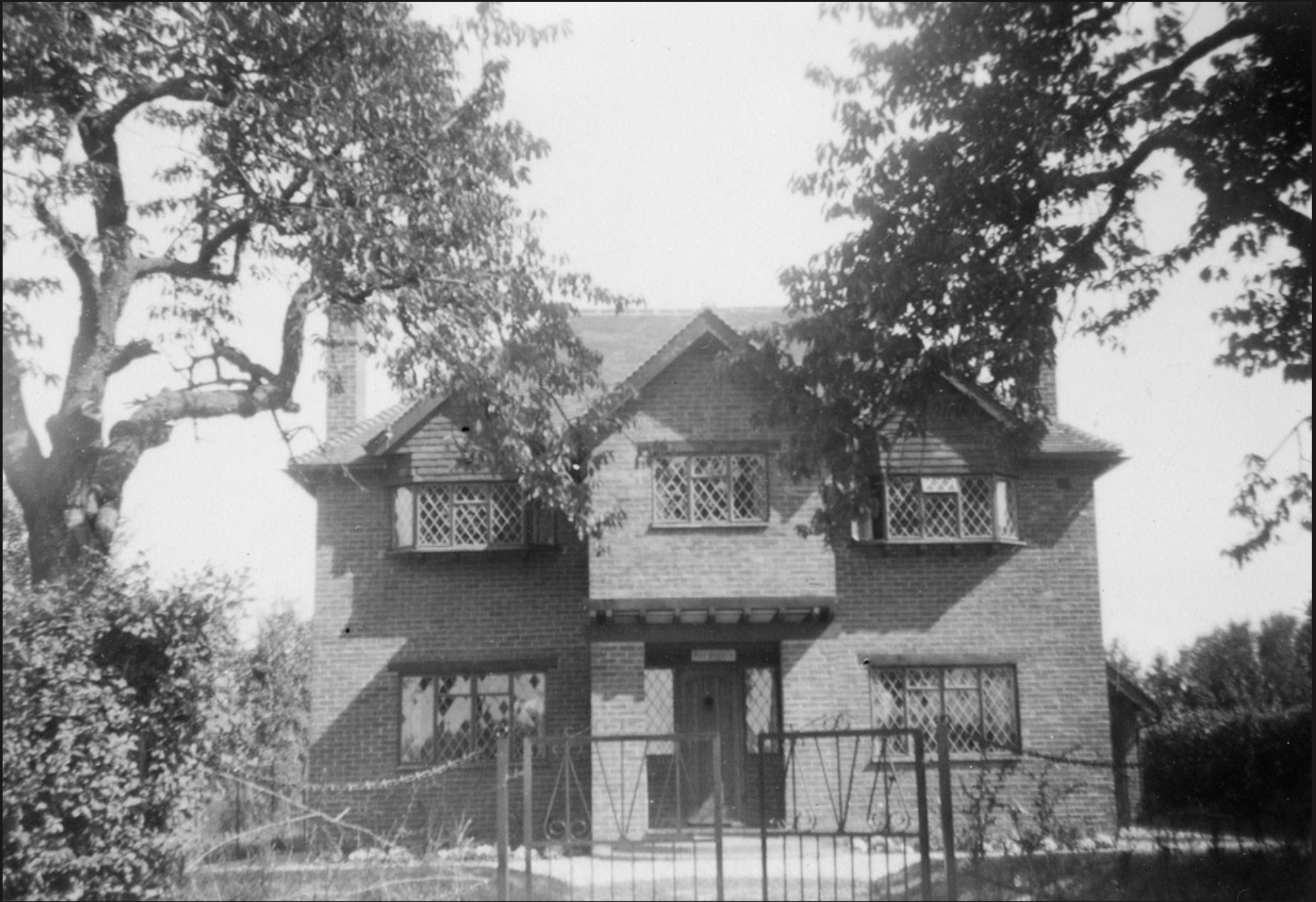
And of course, we used to walk miles along the verges collecting food for the rabbits and everything, which we sold, and they went for meat. So we carried on like that for quite a while. And then the next thing was that Bedford Estates was going to be sold and the orchard was going to be sold. And the orchard was offered to Mrs. Kilby (No. 41) for £500, and she came up to us and said, did we want to buy it? Well, £500 was an enormous amount of money. And the thing was that, how long were Mrs. Goodson and Mrs. Kilby going to be living there? We couldn’t afford to borrow money and be paying the rent, so we had to abandon it, but as it worked out, both the old dears, had gone about 18 months later, so, you know, like life is, with hindsight, we probably could have taken a chance on that, but never mind. So anyway, the orchard went for development and the first house was to build, was Life‘s built house (The Pightle). And Mrs. Life, as you probably know, that the, uh, names of the children were picked out on the, the bricks that the house was built with, and they lived there. And then eventually the Skilbeck’s (Forge End) uh, built the house next to Miss Ransom’s who built the, the bungalow in the middle (Cherry Trees). That’s right. That was Bedford Close and we started – 18 months later, they started to build the other houses, and highly infuriated Bill and his brother-in-law next door, by the council coming and rooting about in the gardens, which the two men, both being gardeners had got sorted out and that sort of thing, because they couldn’t remember where they’d finished off the water pipe. Amazing. But anyway. The rest of the houses were finally built.
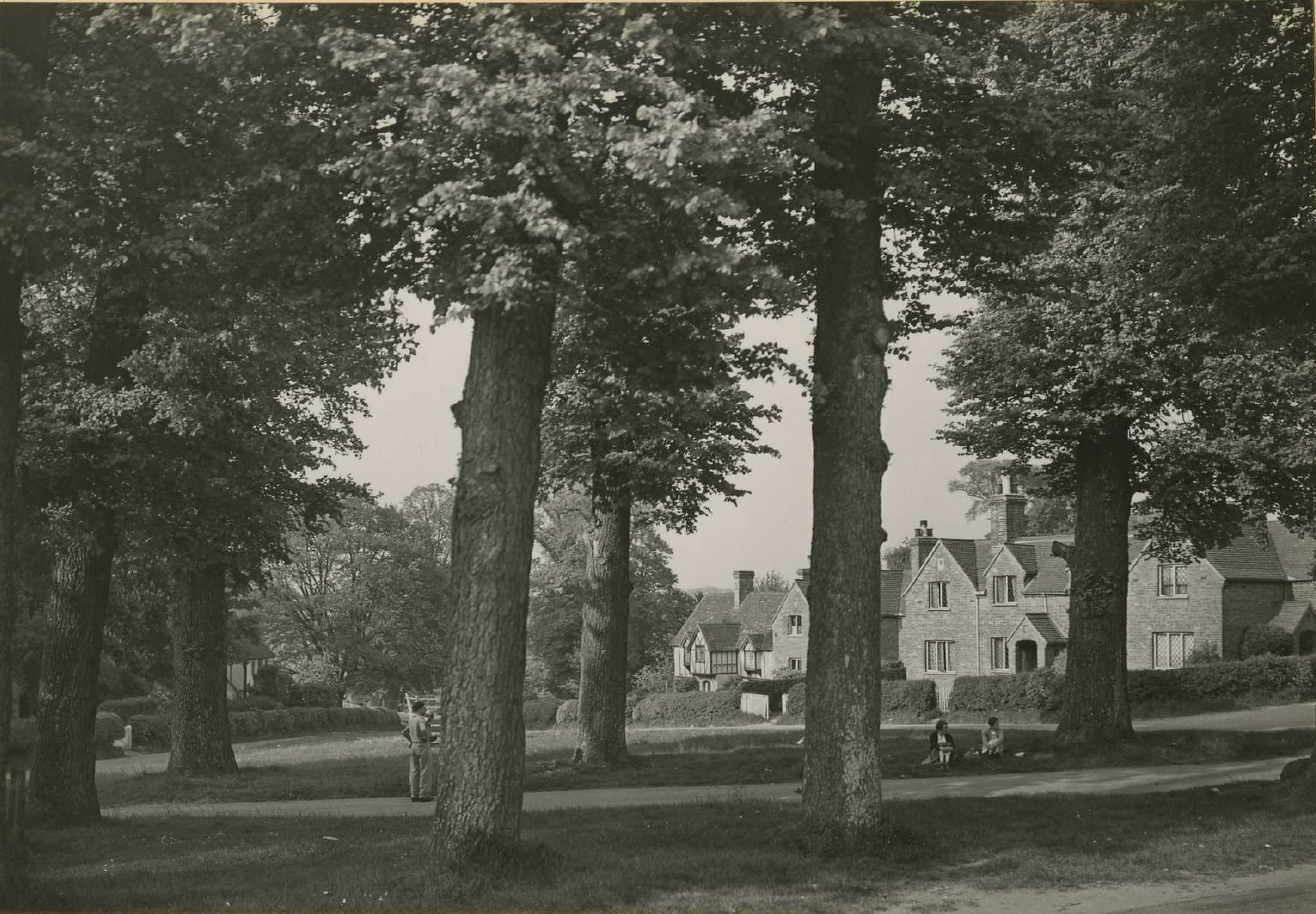
Life was still quite quiet and calm and there wasn’t a great deal of traffic going through the village. And I can remember Bill, one evening, when we’d been haymaking down in the orchard, he said, ‘You go up and start to get a drink and I’ll shut the chickens up‘. And a little while later was a knock on the window. He said, ‘Come with me‘. And we went down to the bottom of the orchard on the fence that looks down onto what is Miss Ruston’s now (No. 41). And we listened to the Nightingales, in plural, singing on the green in the old elm trees. Uh, a wonderful, wonderful sound. They’re absolutely lovely. But of course they disappeared as the traffic increased and then eventually the elm trees had to come down with elm disease. Used to be full of bats. And I can remember once when they’d, after they’d moved the phone box down, which used to be up opposite the post office, they moved it down onto the green ’cause it would be more central. And I can remember going down to phone somebody. And watching a tree creeper, I mean, well, there was probably the distance about there to there away from the trunk, and I was standing in there and watching this tree creeper going up. Of course he couldn’t, well, didn’t bother about seeing me. Anyway. I had a really close look at it, which was brilliant.
Booker Hospital:
My husband’s little sister had scarlet fever and was taken to Booker Hospital, which is the other side of High Wycombe, and my father-in-law would bike there every evening after work to go and visit her while she had the scarlet fever. Of course, Booker eventually became an old people’s home. That was after there was the workhouse up at the Claypit cottages in Chenies. That then moved down to Old Amersham, and then as old Amersham Hospital developed, it was moved over to Booker because the Fever Hospital was closed. And I can remember visiting old people from the village there, which took most of the day. You’d start in the morning and then you had to catch a bus into Amersham, and then you had to catch another one into Wycombe. And of course, wide gaps in between, and then another one out to Booker, and then there was quite a walk from the actual bus stop to the hospital. Then you had a little time talking to whoever it was that was there, and then you started this business all the way back, so you really could agree to go on Safari for the a day if you were visiting anybody there. But it was rather sad because I was talking to one old lady there who was sitting next to somebody that I was visiting, and I said, ‘Where did you come from‘? And she said, ‘Chesham‘. And I said, ‘Oh, is it easy for people to get from Chesham here‘? And she said ‘Well, no, not at the weekend‘. Nobody can get here at the weekend”. Presumably the buses didn’t run and she said she hardly ever saw family because they were all working and of course they couldn’t get there at the weekend and they hadn’t got cars. Very sad that, um, she was there completely on her own.
The Tradesmen:
In the 1950s, we were really quite well supplied with things in the village. Of course, the milk was delivered, meat was delivered from the village shop. The baker came round. And a chap bought an old bus and fitted it out and used to bring the general supplies that you would require in a home. Not like the selection that you have a supermarket now, but you wouldn’t starve from them. Supplies of food and cleaning materials and, and general things that you would want in the household. And he came every Friday and supplied that. The fish and chip chap came on a Friday with his stove actually in the van and smoke flowing out from the top, and he cooked the fish and chips for people. The ice cream van came round regularly. In fact, at one stage we had two going round, and it caused quite a rumpus because of course the children wanted to go out for both vans and a lot of people hadn’t got the money to do that, so that wasn’t very good. The coal was delivered, albeit, of course, previous to that had been rationed, and you left the money on the table, the back door was left unlocked and the chap just picked up the money off the table for payment. The insurance van came round regularly. I think it was once a month, and you paid your insurance, house insurance, or anything else that you wanted to insure. A tic-tac man came up from Chesham and you could buy clothes off him, paying by the week.
Budgen’s at Chorleywood eventually started delivering up into the village, but you had to have an order of a certain size to do it. So I incorporated several elderly people who lived in the close where I lived, and I could get their orders at the same time providing it was all delivered to me, and then I took it round to them. An elderly couple, he was a knife grinder and he used to push this knife grinder round the place they used to bivouac under the hedges, along the roads at night as they moved round the area. But they would sharpen the knives. You paid into a hospital scheme before the National Health came in. And I can remember my husband and I, being rather naive, said, ‘No, no, we wouldn’t pay into the national health. We’d just keep on with the hospital‘. Had it pointed out that we had to pay into the National Health.
Gypsies came round for rags and tins. Tins for making the pegs and rags for all sorts of other things. And also this, has nothing to do with supplies, but the conservatives once a year would have a fete at Great White End outside Latimer where there would be a bus supplied to take us over there for free, which was quite an outing ’cause you didn’t go very far afield in those days. Baldwin’s at Chorleywood up at the top of Colleyland, which I believe now is a shop where you can hire mechanized things or something like that. Anyway, that was the bakery. The bread was delivered around the village from them. Talking about bread, Bill could remember the muffin man going through the village on Saturday nights regularly with his tray up on his head and ringing a bell. He used to go through regularly when he was a youngster.
Clay Pits and Lower Chenies:
Cottages on the Platt (Platt Cottages), which was agricultural workers, but one of the cottages in the Russell time he paid for a house mother. That’s the one that the Vitver’s live in now, to have orphaned boys in the house and he paid for that himself.
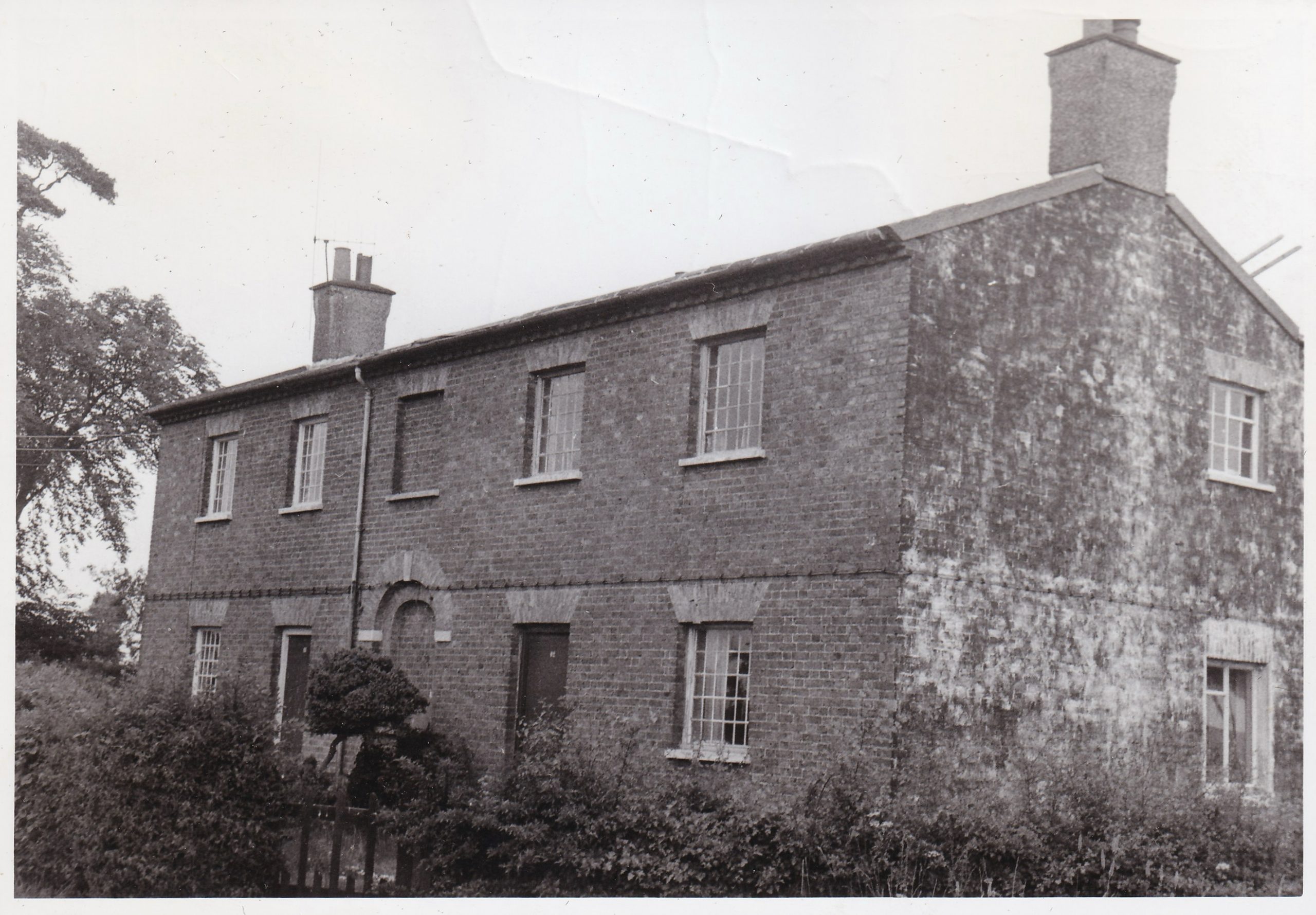
Then you go up and you’ve got the Claypit cottages, which of course, as you will know, years ago, was the workhouse, and then the workhouse was moved down to Amersham. When they ploughed up the field next to Claypits, along by the footpath, you could see, the ploughing up during the war revealed a lot of things, you could see where the old kilns used to be. Of course the clay pits were on the other side of the road and also where the garden centre is now. And in those days when I’m talking about where the garden centre is, was allotments, and the real bottom of the clay pits, there was a pond and a lovely oak tree there, which was sort of in the middle of the hedge. We could never understand why the oak tree disappeared ’cause it was a beauty. But there you are, that’s how it goes. Did it come down in a storm? Melanie Lilley: ‘It came and … went storm. Then they filled in the pond after‘. Fine. You learn something new every day. Coral used to have one of the allotments there and used to grow all their vegetables. The field actually opposite Claypits cottages, the other side of the road is another wonderful field for mushrooms. Used to be years ago.
So now come back to the Green and down to the top of the hill. And to your right there’s a road that goes along Holloway Lane. And on the left hand side was the Common. Now the Common was when you go down the hill and you go round the corner to the right, I think there’s a sewer bed or something. There is, I don’t know whether it’s still there. And a hedge went from there up to the top of the hill of Holloway Lane. So there was quite a large Common there. And it was lovely. You could take the children down there to play and it used to have lovely blackberry bushes there. And of course, as I’m sure many of you realize that on the right of that road that goes along the top, there actually used to be 10 cottages along there. And the pest house as well. The Manor used to graze the common, and if we took the cows down there, then somebody had to watch them, that they didn’t actually come out onto the road. Then you go on, of course, on the left hand side where the footpath goes round, that would’ve been the old road. And then of course the new road, which is the road as it is now, would’ve been cut and not been quite so severe.
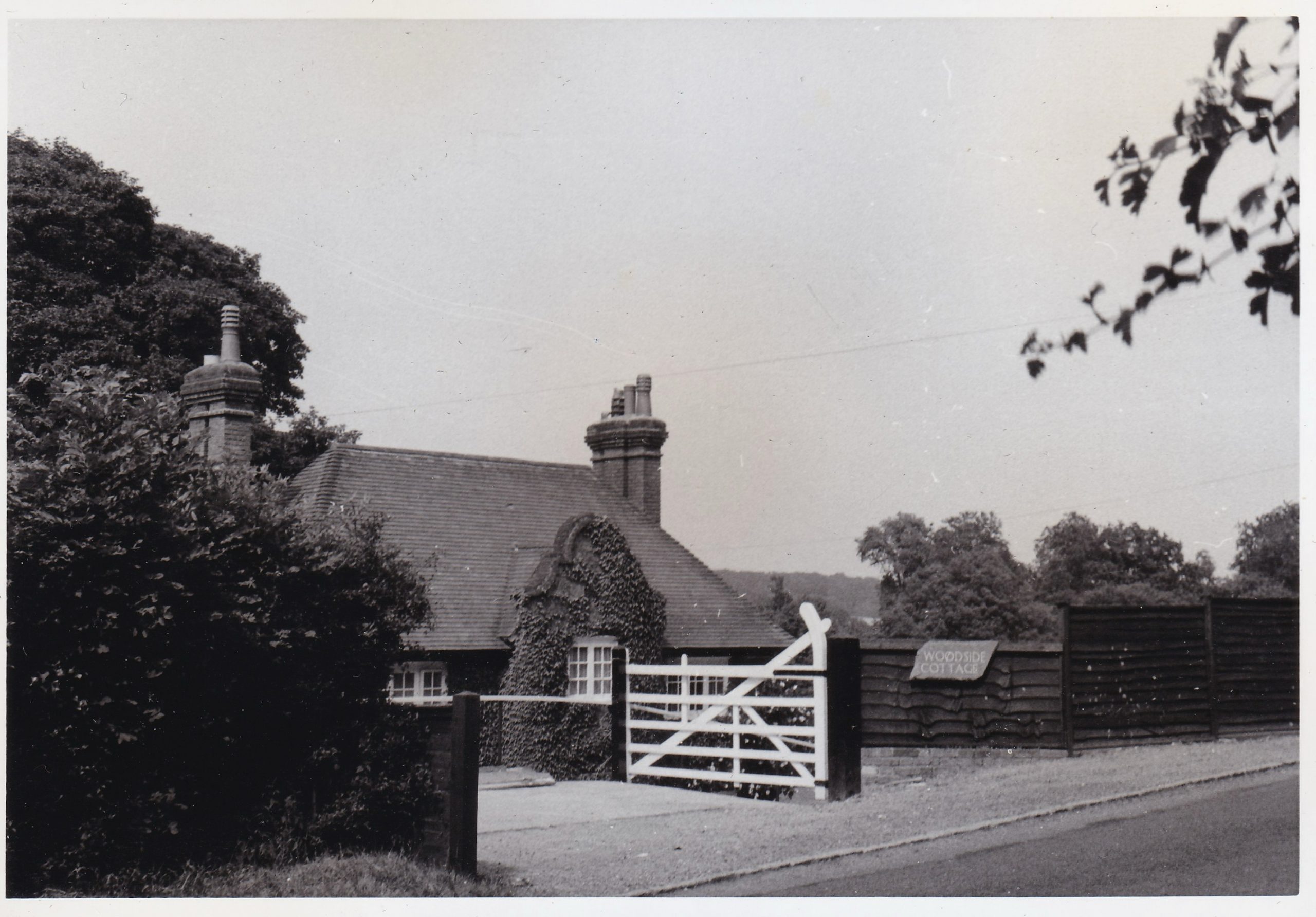
Further on down was the groom’s house on the right hand side (Woodside Cottage), and then the stables (The Court House), and then Woodside, and of course that’s where the Dowager Duchess lived at one time. I’m sure you all know the bits about that. And then turn right and across the river. And there was the Mill where Fitches lived and the Mill was still functioning when I first came round and grinding corn for feed, and of course nearly all the cottages in the village had a pigsty. That was one of the things on the Bedford Estates, they were all to have a pigsty wherever possible and keep a pig, which of course they did many years ago. I can remember Bill going down to get feed from the mill there and eventually Fitches sold the mill and bought the two cottages just on other side of the river and made those cottages into their home (Nos. 1 & 2 Mill Cottages, now Mill Farm (house)).
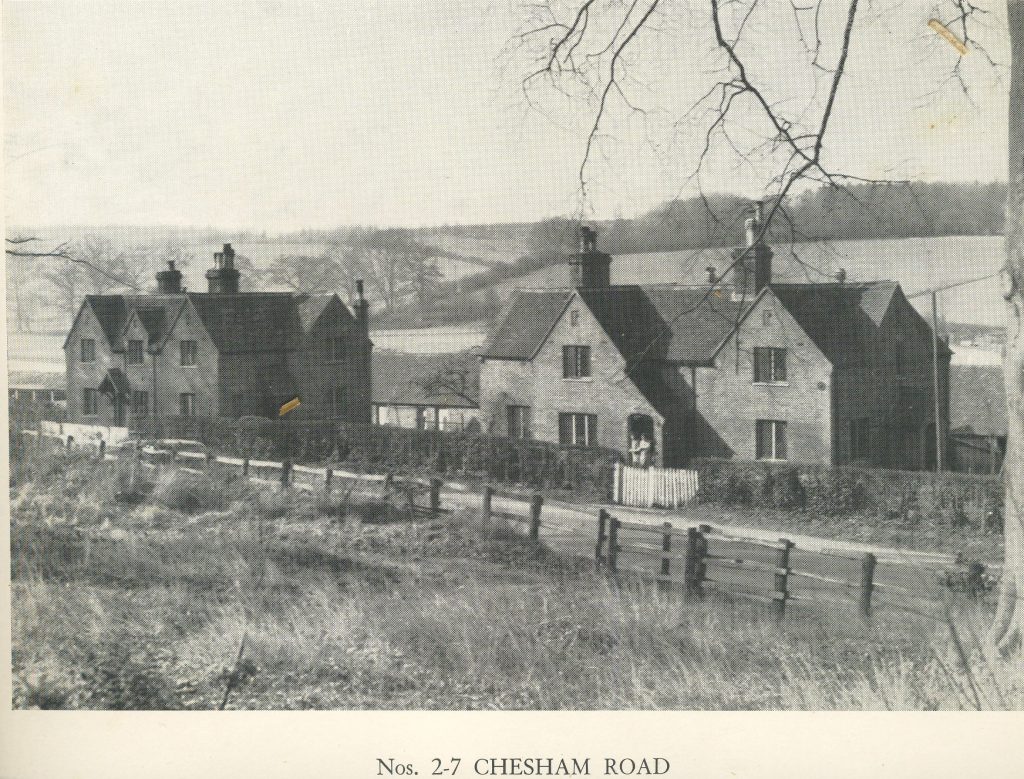
Photograph from the Chenies for Sale Catalogue
So there were the cottages along the bottom road (Nos. 2 – 7 Chesham Road). And I was told, whether this is correct or not, that there used to be two Bastin brothers there. The one had six boys and a girl, and the other one had six girls and a boy. Uh, whether that’s correct or not, I don’t know. And then there was Mr. And Mrs. Weller and their son George and Mr. Weller, uh, years ago had worked, uh, obviously before he came to the village, worked at Wycombe, taking wagon loads of chairs from Wycombe up to London with a horse and wagon. He could tell a good story as well. He was quite a character. In the latter years, when he was here, he used to do the paper round. And I can remember one year he was going away for some reason and would I do it? And I did and, and I’ve done rounds for all sorts of things, delivering notes and all sorts of things. And my goodness, some of those letter boxes are, dreadful, absolutely dreadful. Bite your fingers off, or they’re right down at the bottom. And when you’d got the paper bag around your neck, you nearly throttled you when you bent down to push it in. And yeah. Yeah, they’ve got a lot to answer for.
At the end of the cottages, there was a swimming bath. That had actually closed by the time I came round, sadly. It was there in 1925, so it had been there years, but unfortunately with the development of different industry and that sort of thing in Chesham, the river had become polluted and the swimming baths was fed by the river and eventually had to be closed down and filled in. Which is sad, but Bill could remember swimming there as a boy.
The Manor House:
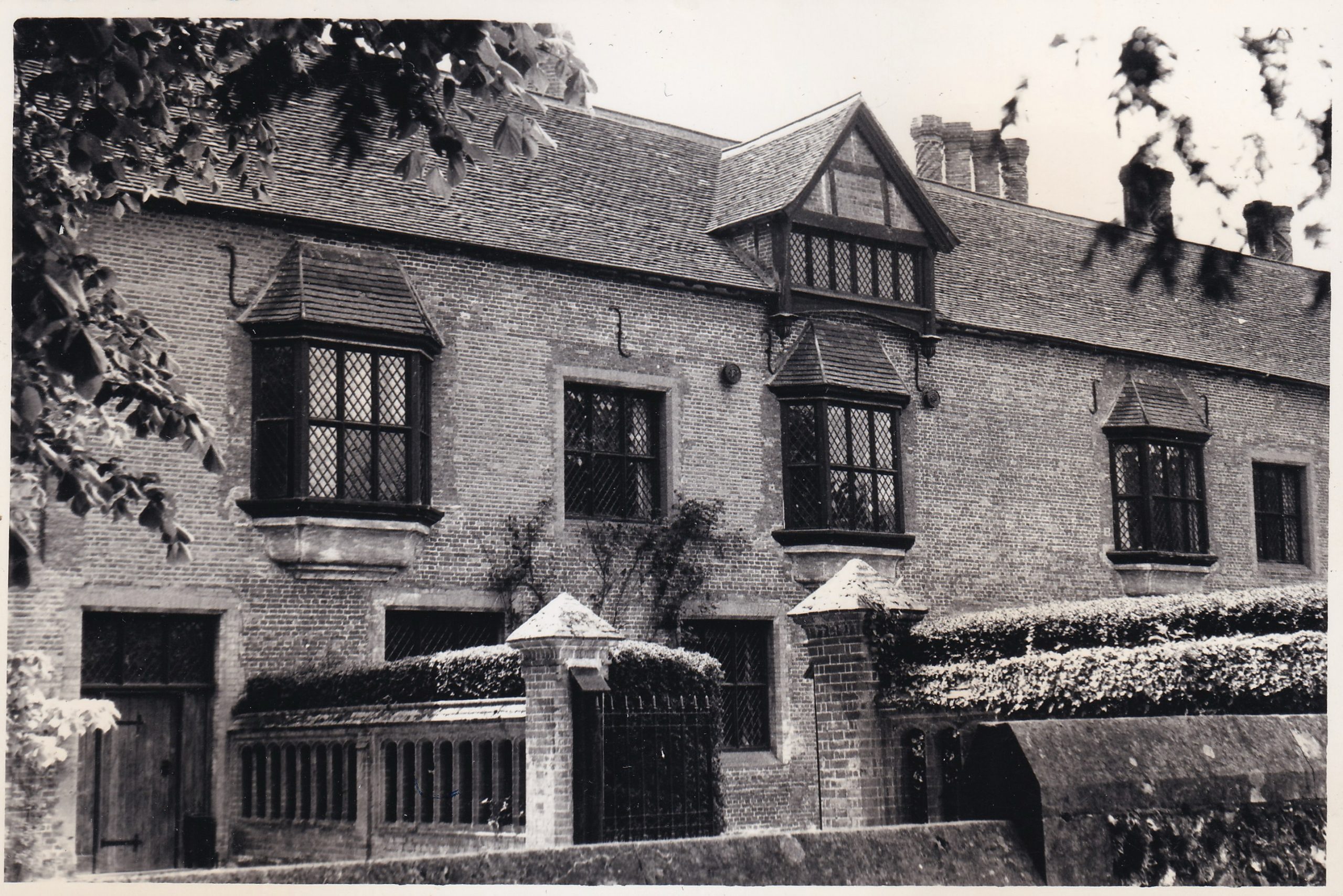
I will now tell you a bit about working actually at the Manor House. The workmen were, as far as I can remember, Frank Wright was the Wagoner and Frank Wright had a deformed hand. He had a stump like that and a thumb, and yet it was amazing. Frank could pick brussels, put his hand down and shovel them down with this stump. He also drove the horses, used to wind the geo line round it. Nothing much stumped Frank. Rod Coster, lorry driver, Don Puddefoot, tractor. Bill Mason and Len Pierce, which were retired but came back to work on the farm. Frenchie who lived up the top road. He worked with a light cob and a light, as we used to call it, a four wheel trolley, taking out fodder and little light jobs on the farm.
Then we had three German prisoners of war who lived in the saddle room at the Manor. I think I’ve put rather faded photos, although the only ones I’d got of them. They were allowed to live in there and they were in there for quite a time. because, bearing in mind, so I’m talking about after the war now, so it was quite some time before they were actually sent back. And Johann Stohl, we corresponded with for over 10 years. He went back and we sent food parcels because Germany was desperate for food and he had went back and had twins. And the twins as they got older, used to practice their English on us when they wrote at Christmas. And then they wrote one time and said, Dad had been very ill with heart trouble this year. And we heard no more of them afterwards, so presumably he died.
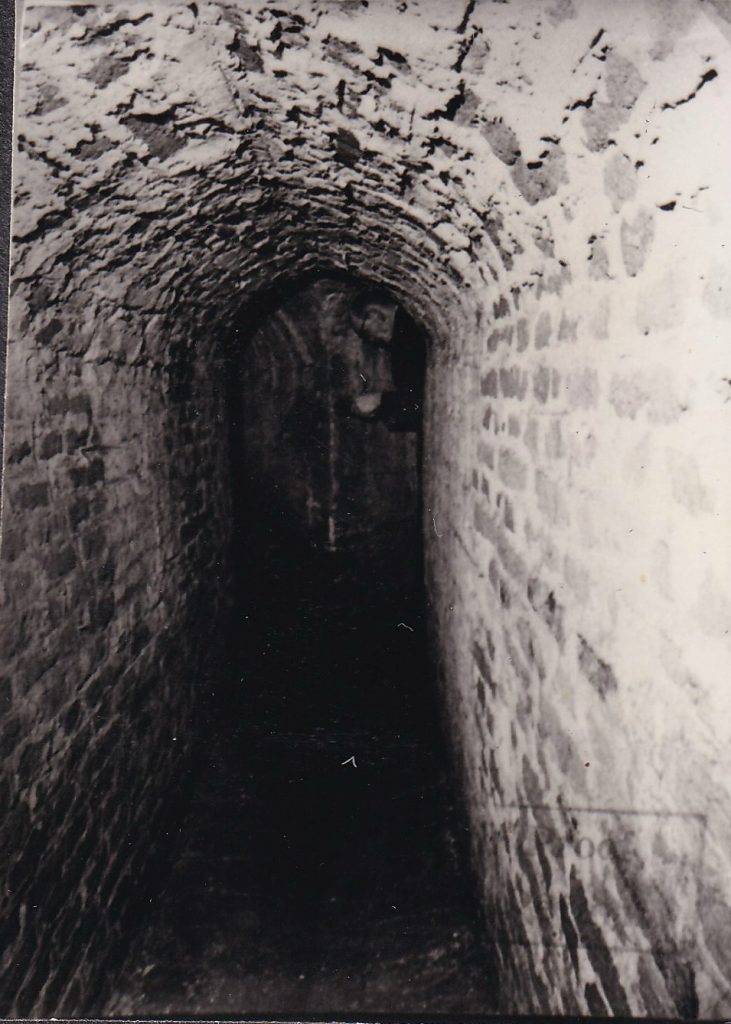
There were secret tunnels up at the Manor and there was one that we could get into in the gardens at the back, uh, in those days, and you could walk right down to just about where the dairy was. And there was another one that used to go through to the chapel. Now that got blocked off because it was dangerous and eventually the one going down to the dairy, that had to be cut off as well, but beautifully made. If anybody hadn’t been in them, the top like that and down and sloped into a gutter at the bottom, all brick, I had to stoop to walk along it. The story went that the one that went down to the dairy went eventually along to Raan’s farm. Now, I don’t know. I only know that while I worked up there, twice, something fell in along the top of the wall, which they reckon was this tunnel. I don’t know. That’s what was always said, anyway.
We used to take the milk down to the cooling house. As I told you, down at the bottom of the yard, there was a gander and some geese in the cart sheds, which are now the garden room. And this old gander was an absolute old fiend. If you were carrying two buckets of milk, you suddenly hear him up the back of you and he’d nip you. But if you were carrying one bucket, he never moved. He just watched you go down. Yeah, yeah, yeah. Right, they’ve got something to defend themselves.
The Manor House milked, as you will realize, quite a lot of the cows. We had 1, 2, 3 sheds that we milked. They were all shorthorns and we had a white shorthorn bull. This was considered to be bad luck, couldn’t tell you why, whether something to do with it, I don’t know. But anyway, this turned out to be the case because the heifers that were kept, we started losing one or two. And one died in a loose box, the opposite side of the yard. And the knacker was called to collect it and the knacker, Saunders of Watford. And he had a low covered cart with a winch in it and quite a heavy horse, but I think it must have had a bit of hackney in it because it had quite a high step and hooves, like great plates. And this horse, you could hear coming along the main road. Of course, there wasn’t the other traffic in those days, and from way past Chorleywood, you could hear, oh, Saunders is coming. Clop clop, clop, clop, clop, clop, clop, as this horse came, came along, Bill Simpson said to me, ‘Oh. Get the horse out of the stable and, and pull this heifer out to the gate so he can load it’. ‘Which I did and Saunders gave me half a crown ’cause he didn’t think a girl should have been given that job. And that was something, I’ll tell you, half a crown. That, that was a lot.
Horses part 1:
While I was working at the Manor, I used to do the milking and so there was a pony and float, Twinkle the pony and the float from the Manor, and I had to take the churns up from the Manor because the milk lorry wouldn’t go up the lane, and go up, milk, and get it back in time for the milk lorry. Well, Twinkle had her own ideas about life, time, and anything that was connected to it, and she was an absolute fiend to catch in the morning and I used to have to go out earlier and earlier. And having been very late one day and rattled through with the churns through the village, I met one of the estate men later on. And he said, ‘How’s things’? I said, ‘Oh gosh, I was late this morning‘. I said,‘ I couldn’t catch her‘. He said, ‘I know you were late. We were all late ’cause we rely on you for the time‘. And I thought, what a responsibility. So I had to make a greater effort to get up early and she would be kept on the Platt and she’d high tail round there for a bit and then she’d suddenly stop and look across at me. ‘Oh, did you want me? Oh, right‘. And she stroll across and nothing would entice her. A bucket, bolt, nothing would entice her until she’d had a little jig round, got the blood flowing presumably, and then we could get on with things. The other thing about her, I used to have to take cowcake up to the Mount as well. So that would have to be loaded up from the barn, a hundred weight sacks, and I’d back the float up to it, you see. And she’d wait until I’d got the sack on my shoulder inside and then she’d stroll away. ‘I think I would go and have a feed from that hay up at the top of the yard.’ So. I’d either got to carry it all the way up there or otherwise I’d put it back again and went and fetched her, reprimanded her, put her back in position, and one time I tied the rein back to the wheel, my theory being, that as the wheel went round, then that will pull the rein and stop her. But the wagoner saw what I’d done. He said, ‘No, don’t you do that because you’ll have her down on her knees before you finish‘. So it always used to be a race of trying to get the sack on there before she strolled off. Nice little mare, but a little madam.
Bill Simpson bred shire horses or had done, shall I put it that way, because of course the heavy horses were beginning to die out because the tractors had come in a lot during the war with the Lend-Lease from America. And um, he bred Just William, who was one of the very famous shire stallions. And there is a picture of him up the Bedford Arms, or at least there was. By the time I got up there they’d only got some youngsters left, and one of them, he was hoping very much he could keep to be a stallion and he would be called Playboy. Now, Playboy was broken in, but obviously hadn’t been castrated. I’m not absolutely sure what age they examined them, but anyway. In due course and Playboy had been, as I say, broken in, but poor old Playboy had also had begun to get the urges of life, and poor lad, he failed his exams and everything and had to be cut very late. So we’d got Playboy and we’d got Twinkle, the little half legged mare that I used in the float, and two more I think were broken. And eventually sold. Now one of those, one day we were trying to get the collar on this youngster. We’d run it round and round and round on the Platt and quietened it down. We’d got it in the yard and the, the wagoner Frank Wright, was trying to get this collar on. And you probably all know, you stand at the shoulder of the horse and hold the collar like that. Get its nose through and put it over its head. Now this horse was having none of it. His nose was going up and up and up and up, and poor Frank was trying to reach it and he couldn’t. Now, okay, I’m young and naive. Frank in the end swore, he said, ‘Oh, my arms are aching‘. He, so he put the collar down and I thought I could have a go at that. So I took the collar, and as I say, young and naive, here’s the horse’s face facing me. So I go like that. And of course the horse was so surprised, it just went straight on and that was it. And Frank swore like mad, and I thought, well, I was only trying to help him and he said, ‘Do you realize‘? he said, ‘You never do ‘that‘. He said. ‘If that horse had struck out at you, he would’ve ripped you from top to bottom‘. So I’d learned something new. He was absolutely right, but I hadn’t realized that to that point. Never mind, you got the collar on. So that was the main thing.
One day after I’d finished milking, Bill Simpson used to have his office upstairs. You went out and yelled at the window and he opened the window. ‘‘What do you want me to do today‘? ‘‘Right‘ he said. ‘Take Playboy and Twinkle and go and bout those rows of potatoes up’. Now there were only about eight rows of potatoes and so no way were you going to buy a bouter to put on the tractor. So yeah. Alright. So I harnessed them up and got the bouter and went up there and we started off across the field and oh, we, we weren’t doing too badly. And then all of a sudden Playboy thought, Hmm. I’ve got this pretty little mare next to me. So he started to mount her and so I’ve got them all tied up in the chains and the geo lines. Ah, right old puzzle. Sorted them out, reprimanded him, and we started off again and we went in quite a dignified fashion for a while, and then it all started again and he was up again. And then I became aware that, well down the field, was a whole gang of men, hoeing mangles, laughing their heads off at the pantomime, naturally. You know, We did eventually get it done and his enthusiasm was calmed down after a while. But, dear, the things I that I used to get to do, dear, dear.
Horses part 2:
Previous
The paddock on the right hand side, just at the top of the hill by the Le Neve Fosters (Hillside Cottage), somebody, I can’t remember who, bought a nice little mare for, I believe it was one of the daughters. And after a little while, they were a little bit worried because they thought the mare would be lonely, so they bought a donkey. And then time went on and they decided that it would be rather lovely if this little mare had a foal. So she was taken off and sent to studs somewhere, came back and proved to be in foal. And there was great excitement about this as the days came closer. And eventually she foaled and the foal got up and said ‘‘Eeyore‘. And the donkey had got there first, and nobody had realized that.
The horses were taken to Thompson the Blacksmith down Solesbridge Lane until he died, or no, I think he retired first. That’s right. And then died. After that, you had to take them to Ley hill. But I do remember being told that one man from Darvills Yard had got to take a horse over and he got halfway across the Common and remembered that he hadn’t got his doggy bag as we used to call it. So he dropped the horse’s leading rein. Now, the idea in those days was you drop the leading rein and the horse should stand while the rein was down on the ground. So he dropped the leading rein and went back to the yard, and when he came back, the horse was gone. So he looked all over the place anyway, couldn’t see the horse anywhere on the Common, and in those days there was only one tree in the middle of the Common, an oak tree. That was all, ’cause it was all grazed. You see? And he couldn’t see the horse anywhere. So he went and this horse had obviously known where he was going. He’d found his own way and along the road and down Solesbridge Lane and Old Thompson was busy shoeing him by the time the chap got there. Oh dear.
One horse, the, uh, the cob that I told you about that worked with Frenchie, of course the idea when you were harvesting, was that you loaded up everything you’d got, every cart, wagon, anything you’d got, lorry If you’d got a lorry. You loaded it up at night and then in the morning you could unload it while the dew was on the, the rest of the ground, you see. And on the rest of the haul when you couldn’t haul it. And that was the idea. And we were thrashing in the field across the top road from the back road to the Manor and down. And I don’t know whether there’s still a fence across there, but there used to be a gateway through into the next field. And we were thrashing there. And they’d got this cob and the light trolley and we’d loaded that up the night before, and that was up at the box. And they’d nearly finished unloading it when something spooked the cob, and he took off and the chap jumped off and this horse came up through the gate, up to the main road, through the gateway there, across the road, through the next gateway, down the track, through the next gateway, round the yard, through the next gateway, turn direct right. And the only thing that stopped him was he got wedged in the shafts in the stable door. It missed all the gates right the way down. Absolutely amazing.
We did have a sad event actually at, at, uh, Little Green Street. I used to work with Ted Picton there. Ted Picton lived in the cottage on the right hand side as you go up to the Mount, on the corner there (No. 28). And Stan and I were hauling out mangels. Now I think the tractor was probably being used for something else, for ploughing or something like that. And so we were using the horse and cart, but the old mare was pretty aged, so we were only putting half loads on. And we were clamping these mangels ready for the winter, you know, you make them like that and then you cover them with straw and then cover them with soil and keep them until you want fodder in the winter. We’d backed the cart up and tipped the the mangels out, and she just suddenly, she reared in the air and dropped and she was dead. We just couldn’t believe it. It was such a shock. Anyway, Stan said to me, ‘Go up and tell the boss’. So I went up to the house and told Bob Dickens what had happened, and he was at the back door and he said, ‘‘Hang on a minute‘. And he went in and he came back with a carving knife and he said, ‘‘Uh, tell Stan to, to bleed her‘. He said, ”Then it’d be all right for the kennels‘. So I went back down the field and I gave the message to Stan and he looked aghast. He said, ‘‘I can’t do that‘. And I realized the poor man was feeling somewhat embarrassed with me standing there. So I said, look, I’m going to take a little walk over there while you think about it. And so I walked over and stood looking into the wood, and all of a sudden he was behind me. He said, ”It’s no good. I can’t do it‘. I said, ‘No, ‘I don’t blame you. And nor could I. I’ll take it back, and if he wants it done, he’ll have to do it himself‘. Needless to say, it didn’t get done, so.
While I was up at Little Green Street Farm, I did talk about having brought my little mare with me and I had her when I worked up at Little Green Street Farm and somebody obviously going by, saw her in the field there and they were filming Black Beauty on Chorleywood Common. And they came in and asked whether they could borrow her as the starters hack, which of course would actually have been brilliant to have got a little bit of money, you know, very worthwhile to get something for that. And so, yes, rather, they could borrow her. And so somebody came and fetched her and rode off on her. And Flash was fine until she got her blood up with any excitement, and then of course she, you know, she was all over the place. And so they obviously rode her quietly down to Chorleywood, but when it came to the point of the starters hack and then these horses scurrying off, that obviously got her blood up and she did not perform as a starters hack. She went mad and they had to bring her back and say sorry she wouldn’t be any good.
Finale:
Another thing that’s interesting was, when my mother went to help nurse an old uncle of mine and I went to visit him one time. And he was asking what I was doing and I was telling him you see and, tractor work, he said ‘‘It must be cold‘ and I said ”Oh it is terribly cold‘ because were no cabs or anything in those days you just sitting on this seat, sprung iron seat. And he turned to his wife and he said ‘We ‘still got that old coaching coat?’ and she said ”I don’t know, where is it‘? so he said ‘Is it in that cupboard under the stairs?‘ So she went and rooped and she came out with an old full length coaching coat right down to my ankles with the cape round it and everything he said ”That was my uncle’s, ah, would that be any good‘? I said ”That would be brilliant‘ you see. So he said ‘Well, it’s over a ‘hundred years old ‘Right. So I wore that coat on the tractor. One day Simpson came through. It was actually my day off. We had a day off when you were on milking. He said ”Rod’s taken a load of manure to the Gate Hangs Well at Chorleywood‘, and it was raining and he said ”He’s got stuck. Can you take the tractor and go and pull him out‘. So I put this coat on. Off I went and pulled him out. It was torrential rain all the way there, torrential rain all the way back. Put the tractor away, went indoors, took the coat off and I was bone dry and that coat was a hundred years old. Absolutely amazing.
Just, I think, one last thing, oh yes, a couple of things, you’re nearly there. We picked sprouts and they were taken up to Brentford market and picking sprouts was piecework so fine, what shall I do? Oh go and pick sprouts, yeah you wanted me to pick sprouts. I think I’d come off the sheds probably for some reason by that time. Now you pick sprouts piecework, so, fair’s fair, after all. Trouble was that muggins here picked as much as the men and suddenly I was called to the office one day and Bill Simpson said ‘I’m having trouble ‘with the men‘ So I said ‘‘Why‘? He said ”Well, you’re earning more than them‘ so I said ”Why am I earning more than them?‘ So he said ‘‘Well you see, you are earning more than than you should be earning for the week‘. So I said ‘Well it’s piecework you know. Obviously ‘I’ve worked as hard and managed to be…‘ No, that was no good. They were going on strike. So please, would I mind earning my weekly pay and then going home. So that’s what I had to do.
Just one more thing I think and then you’ve had it. Much so I can hear a sigh of relief. One of the trains that used to go through was the Master Cutler, a big steam engine. I’m not quite sure whether it was 12 o’clock or half past 12 but anyway, many people didn’t have watches in those days and that gave a hint of the time you’d got left before you went for lunch. That used to go through, you know, plenty of steam and smoke and tooters. It went to Little Chalfont and that was one, one of the fast ones that went right through. So there you have it.