

Job Description – What Job Description?
1969-1996
Part 1 – 1969 – 1982
It all started in early September 1969, when the new Headmaster of Chenies School telephoned me to see if I was still interested in a post as a Clerical Assistant. (that was the job title then). I had previously applied for a similar post at another school and my name had been passed on to him. With four children, three of whom were already in school and the youngest one about to start Nursery School, it was just the type of job I wanted. I went to look round the school and was offered the job on the spot.
I was delighted as the hours fitting in ideally with my youngest son’s Nursery School hours. At that time, the post was for just 8 hours per week – 2 hours on Mondays, Tuesdays, Wednesdays and Fridays and the pay was 6s 4d per hour (32p in today’s money!) The hours were soon increased to 10 per week when it was found that the previous Headteacher had apparently done all the ordering and record keeping herself, but that was now my responsibility.
The School Office accommodation was situated in what is now the Television Room and Paperback Library. I worked on the blue topped table which is still in use in the Hall. This was sited where the Paperback Library bookshelves are now. I sat facing the wall and the Head sat at the desk which is still in use in Mr. Reeves office. He sat with his back to the Hall. A tall glass-fronted bookcase was against the wall where the television set is now and the new exercise book stock was kept in a cupboard sited against the wall to the kitchen.
This was also the Staffroom – at breaktimes, the Head would retreat into the School House where he lived and the rest of the staff would come for a cup of tea or coffee. The crockery used had to be washed up in the Infant girls cloakroom basins. These toilets were the only ones available for the staff, unless they cared to use the outdoor ones!
The school was very different in those days – there were 173 children on roll in 6 classes. Class 5 (the Reception Class) was in the Hall. There were up to 36 five year olds in this class. Their tables were situated in the area from where the stage blocks are now kept, up to the second pair of doors onto the field and occupied the width of the pinboard wall by the hall entrance doors. This area was surrounded by moveable screens. The Hall was also used by other classes for P.E. but there were no items of Gymnastic Apparatus then. When the Hall was used for Gym or Music, Class 5 had to swap rooms with the other class, taking their books and other equipment with them. Their mathematical aids mainly consisted of Cuisinaire Rods (coloured wooden rods of differing lengths) which were kept in cardboard tidy boxes.
The children carried these themselves and frequently dropped them in the administration area as they passed through. At 11.45 a.m. each day, the class in the Hall had to go out to play so that the dinner tables could be set up. Almost all the children in the school took the cooked meal provided – a very few went home. None brought sandwiches. There were two sittings for lunch – 12 noon for the Infant Classes and 12.45 p.m. for the Junior Classes. The Infants had to be clear of the Hall by 12.30 p.m. so that the tables could be cleared, cleaned and re-laid for the second sitting. The Staff also had school lunches then and ate them at the staff table in the Hall. There was a set meal each day with no choices. The children queued up and carried their own meals to the table. The Cook ruled the Dining Room with a rod of iron and took it as a personal insult if a child dropped its plate or left anything at the end of the meal.
‘What you take you eat!’ She would bang on the serving hatch with a ladle if she thought it was getting too noisy. This terrified the new children at first.
After collecting their food, the children had to sit and wait until all were served, with their meals congealing onto the plates as it got cold. Grace was then said. They did not have to eat in silence, but noise was definitely not acceptable. At the end of the meal, the children had to wait until all had finished, they then turned to the serving hatch and said in unison “Thank you very much ladies, Good Afternoon“
The highlight of School Dinners was the Christmas Lunch – the full works were served – Turkey and all the trimmings followed by Christmas Pudding, which had sixpenny pieces in it! Anyone finding a sixpence in their pudding had to stand on their chair and shout “Hello Sixpence” which would lead to cheering from the other children. On the staff table, we always managed to slip a two shilling piece (10p in modern money) into the Deputy Head’s plate; she would then stand on her chair and shout “Hello Two Shillings” which brought more cheers (some derisory) from the children.
Parties were held each year for the Infants and Juniors separately and Father Christmas came and gave each child a present. The school was lucky enough to receive a £25 bequest each Christmas and this provided sufficient funding for the party food plus a gift for each child.
The dining tables were old and each had a shelf under the table top. At intervals, these shelves were cleaned out and long-dead sausages and a variety of other foods would be found. The tables did not fold and had to be stacked round the Hall. Eventually, the School Meals Supervisor authorised the purchase of new folding tables, but this was not to happen for many years.
Class 4, mainly the 6 year olds, were taught in the room which is still Class 4. There were also up to 36 children in this room. Class 3, up to 36 mainly 7 year olds, were taught in what is now the Resource Room between Classes 1 and 2. There were no fitted cupboards in this room then. Class 2 were in the same room as now and up to 36 children were taught here but there was a lot more room then as they sat in formal rows at small double wooden desks, some of which had tip-up bench seats. Class 1B was taught in what is now the Group Room. There were as many as 22 children in this room and the only way in and out for some children was across the top of the desks. At times the atmosphere in this room was none too nice! Class 1 was in the same room as now and at times there were 42 children being taught in there.
Classes 2, 1B and 1 were usually of mixed age groups but all the 11+ (the then transfer age) were taught in Class 1. It was known for 40 children to be sitting the 11+ Exam in one year and even under the somewhat crowded conditions in which they were taught, there was a steady 75% pass rate.
Swimming featured in the curriculum of the older children. They were taken every Friday afternoon by coach to Amersham Swimming Pool and on the way back to school, they were allowed to eat jelly cubes – this was because their teacher, Miss Howe, the then Deputy Head, always ate jelly cubes herself. After she died a few years ago, I attended her funeral and talked to some of her former pupils who were there; their abiding memory of Miss Howe was of her with her jelly cubes.
I have told you about the classroom accommodation, but the toilets for classes 3, 2, 1B and 1 were outside in what were called ‘the Barns’, which were situated between the Hall and Old Blocks. These ‘Barns’ can be seen on the aerial photograph which hangs in the Headteacher’s office.
Apart from the toilets, the ‘Barns’ housed the stationery store (spiders, mice etc. included), the games equipment store and the Caretakers Store. They were freezing cold in winter and sweltering hot in summer. Needless to say, the toilets froze up in the winter.
I vividly remember an incident which happened near the end of one Christmas Term – the children were all fairly high-spirited and, apparently, a boy in Class 1 ( who to save him embarrassment should he happen to read this in the company of others, shall remain anonymous) sat down at his desk without looking and his neighbour put a pencil, point upwards, under him, which he promptly sat on. The victim was a boy of lets say generous proportions. This had the effect of breaking off the point of the pencil, leaving him with lead sticking out of his ample rear.
The Welfare Assistant took him into the boys’ toilets and tried to remove the offending piece of pencil with a pair of tweezers, but he was making such a fuss that she could not manage it. She, therefore, summoned me to try to help her and my abiding memory of this incident is the victim hanging onto the washbasin, with his trousers round his ankles whilst I held him down as best I could and she again tried to remove the lead. We did not achieve our aim and in the end had to call an ambulance to take him to hospital. He was carried out face downways, protesting loudly. He returned to school after treatment, none the worse for his experience, and enjoyed the afternoon Christmas Party.
During the year, all the usual events took place; Harvest Festival, Christmas Productions (both held in the Hall). The junior production was usually along the lines of a pantomime. Christmas Parties, Sports Day, participation in the Music Festival and Outings also featured prominently. The School Play as we now know it, the Penny Fair, School Camps and School Journeys are more recent innovations.
On the subject of outings, here are some howlers worthy of note – there was the visit to Windsor with Class 4; we had just boarded a pleasure boat for a trip to Boulters Lock; we were on the top deck and all the children were sitting down waiting for the boat to start when a little voice piped up “Oh look, there’s a satchel floating on the water“. Another little voice piped up, “Yes it’s mine“. A quick shout to a nearby boat-owner and the satchel was rescued with a boat-hook.
Then on a visit to the Monument in London, we were all climbing the spiral staircase to the top when the child in front of me froze and it took a lot of persuasion to get him to continue up.
On another occasion we were visiting St. Paul’s Cathedral; I volunteered to stay in the main body of the Church whilst the others climbed up to the whispering gallery and above. They had got outside and were walking round the gallery at the top of the dome when one boy decided to look through one of the telescopes which are provided and got his finger caught. He gave it quite a nasty gash. Mrs. Palfreman, the teacher in charge, did not have any first aid equipment with her – it was all downstairs with me. Luckily a teacher from another school came to her rescue and gave her a plaster. When they came back down and we continued on our way back to the station, Mrs. Palfreman asked me go to a nearby chemist and get some more plasters. This I did and when I came out, they had disappeared.
In the early 1970’s, I accompanied a party on a visit to a Silk Farm at Ayot St. Lawrence. It was very hot in the area where the silkworms were kept. We were listening to a talk on how the worms made the silk when suddenly a girl fainted and ended up lying with her head in one of the silkworms enclosures. The people in charge were not amused.
I went on a visit to Ivinghoe Beacon with Mrs. Palfreman’s class and we had parked the coach in a car park near the bottom of the Beacon. It was a rainy day and the ground was very muddy. I was walking along talking to her when suddenly I realised she was no longer beside me – she had slipped down the slope and was lying on the ground covered in mud. We were all convulsed with laughter!
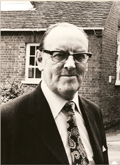
Lastly, on a visit to London Zoo with the Infants, Mr. Crozier was accompanying the party and was responsible for a group of some six small children. We were at a cafeteria at the foot of the Mappin Terraces and the children had just purchased ice creams or drinks when Mr. Crozier realised one of his group was missing. We looked around for him and suddenly he appeared at the top of the Terraces running happily along looking at the bears. We shouted to him to stand still and wait. We then approached him from both directions so that he could not escape again.
Radio broadcasts was received in all classrooms via a loudspeaker which plugged into a socket in each classroom. Some of these sockets still remain in the old block. The loudspeakers were heavy and cumbersome and had to be carried from the cupboard in the administration area as needed. These were replaced by modern radio/cassette players when the new block was built.
In the early 1970’s, Mr. Crozier agreed to a Parents Association being set up and this has proved its worth time and time again. There is always a small core of very hardworking parents who are willing to give up so much of their time for the good of the children and the school.
A large number of the children in the 1960’s and 1970’s came from the Military Services College at Latimer (now known as the Parkfield Estate). Some were children of officers attending courses at the College, some of whom were only with us for a few weeks, some for longer. The others were the children of the ‘other ranks’ who were employed in various capacities on the Camp. These children were with us for up to two years. There was a constantly changing population and you never knew how many new children might turn up on a Monday morning or who might have suddenly left due to a parent’s posting. They all lived in furnished accommodation on the camp so moving out did not pose a problem to them – only to us!
There was a rather ‘them and us attitude on the camp – the Officers all lived in The Grove (and in the latter years in Spring Close and Chess Close also) and the ‘other ranks’ in The Ridings. It was noticeable that in most cases, the children’s friends were also from the same ranks.
Initially my job mainly consisted of answering the telephone and typing letters etc. on an ancient manual typewriter and duplicating items on an ever more antiquated ink duplicator (I usually ended up with more ink on me than on the paper!) When the Headteacher had an appointment, I often had to make myself scarce and sit in the cloakroom.
The Head heard readers from the Infant Classes daily and I soon knew the Janet & John series of books off by heart, to say nothing of Chicken-Licken, Hen-Len and Cock-Lock! It became very tempting to prompt the children when they stumbled over reading a word.
The organisation of the ordering of supplies was altered in the early 1970’s and we were told, as far as possible, to order from the G.L.C. Their ordering system was quite complicated and it resulted in all clerical staff being awarded extra hours to cope with this. I was then working 15 hours per week.
The Parents’ Association agreed to pay for the rental of a colour television set and from then on, all classes have watched a number of schools programmes each week.
In 1973, the Local Authority changed the age of transfer to Secondary School to 12+ (now where have I heard about changes to the age of transfer recently?) This meant that accommodation had to be found for another year group in the school. In late 1973, there were murmurings of a possible extension to the school to provide more classroom accommodation together with new toilets and administrative offices. There was also talk of a Staff Room and Staff Toilets!
Plans were drawn up and work started on the demolition of the old ‘Barns’ and by the beginning of 1975, the New Block had been completed. During the building work, a Portaloo Toilet Block was installed in the back playground and a temporary door was installed in the end wall in Class 2 which gave access onto the back playground. What elation there was amongst the staff – we had our own room and more importantly adult height toilets. Unfortunately. at the time of the completion of the New Block, the Headteacher Len Crozier was taken ill and was not in school when the New Block was opened.
The Headteacher and I now had our own offices and there was proper indoor storage space for stationery etc. Not only that, but new administrative equipment was supplied as part of the new set-up. I now had an electric duplicator, a filing cabinet and stationery storage facilities.
Class 3 moved into their new classroom which was fully equipped with new furniture. Even the Cleaner had a new stock cupboard. The Library was set up and what had been a classroom now became an area where various activities could take place between Classes 1 and 2. The change in the school seemed enormous to those working there at the time.
Life went on as normal with a regular turn-over of pupils. There were not many staff changes as staff at Chenies seem to say for long periods of time. This is good for all concerned as it gives stability. The first Penny Fair was held in 1979 and the first Class 2 Camp at Shortenills in April 1981. I went to this camp (and all the subsequent ones) as Head Cook & Bottle Washer and filler of Hot Water Bottles. The weather for this first camp was freezing and the water carriers and even the gas bottles had to be defrosted before use in the morning – we survived and all enjoyed ourselves.
In January 1982, everything about our nice ordered life was to change abruptly. Len Crozier, the Headteacher had suffered a couple of bouts of heart trouble during his time at Chenies and at the end of January, he was off sick with what seemed like gastric flu. On the morning of Friday 28th January 1982, at about 8.15 a.m. I received a telephone call from the Deputy Head, Joyce Gilding, to say that Mr. Crozier had died suddenly at home in the School House that morning.
I went straight in to school, arranged for a Supply Teacher to come and take over Class 3 and together with the Deputy Head, took on the awesome task of informing the Local Authority and others of the news of Mr. Crozier’s death.
The children had known that Mr. Crozier was ill and that when they were out playing, they should try to be as quiet as possible, so it was decided not to tell them anything else until the end of afternoon school. At playtimes and at lunchtime, the children were told that they could either stay indoors or play in the back playground. I don’t think any of the children suspected anything.
It was decided that each Class Teacher would break the news to her own class at the end of afternoon school and the children would take a letter home to inform their parents. The children’s teachers escorted them to the school gate. The parents waiting there immediately read their letters and silently moved away from the gates and went home. It was very moving to see this reaction.
Mrs. Gilding and I stayed on to try to sort things out. Just after everyone else had left, a lorry arrived – it was delivering the long-awaited new dining tables! What a day to choose! Upon seeing the lorry, we both got a fit of the giggles – we supervised the unloading of the tables and when the men had left, we collapsed crying in each others arms – we were exhausted both physically and mentally. Thank heavens we had the weekend to collect our thoughts for the future.
My fondest memories of Len Crozier are his wonderful piano playing on various occasions. l especially remember him when I hear the hymn ‘God is love, his the care played. It also took a long time to get used to not hearing him whistling the same tune everytime he walked about the school – at least you knew he was coming!
With the sudden death of Len Crozier, the responsibility for the running of the school fell on the shoulders of Joyce Gilding. To enable her to take on this burden, she had to give up teaching her class and become Acting Head. Len Crozier’s funeral service was held in Chenies Church which was packed with parents, staff, villagers and colleagues from other schools together with representatives of the Local Education authority. He was a much respected member of the community. As a mark of respect, the school was closed for the day. Life in the school went on and the children quickly settled back into their routine. Joyce Gilding continued as Acting Head until the end of the Summer Term.
Len Crozier had been due to take early retirement and had planned to leave the school at the end of the Summer Term. It had been his wish to take the whole school on a special outing as one of his last duties at the school. A trip to the Army Display at Aldershot had already been planned before his death and it was his widow Evelyn’s wish that this went ahead. The day of the outing dawned fine and warm and at 8 a.m., children, staff and parent helpers piled into three coaches and set off. We all arrived safely and split into groups to see the sideshows and demonstrations.
The younger children were told that under no circumstances were they to go on the Aerial Runway and I vividly remember the horror felt by myself and the Welfare Assistant, Brenda Hampton, when we saw a child who was to join us in September and who had come on the outing with his mother, coming down the runway. Of course, the other children thought this most unfair. We all met up in the afternoon for the Arena Display, the highlight of which was a display of climbing the rigging with the ‘Bell-Boy’ at the top. We all made our way wearily back to the coaches for the journey home. The majority of the younger children slept most of the way whilst the older ones had a sing-song. We all arrived back at about 7 p.m. totally shattered but very happy.
Interviews for the post of Headteacher were held and Norman Reeves was introduced to us as the new postholder from the start of the Autumn Term 1982.
Part 2 – 1982 – 1996

We all realised that with the advent of a new Headteacher, there were bound to be changes. It was a difficult time for us all – the resident staff wanted to protect the status quo of the school the way they were used to in most areas, but also had ideas of improvements/changes that they would like to see. On the other hand, we had to realise that we had a new ‘man at the top’ who had ideas of his own and he did not take too kindly to being told ‘we do it this way here. We soon learned that it was much better to phrase it ‘we used to do this or that, but if you want to change it……..‘ In most cases, things stayed as they were!
When Mr. Reeves started here, he was a full time Headteacher, who did a small amount of teaching. There were 95 children on roll in 4 classes. We still had a number of children from the National Defence College but this was to change later when the N.D.C. closed. One of Mr. Reeves innovations was the School Journey, the first being to Hampshire & Dorset in April 1983. I have been involved with a lot of the preparations for these journeys over the years and now feel as if I know an awful lot about the Lake District, especially about Beatrix Potter and also about the North Devon area.
Soon after Mr. Reeve’s arrival at the school, I found that the old manual typewriter was getting well beyond its useful life and I asked if it would be possible to have a newer model. Mr. Reeves readily agreed to this and the purchase of an electric model was made. What a difference.
With the demise of the National Defence College, the number on roll dropped and this meant that our funding dropped, thus resulting in the need to reduce the number of teaching staff. This meant that Mr. Reeves had to take on the task of teaching a class in addition to his role of Headteacher. As his teaching schedule became greater, more responsibility was placed on me, which I have enjoyed. The demise of the School Dinner Service relieved me of the task of collecting, counting and banking the money each week.
The advent of the computer age filled me with dread – I was sure I would not be able to cope and was very tempted to retire then. It was, however, not as bad as I had feared although there are still many tasks which I find quicker by hand. It seems incredible that to now enter a new child onto the school roll, the following motions have to be carried out:
- Enter the child manually into the Admissions Book and issue an Admission Number.
- Enter the child onto the Computer records.
- Make out manually a record card and medical record card.
- Fill in manually an Entrants Medical Return for the Health Authority.
- If the child is over 5 years old, fill in manually a Transfer Form.
So much for the computer age!!!
The advent of the National Curriculum has created a greater workload for Teachers but for Secretaries as well. So many records now have to be kept on the computer and I understand that more are in the pipeline for the near future. I have been very lucky to have been allowed to take on responsibilities outside what you would consider the normal duties of a School Secretary – hence the title of this epistle – ‘Job Description – What Job Description? I have assisted at camps and on outings, organised the Annual Christmas Fayre, taught swimming, helped with the production, costumes and scenery for school plays, helped organise Craft Days and even at times taken classes.
I do find it sad, however, that the children’s outlook on life has changed so much – they no longer have respect for adults or their peers; they are far more self-centered; they have little or no respect for authority to the point of being downright disobedient in many instances. I don’t feel they are as happy-go-lucky now and they are certainly not able to create their own amusement with simple toys and games.
However, Chenies is and as far as I am concerned always has been and I hope will continue to be an extension of my family. We are a small, close-knit community. Over the years, most members of staff have suffered the deaths of parents or other close relations, have been ill themselves, or have suffered personal problems which seemed insurmountable at the time, but the support received from the others has seen us through these times and 1 am sure this will be true in the future.
The past few months have been very busy working up to the 150th Anniversary Celebrations and the past year has passed very quickly. It has been very interesting making contact with past pupils, parents and staff and I now look forward to meeting them again.
Although I am excited at the prospect of my retirement to Norfolk and taking things a little easier, shall miss everyone at Chenies. I shall think of you often and hope to be invited back to some of the events which will take place in the future.