

Thomas Trafford Boughton, affectionately known as ‘T.T.’, was born in about 1875 at Chenies Manor House, and became an agricultural engineer at the family’s Chenies Manor Farm where his father, John Henry Boughton, was a farmer and miller. The family can trace its origins in the area going back to 1724.
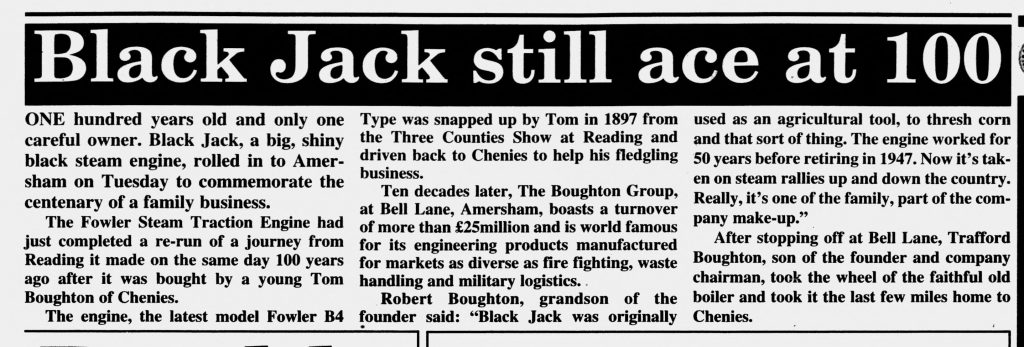
Thomas started his Chenies business at the age of 21 along with his father. The company dates itself from the first transaction made, which was in June 28, 1897.
At that time the well-paved and engineered network of roads throughout the country which we take so much granted was little
more than series of cart tracks. Cars were no more than dreamed of but beer was cheap. According to Thomas it was ‘not difficult to get a pint of beer, a wedge of bread and cheese, a pickled onion and a punch on the head all for the princely sum of 2d.”
Maintenance of the roads was the responsibility of locals in the villages and towns through which they passed, and amounted to the filling in of the worst potholes by taking stones from the fields and farms along the route. John Boughton was responsible for a stretch of the A404 near to Amersham.
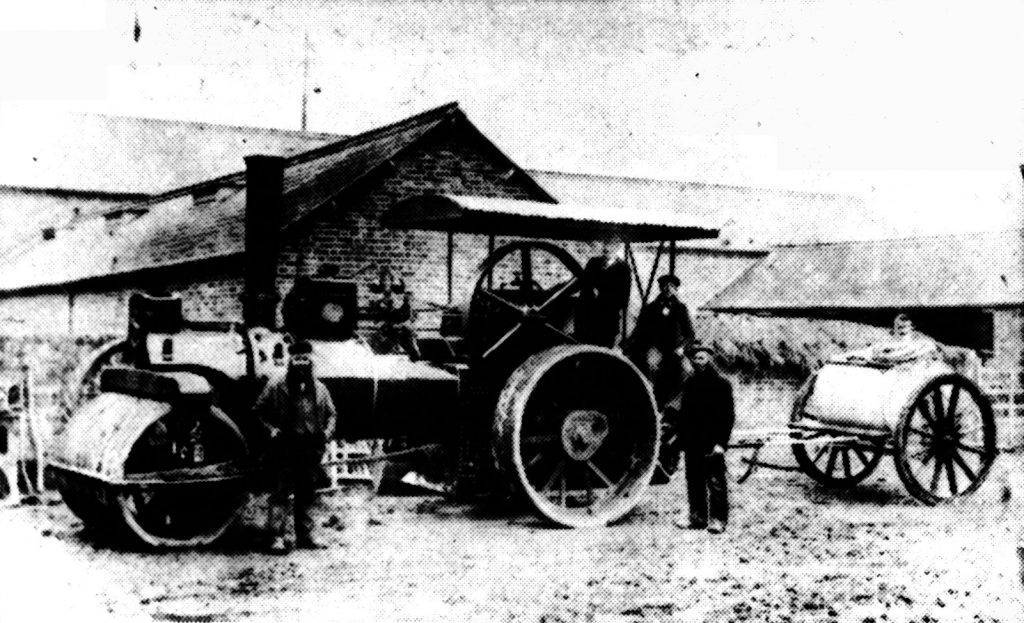
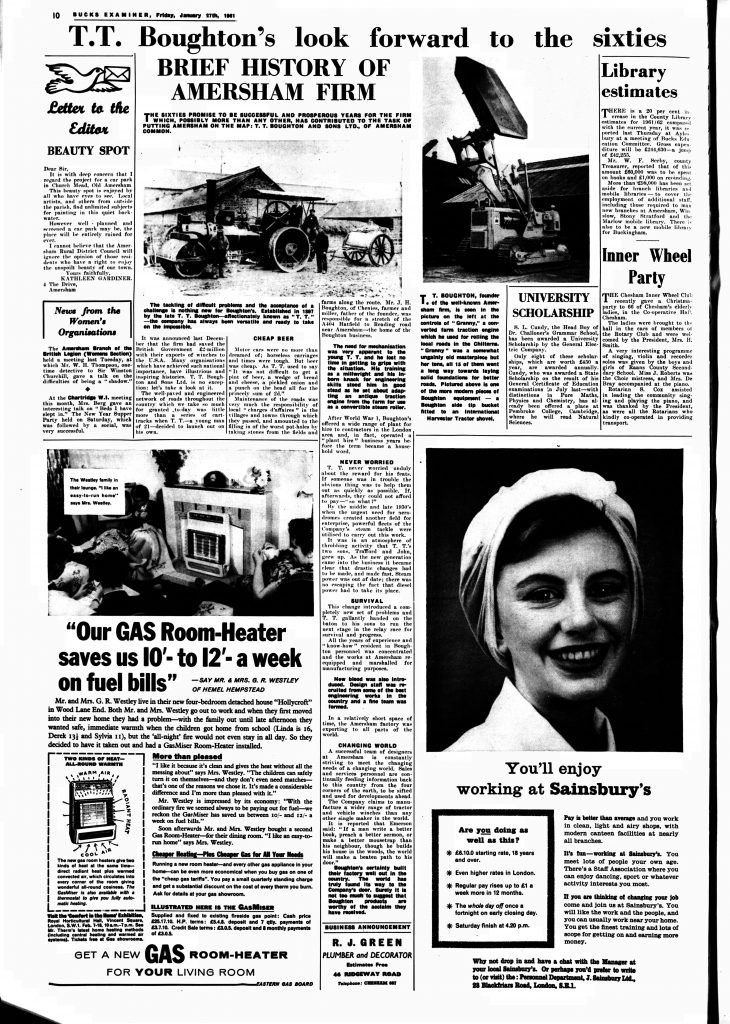
The need for mechanisation was very apparent to the young T. T. His training as a millwright and his knack for engineering stood him in good stead as he set about adapting an antique traction engine from the farm for use as a convertible steam roller, and from there he started to manufacture agricultural machinery.
As the business grew, Boughtons moved to Bell Lane, Amersham, in 1903, and after World War 1 it offered a wide range of machinery for hire in the London area, even before “plant hire” became a household word. One article in the Buckinghamshire Examiner declares Thomas ‘most proud of developing a highly sophisticated fire engine chassis‘.
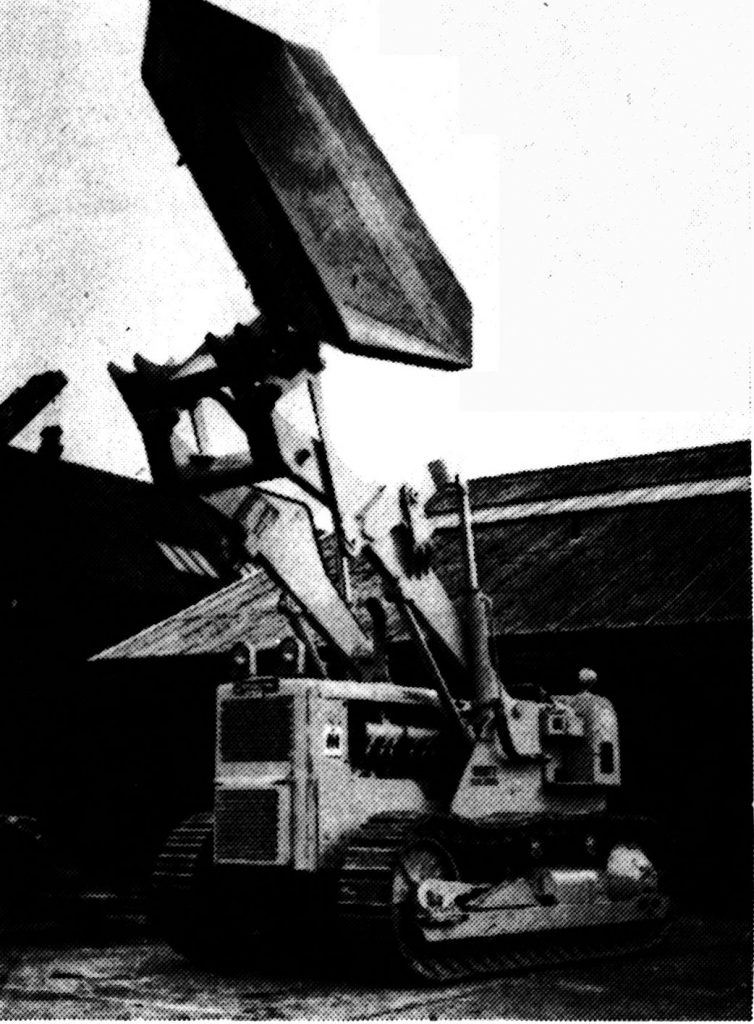
“Granny” (see above image) was a somewhat ungainly old masterpiece but her tons, all 15 of them, went a long way towards laying solid foundations for better roads. Pictured on the right is one of the more modern pieces of Boughton equipment – a Boughton side tip bucket fitted to an International Harvester Tractor shovel.
One newspaper reports that T. T. never worried unduly about the reward for his feats. If someone was in trouble the obvious thing was to help them out as quickly as possible, and if they could not pay then that was no matter.
By the middle and late 1930’s when the urgent need for aero-dromes created another field for enterprise, the company’s steam engines were utilised to carry out this work.
Thomas’s two sons, Thomas and John (both namesakes of their elders) both grew up surrounded by the work of Boughtons, and as steam power became less relevent they began introducing diesel powered engines instead. This change prompted T.T. to hand on the baton for the next stage of the business, which continued to grow in strength and size.
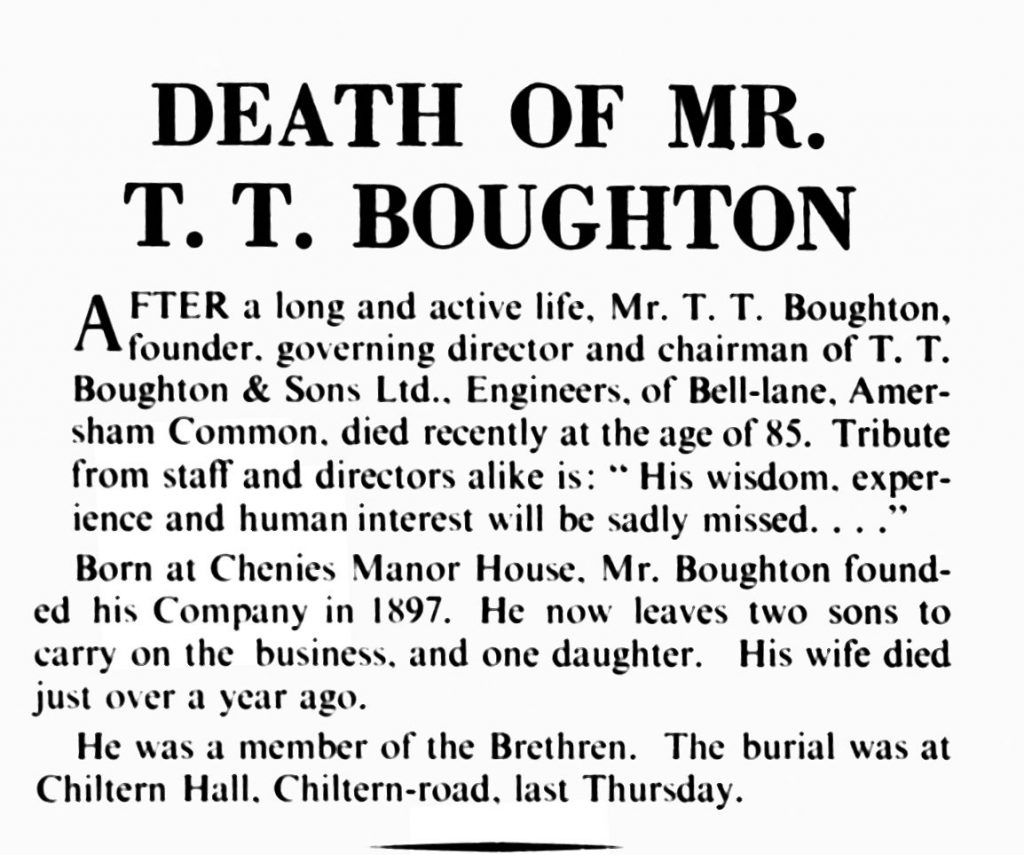
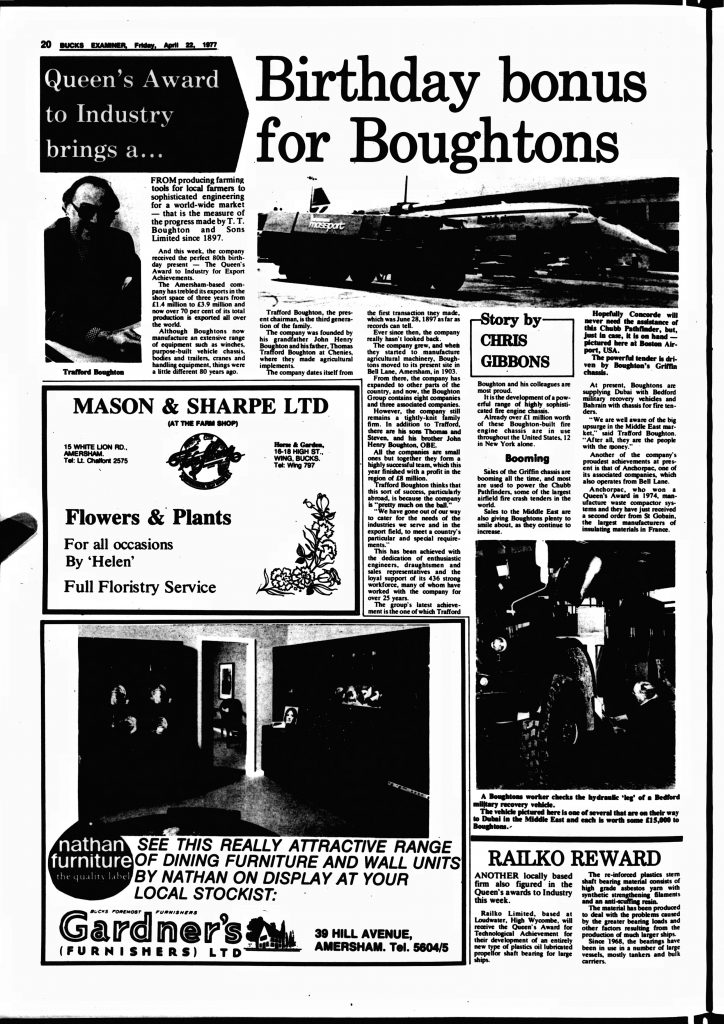
After a long and active life, Thomas died aged 85 in 1959, leaving his two sons to carry on the business, and one daughter. In 1977 the firm received the Queens award to Industury for Export achievements, and in 1989 they received a Fit for Work award for employing people with disabilities. “My father was a very compassionate man,” said (young) Mr John Boughton. “I remember one man used to cycle in from Chenies with one leg!“
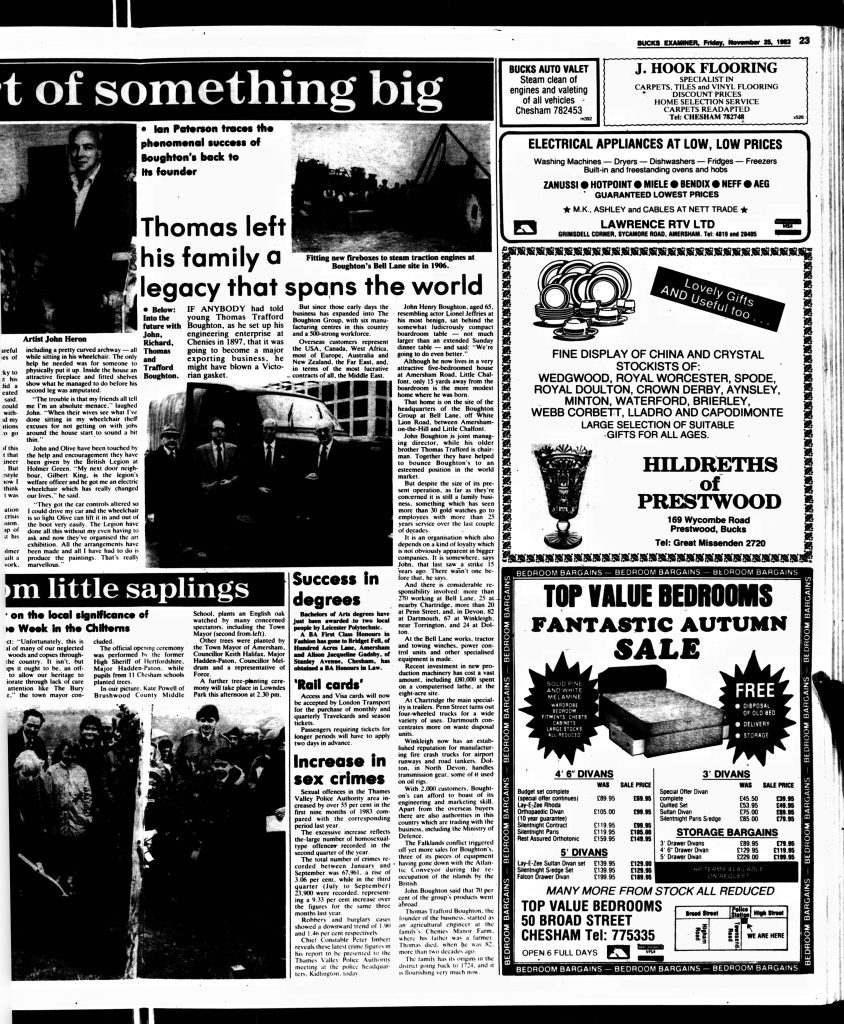
Although he (John Boughton) now lives in a very attractive five-bedroomed house at Amersham Road, Little Chalfont, only 15 yards away from the boardroom is the more modest home where he was born. That home is on the site of the headquarters of the Boughton Group at Bell Lane, off White Lion Road, between Amersham-on-the-Hill and Little Chalfont.
Below are some newpaper articles from the Bucks Examiner about T.T. and his company.
sources, The Bucks Examiner
contributer, Rachel Bishop
Date published 15 April, 2026