


The First Church
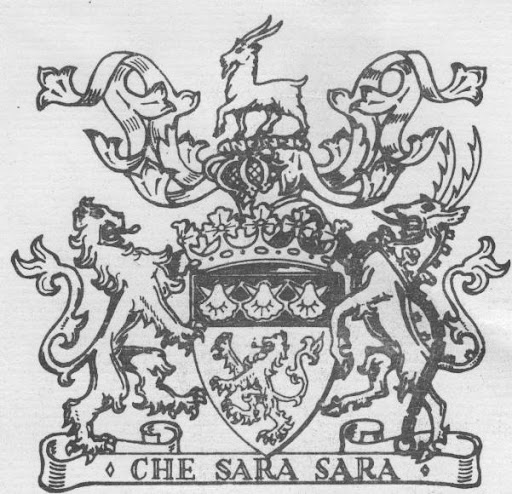
The earliest record of a church on this site is believed to have been built in the latter part of the 12th Century by Alexander de Isenhampstead (or Isenhamstede, the earliest name for the village of Chenies) who held the Manor of Chenies in 1195 for a knight’s fee. Alexander was also known as Alexander de Cheyne, eventually leading to the village being known as Chenies.
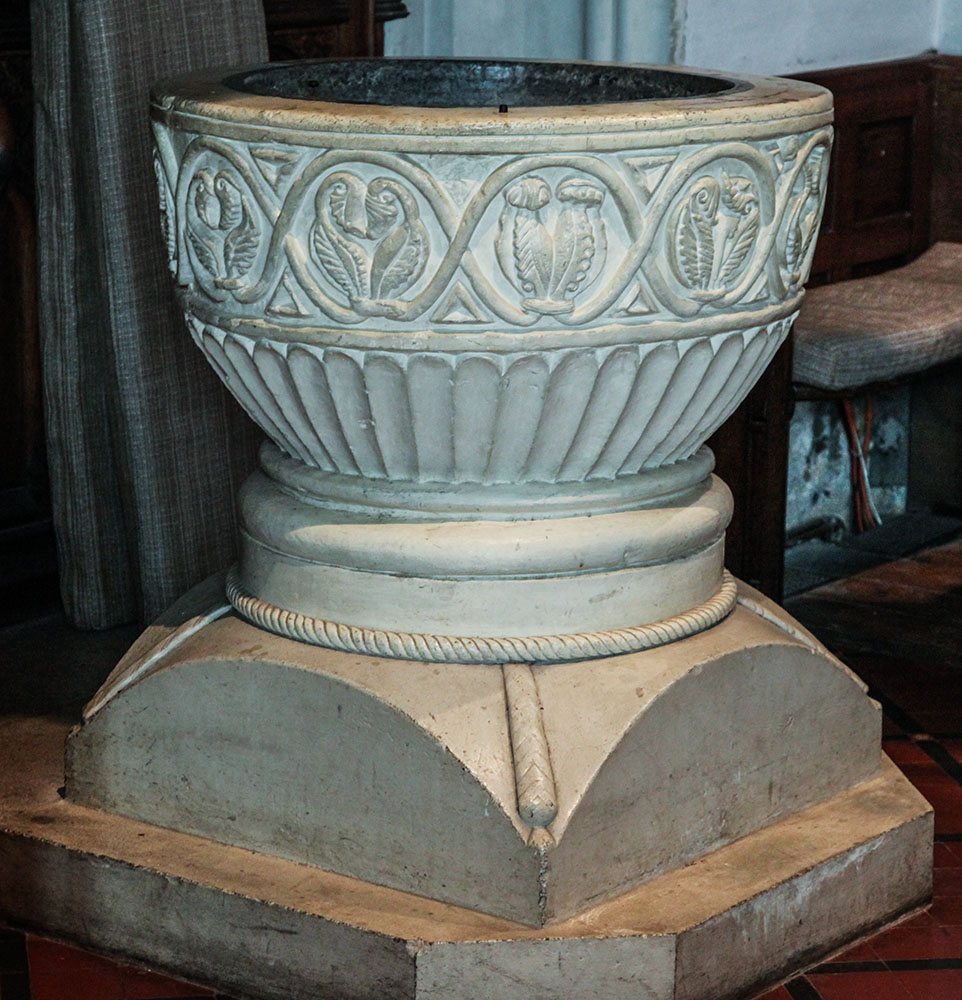
Nothing exists of this first period of settlement except some relics of a capital and font in the present church, St. Michael’s, said to have come from an earlier church on the site and now located at the foot of the pulpit. The 12th Century font is a fine example of the renowned “Aylesbury” style which can be found throughout Buckinghamshire, Northamptonshire and Bedfordshire, and is in excellent condition which suggests it was well looked after, and adds weight to the view that the first church dates from the last part of the 12″ Century.
The first recorded Rector of St Michael’s was John de Chednuit (a variant spelling of Cheyne), who was presented to the church by Alexander de Chednuit in 1232.
John became Rector at a time when church leaders in England, allied with Rome, were heavily involved in the governance of the country and King Henry III was on the throne.
During his reign there were three more Rectors of St. Michael’s. Eustachius de Offul was appointed in 1232, Symon de Wycombe in 1264, and Johes de London in 1267. Eleven further Rectors served the parish in this first church. John de Falde was presented in 1326 and his ministry lasted until 1359. He was the incumbent in 1348 when the plague was first recorded in England, and in the ensuing years when it’s terrible effects halved the population.
John Langeporte was appointed in 1418. His ministry lasted until 1461, and covered the period when the present building was commenced, around 1450.
Thomas Wheeler became Rector in 1461 but resigned in that same year, to be replaced by Richard Challoner.
The Second Church
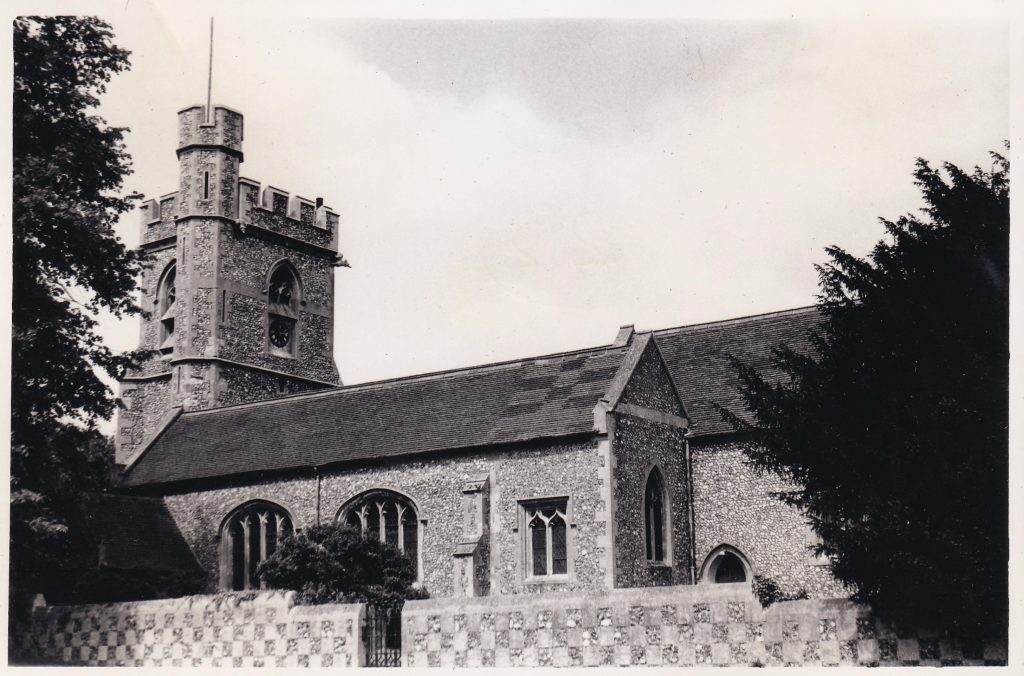
In 1479 Edmund Molyneux presented Thomas Weldon as the new incumbent, and a decision was taken to substantially reconstruct the church, replacing it with the stone and flint building that we have today. Particular attention was given to the Chancel roof and the south arcade (or aisle). This work continued for thirty years, during which time the widow of Sir John Cheyne died, leaving the Manor to her niece, Lady Anne Philip. In the year 1500 she took possession of the manor along with her husband, Sir David Phelip who continued the work of rebuilding the church. When he died in 1506, he left £4 in his will to “fynyshe my building of the parish church of Chenies.”
On the event of Anne Philip’s death in 1510, the manor passed to her granddaughter, Ann Sapcote who in 1526 remarried to one John Russell, marking the change in ownership from the Cheyne to the Russell family, with whom the village and Church’s history has been inextricably linked ever since. Anne Philip is commemorated by one of the memorial brasses, and it is likely that Sir David is the donor figure in the east window.
During the building period, a succession of Rectors followed Thomas Weldon, including John Cooper and Richard Newland in 1483, and Robert Leffe in 1504. In 1509, Henry VIII ascended to the throne, whose favour John Russell quickly garnered, earning him a Barony in 1539. King Henry visited Chenies twice during his reign, and would have noticed the substantial work John Russell put in to improving the manor and estate.
During this period Peter Calcot was installed as Rector in 1527; William Burham in 1530; Nicholas Smythe in 1534 (probably a son of the Nicholas Smythe commemorated on the brass by the south door), and finally, William Quarton in 1547, the year Henry VIII died.
This was a tumultuous time for the church. Non-conformity had been a latent force in the Chilterns since the turmoil of the Wycliffe era, and yet there was severe opposition from the church hierarchy to allowing the common people access to the Bible in the vernacular. In 1534, King Henry broke away from the Catholic Church and set himself up as the head of the Church of England.
By 1535 bibles in English were being smuggled into the country and becoming widely available. In 1538 Lord Thomas Cromwell directed the clergy to have a copy of the Bible, in English, accessible in every church in the land, and Thomas Cranmer prepared the Book of Common Prayer in 1547 which came into use throughout the land in June 1549.
In 1553 John Knox paid a notable visit to the county preaching a sermon promoting Protestantism at Amersham on the eve of the succession of Queen Mary, who returned the English Church’s allegiance to Rome. Not every Russell supported the Catholic Church however. The National Archives hold a record that states:
‘Two leading members of the Council at this time, the Earl of Bedford and Sir Thomas Cheyne, were intimately associated with … the old Lollard stock already more than once referred to. It is noticeable that Knox seems to have begun his labours near Bedford’s seat of Chenies. He may very likely have been entertained at the old manor-house, still standing, which was built a few years before his visit. The Lord Russell to whom he was commended was probably Lord Francis, afterwards the second Earl, a man who not only staunchly supported the cause of Protestantism, but also cherished the traditions of the older reforming movement.’ The Lollards of the Chiltern Hills by W. H Summers
In 1555, John Russell died and in 1556 his widow Anne, Countess of Bedford built the Bedford Chapel in accordance with the instructions in his will. With Reformer Francis now seated at Chenies, and the ongoing feud between catholic Queen Mary and protestant Queen Elizabeth, the Rectors of St Michael’s may have had a challenging time.
John Hambleton succeeded as Rector in 1558, the same year Queen Elizabeth reversed Queen Mary’s decision on Rome, and John Yeoman in 1560. Three years later, the Church of England was established by the adoption of the 39 Articles.
Humphrey Roberts became Rector in 1573, to be succeeded in 1575 by John Cawador. Master Peter Alibond was invested as Rector in 1592, and served for 36 years until 1628. He seems to have been something of a rebel, and was rebuked for not wearing a surplice, and hauled before the church court for trespass and for keeping five unringed pigs. During his incumbency it is recorded that there were, “The usual entries for dereliction and non-payment of tithes.”
Anti-Catholic legislation was increased in 1605 after the Gunpowder Plot, and in 1611 the Authorised Version of the Bible was published. George Jay was Rector for just a year in 1628, with his successor John Whiting lasting only two.
John was followed as Rector by William Sparke and John Jemmatt, both in 1641. The existing pulpit dates from 1640, and was originally three-tiered (now only the top is original). In these Puritan times, sermons were much longer than they are today – one sermon is recorded as lasting 5 hours! Life in England continued to be tumultuous, with Civil War breaking out in 1642 between Charles I and the Parliamentarians who were deeply concerned with Charles’ Catholic leanings. On the 23rd October the Battle of Edgehill was fought in which William Russell, the 5th Earl of Bedford was present as General of the Horse. William fought first on the side of the Parliament and then on that of the King during the Civil War, and at one point Chenies Manor was garrisoned by the Parliamentarian forces.
In 1645 Archbishop Laud was beheaded for treason. This first civil war ended in 1646, but tension continued and war flared up twice more until the Royalists were finally defeated in 1651.
Religion continued to be a point of conflict for many in the country however. In 1662, the the Presbyterian-minded Rector of St. Michael’s, Benjamin Agas, was among the 2000 ministers ejected under the Acts of Uniformity. These were a series of laws passed that attempted to establish a standardised religion, mandating the exclusive use of the Book of Common Prayer and requiring all citizens to attend Sunday services. Many ministers were expelled from the Church of England for failing to comply.
A Church Neglected
Benjamin was followed by George Potter in 1663, and by William Burroughs in 1667. The latter reported that there were no dissenters in the parish, a statement he must have known to be untrue. Another William Burroughs became Rector in 1704, followed by Edward Daynell in 1749. It was to be a century of dilapidation for St. Michael’s, though whether the cause was poverty or wilful neglect is unknown. Certainly, one incumbent visited but twice a year for the fishing! It is recorded that his five hour sermons might be curtailed by the verger’s whispered advice, “Hurry up, they’re rising.” We don’t know who that Rector was, but George Jubb, appointed Rector in 1751, was a pluralist who held livings in Toddington (Beds.) and Cliffe (Northants.), as well as Chenies. A later, and reportedly saintly Rector, described Jubb as “a wolf in sheep’s clothing”, and indeed he became the indirect cause of the Baptist Chapel’s construction in Chenies in 1778.
It was known that Jubb had a very comfortable living, yet was continually absent from his parish, and it is very likely this apathy that influenced John Davis, the then steward of the Manor, in his opinion of the Church of England along with Jubb’s refusal to recognise John’s daughter Elizabeth’s marriage to John Lamb, stating that her five children were born out of wedlock, and therefore were registered in baptismal records as being ‘in sin’. John was expected to follow the Church of England, since the Duke was himself an ardent patron and a great friend of the Rector, Dr Jubb, however the situation came to a head in 1773 when John Davis resigned his position as steward and became a Baptist.
The following extract from the records of the Baptist Chapel reveal quite clearly the passionate under-currents of the situations:
“In the year 1775, a clergyman officiated at Chenies Church whom the present rector described to me as a wolf in sheep’s clothing. It was a time of great laxity in the discipline in the Church of England, and there were a great laxity of discipline in the Church of England, and there were a great many sporting Parsons whose lives would not bear strict investigation. This man was one of those. My great uncle Mr Davis was at the time steward to the Duke of Bedford and lived at the large house by the Church. He could not stand the goings on of the rector, so he bought two cottages and the field on which the Chapel stands, resigned his office under the Duke, helped to build and gave the land for the chapel, gave the ministers house and the land on which it stands to the cause. The whole was placed in the hands of the trustees, he retaining the cottage and garden lying between the chapel and the minister’s where he ended his days”
The Baptist Chapel was built in 1778, and formally vested in 1779.
By the late 1700’s the Church was in a poor state. The chancel roof had collapsed and the chancel itself was closed off and abandoned. Rectors during this period included Francis Randolph in 1788, William Morris in 1795 and then John Wing in 1827.
A Church Renewed
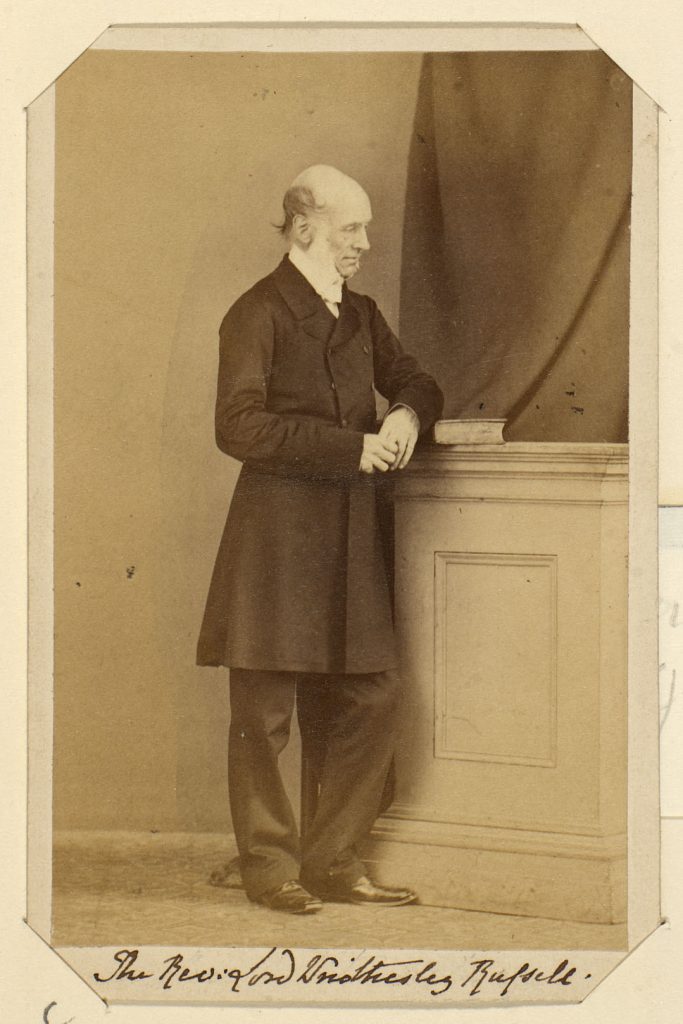
In 1829 a new Rector was appointed aged just 25. A younger son of the 6th Duke of Bedford, and a personality whose memory is still treasured in the village, Lord Wriothesley Russell set about repairing the Church and renewing the relationship between the church and it’s parishioners. Although offered high office in the Church he refused to leave his village flock, and in later years Russell was a chaplain to Queen Victoria and Prince Albert.
Russell remained in office for fifty-seven years, and that period – and that of his successor Reginald Shann – was a golden age for both the Church and the village. The Dowager Duchess Adeline recorded that it was “a period of great agricultural prosperity”. Under Russell’s care the church was closed during 1835-36 for major restoration, reopening on 23rd June 1836. Two sermons were preached for the occasion.
Wriothesley Russell persuaded his father, the Duke, to permit him use of the armoury wing of the Manor House as parish rooms. This, for the times, was a great innovation. Two large apartments at the west end were remodelled for the purpose, and the Rector utilised them for both village and church activities. In the days before the village school was built in 1846 he taught the village children to read and write in the Rectory kitchen, and it is recorded that he refused to have a new carpet in his study as the men would not like to walk on it in their boots. He also started an orphanage for boys in what are now the Platt Cottages and opened the new burial ground opposite the Church overcoming some opposition by promising that was where he and his wife would be buried when the time came.
The affection in which he was held is attested to by the lovely illuminated address, with its charming watercolour scenes, which still hangs in the church. This address was presented to the Rector by the villagers to mark his 50th anniversary as their priest. On each side of the address may be seen the signatures of the donors – said to include the whole village. It is interesting that some of these names are still to be found either in the village or the surrounding area.
A considerable amount of work was done on the church in the period 1861-1887. The flint facing was reworked during this period, but a sketch dating from before 1864 shows a brick face with stone corner work, and this may have made during the process. In 1864 the porch to the south door, battlements, turret, and flagstaff were added. The early sketch reveals a weathercock in place where the turret now stands. An even earlier sketch shows much smaller crenellations, predating the level balustrade as it was just before 1864. In 1885 the Bedford Chapel was extended westwards towards the Tower.
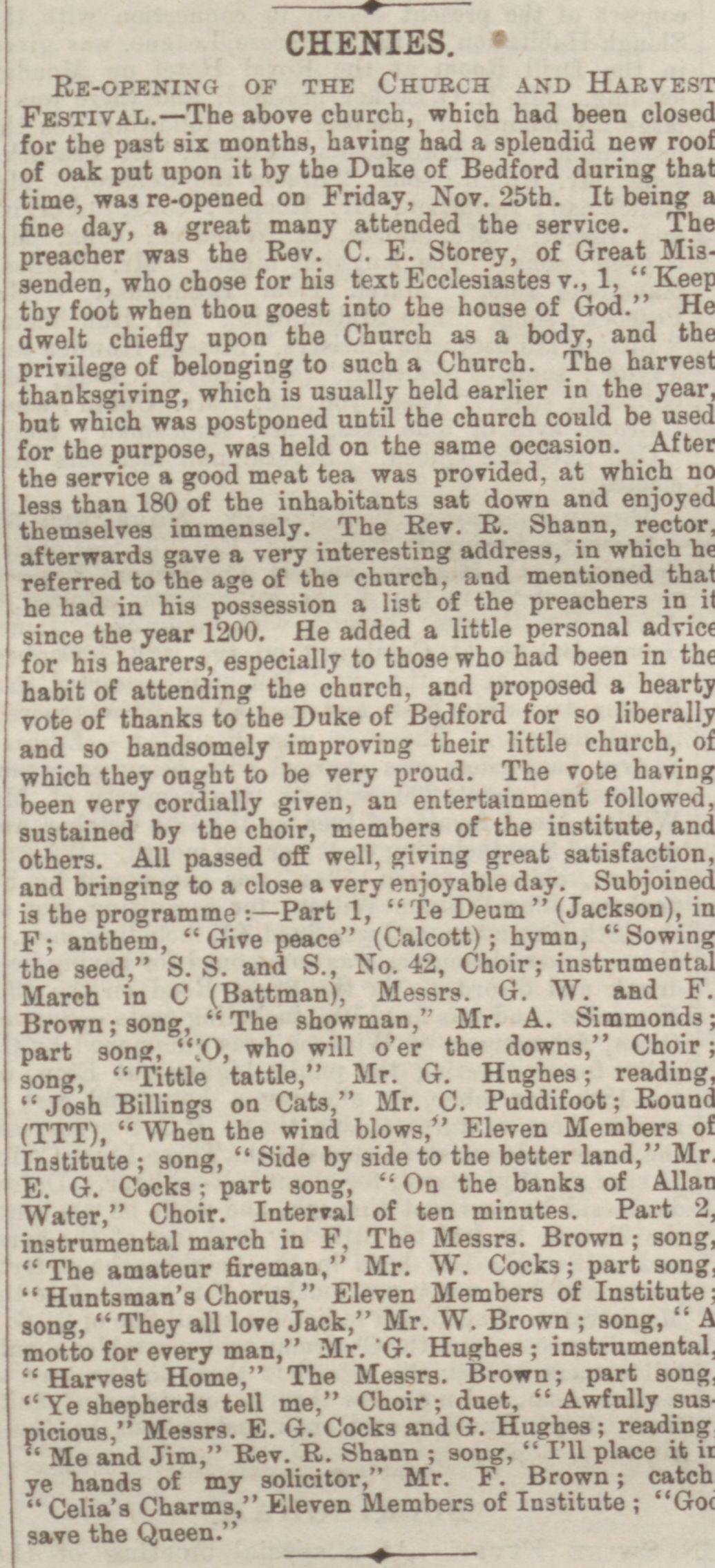
Improvements to the building continued under Russell’s successors. Reverend Shann became Rector in 1886, and in 1887 the roof was raised and the present day hammer beam roof made of oak installed. The church closed for six months, and was reopened on Friday 25th November. The event was celebrated with a reopening service and harvest festival, followed by a ‘good meat tea‘ which was attended by 180 inhabitants of the village.
The wooden screen that you pass through immediately after entering through the main door was erected in 1891 at a cost of £68/15s/4d, of which £50 was contributed by 11th Duke of Bedford. The screen separating the bottom of the Tower from the Nave to form the vestry is also from the 19th Century; though the exact date remains unknown.
During the 18th Century the original 16th Century windows, with one small exception, were removed to Woburn and are now lost. Only the small “Donor” panel in the bottom centre of the east window remains. We have no record of the replacements that occupied the interim period, but between 1895 and 1898 new windows were installed as we see them today.
A faculty was granted in 1895 for the construction of an organ chamber, the installation of an organ, and for considerable changes to the south aisle. To make provision for the organ chamber the south aisle was extended eastward by thirteen feet.
The window in the east end of the aisle was moved to the west end, and a window in the Chancel was moved as a replacement. The window from the west end of the aisle was moved to the south side of the newly created organ chamber. Modifications were also made to the arches in the south aisle. The Chancel arch was installed, and seating in the south aisle rearranged. The corbels upon which the original roof rested remain, but appear to be improbably placed. In some cases, they lap over the edge of the arches; a circumstance explained by the reshaping of the arches at the time. The entire cost for the changes was born by Lady Ela Russell and the 11th Duke of Bedford. In 1906 the Bedford Chapel was extended once again.
The choir at that time sat in front of the pulpit whilst the chancel was reserved for Lady Blandford and Lady Russell who used to enter by the chancel door and sit in the choir stalls, one each side.
Joy Atkins, a member of St Michael’s, shared in her audio memoirs the following:
But old Fred Smith told me that Lady Ela Russell used to come over from Chorleywood House to church and would come in from the chancel door and the choir sat in the front pews of the church. I mean let’s face it, you didn’t mix with the riffraff! So the choir had to sit in the front pews of the church and there would be a chair at the end of the pews where the bowler hats were piled of men of the choir.
The cemetery, you may be interested to know, used to be many years ago, the fish pond for the Manor and there were buildings along the back of it. And that was eventually filled in and then of course, years afterwards, that was given for the cemetery and my father-in-law used to do a certain amount of the grave digging at one point. And he told me once that he’d almost finished digging a grave one time, he’d got the ladder down into it, when suddenly it started to fall in because it’s all made up ground you know, started to fall in. he managed to get out just in time but lost the ladder. That was still in there. And babies were buried under one of the trees in the churchyard if they died very young and and he said he could always remember his father carrying the coffin and taking it out there.
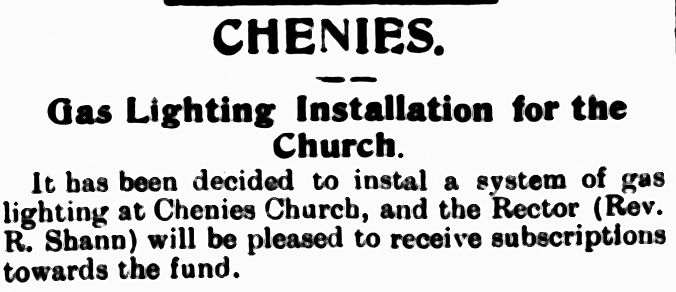
In 1912, the Reverend Shann organised fund raising to install gas lighting in the church.
In 1914, the declaration of war that occurred after the murder of Franz Ferdinand would lead to deep felt consequences for both the residents of Chenies and the Rector, Reverend Shann, after his son Reginald (also known as Rex) enlisted in 1914. After serving in several regiments, a promotion and being wounded at Arras, he was eventually killed in action near Hargicourt on the 21 March, 1918.
Within St Michael’s Church, and displayed on the north wall of the Nave is a memorial to him that takes the form of a large tablet set on a backboard with a triangular pediment and pilasters either side, a latin cross is above and scrolled apron below. This was commissioned by Adeline Marie, Duchess of Bedford, widow of the 10th Duke, and reads as follows:
TO THE HONOURED MEMORY OF
LIEUT REGINALD ARTHUR SHANN EAST LANC REGT
YOUNGER SON OF REGINALD SHANN. FOR 33 YEARS
RECTOR OF THIS PARISH AND ELIZABETH HIS WIFE
SERVED FROM 1914-1918 IN THE GREAT WAR
FELL IN ACTION AT HARGICOURT MARCH 21ST 1918
A GOOD SOLDIER OF JESUS CHRIST
THIS TABLET IS ERECTED BY HIS FRIENDS AND FELLOW PARISHIONERS
ADELINE MARIE DUCHESS OF BEDFORD
Reverend Shann served the community well during this difficult time, taking the funerals of several Chenies residents as well as a post-war memorial service for those lost. For many years he served on the school board, and he was also a member of the cricket club. During his years of service he also compiled a list of christenings, marriages and burials that took place at St Michael’s Church between 1592 – 1832 which provide a picture of the congregation over time.
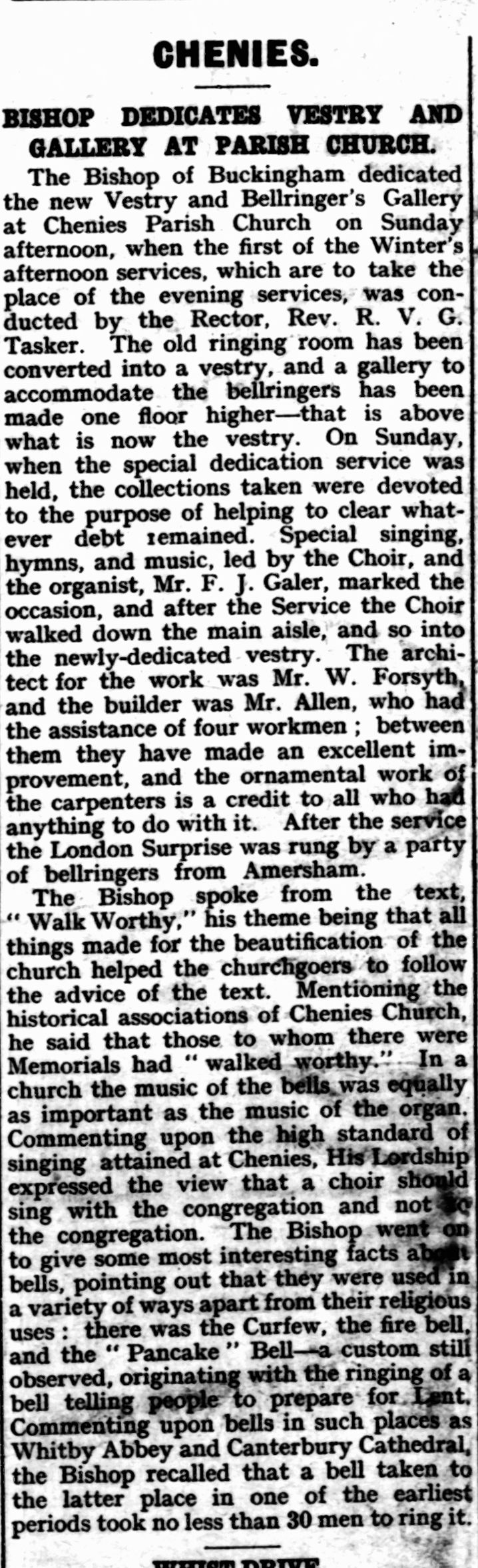
Charles Francis Clark became Rector in 1920 and R.V.G. Tasker in 1928. The altar rail was replaced by the present oak kneelers in 1931, and the stone footpace, upon which the altar still stands, was installed. The belfry chamber was installed in 1933. Prior to that date the ringers were to be seen at the base of the Tower, at the level of the Nave. Reverend Tasker held a service in which the Bishop dedicated the vestry and gallery.
In those inter-war years, Joy Atkins remembers bellringing at St Michael’s Church well. She recalls:
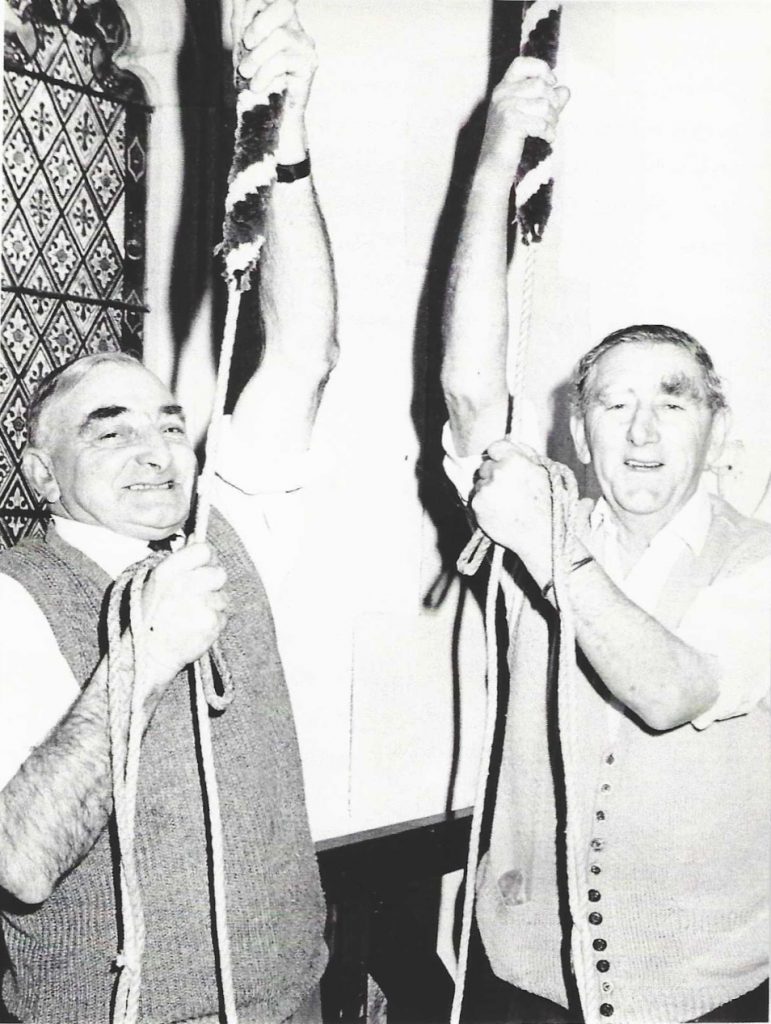
“The church is much about the same as it was in those days but the organ pipes now, are in front of the ringing gallery. In our days that was open so you rang up there openly, and you could watch when the bride came in. And I remember once seeing a bride come in and there was a big radiator at the back of the pews with the big tap at the bottom and the bride turned the corner and her veil caught on this and she was suddenly back. Of course we could see this from the gallery you know. Oh dear.
Archie Grover was one of the bell ringers. Archie Grover used to cycle from Amersham every Sunday to church and go to church afterwards but Archie used to come with the old oxford shirt. Many of you will remember, cotton shirt with a sort of a black stripe in it which didn’t have a collar on it, you added the collar. Well the working men very rarely added the collar and Archie would come to church in his shirt without a collar and tie and one of the then church wardens said to me one day ‘I think it’s disgusting the way Archie comes to church and hasn’t got a collar and tie on‘. I said ‘Well at least he comes to church, and many collars and ties are walking around and they never come to church‘ but he always came and was very regular.
Likewise Joe Goodman who lived at Common Wood never failed to come to church. He, if he couldn’t bike, he walked across the fields hail, rain, sunshine, snow, whatever, Joe would be there to ring the bells. And he did that for many many, years … Bill Bastin from Chorleywood was bell captain for a while and then, that was after the war because of course no bells during the war, and the Home Guard used the tower as their watching point obviously. And after Bill Bastin ceased to be captain, Bill (Atkins) took over and after Bill died, Joe took over and then Joe retired and went up to Norwich to be near family.
In 1934 Frederick Harold Smith became rector, and in 1935 he conducted a service together with the Baptist Church to open the village’s Jubilee celebrations, and another for the Kings Coronation in 1937. Smith also oversaw the installation of electric light in the church in 1936, and guided the parish through the terrible impact of the second world war.
On the 3rd July 1947, John Trevor Jones was inducted as Rector of Chenies by the Bishop of Buckingham, and in a church newsletter he writes of his joy at being welcomed to the church, and of his hopes for his incumbency.
In 1959, the Reverend Jones was the acting postmaster in the village, and allowing his tenant at the Old Village Shop to run the Post Office there. Due to a falling out however, the post office, contained in a metal box, was handed back to the Rector then who operated it from the Old Rectory where he ran it for a couple of mornings a week. He got into trouble however, in 1961, when one resident found that he was never present at the correct times, and the licence was taken away from him:
We moved into the village in 1961. You had milk tokens, when you became pregnant. I used to have to go up to the Rectory to get my stamps, and he was never there. I wrote to Watford GPO and said, could they please tell me what times I should go to the Rectory. So I was pushing the pram up when he wasn’t there and they came down on him like a ton of bricks. He should have been there. And they took the license away from him and gave it back to the village shop. He wasn’t doing his job properly‘.
In 1959-60 the original organ was destroyed by storm damage, and was replaced in 1960 by the present organ at a cost of £2363. The new organ console was placed at the south east corner of the Nave, which it still occupies.
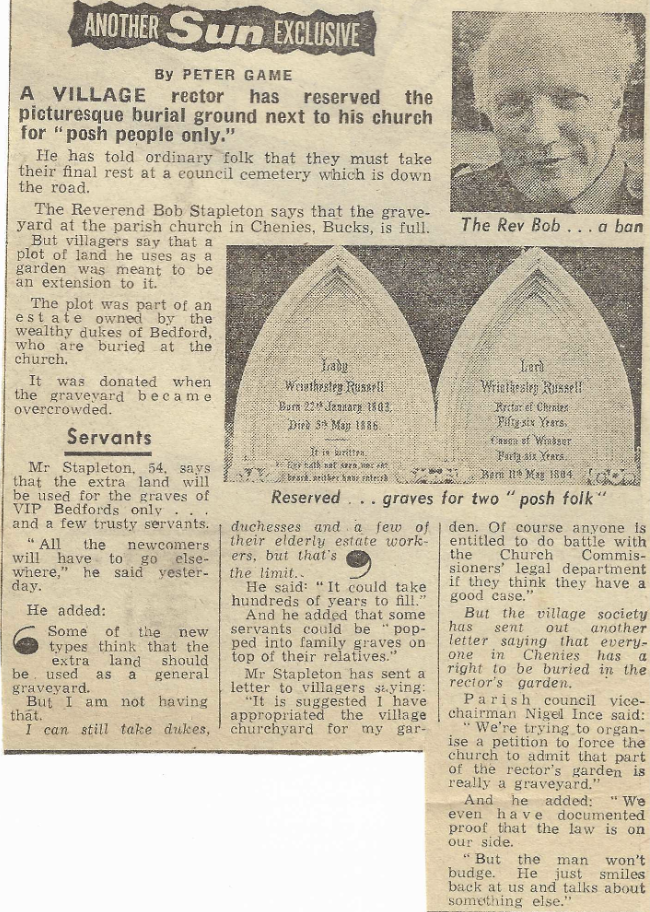
Robert (called Bob) M. V. Stapleton became Rector in in 1964, and in the late 1960’s a dispute arose between the church and the village regarding the churchyard once again reaching capacity. The Bedford Settled Estates had transferred some land to the Benefice, which became the Rectory garden. The Parish Council and Villagers believed that this land was intended as an extension to the graveyard. Villagers were angered when the Rev Stapleton said he would only bury relatives of the Duke of Bedford in the remaining space rather than surrender his garden. By 1980 this hit the local and the national press (see here, here and here) and 130 village residents signed a petition supporting this view. Rev. Stapleton’s letter to the village can be viewed here. This was finally resolved in 1985 by compromise on both sides.
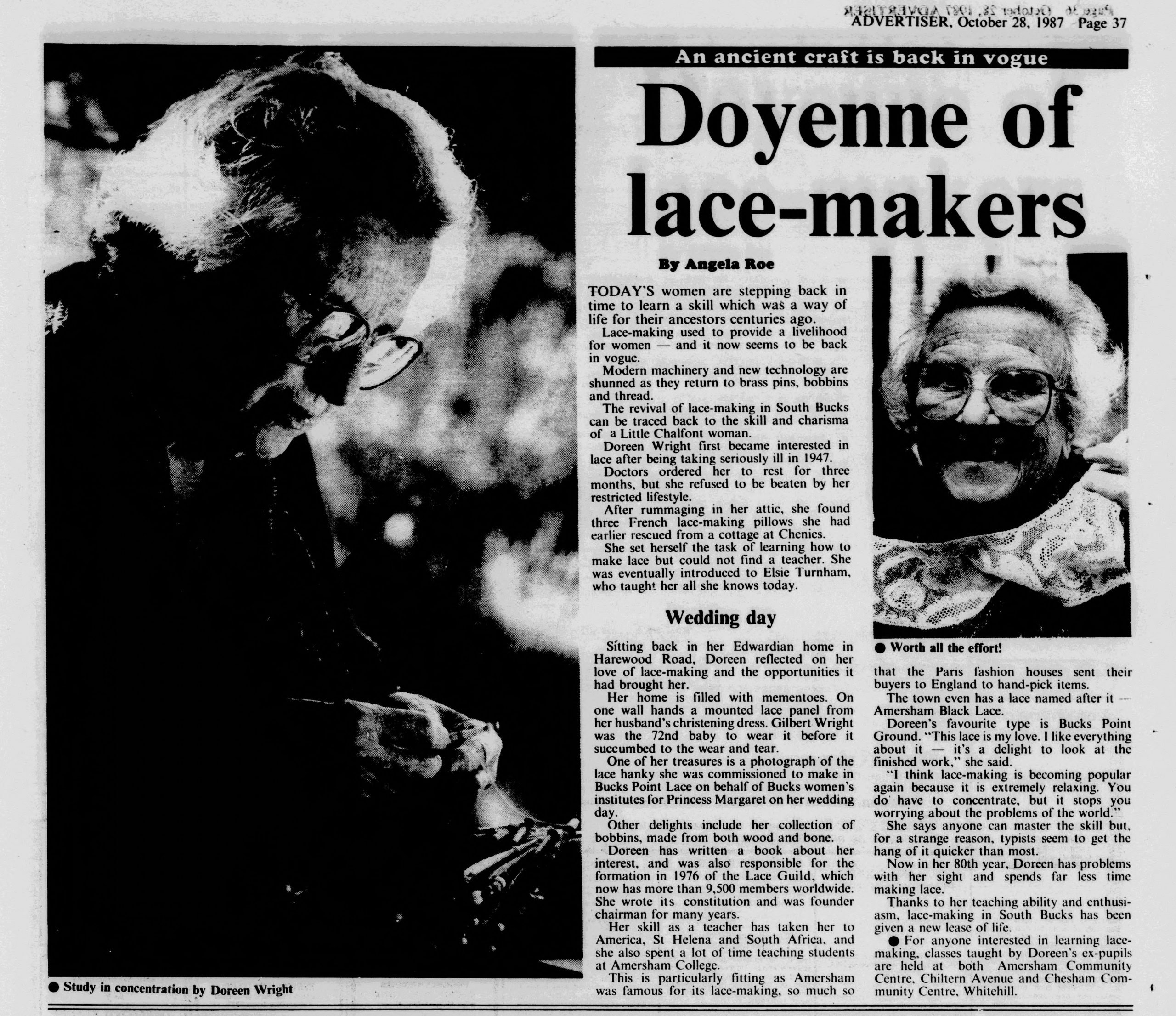
The hassocks (kneelers) were made in 1982 to a set of designs by Mrs. Doreen Wright, a prominent member of the WI and noted for her lacemaking skills. The designs include watercress (grown on the River Chess), shells (Russell cost of arms), oak leaves, music, doves of peace and fleur-de-lis (Prince Charles was married in 1982); many hassocks being “signed” with the initials of a person that the needle work wished to be remembered.
In 1990 the organ loft was created in the Tower, and the vacated space was separated off to form the Preston room, named in memory of Bert Preston, whose bequest paid for the work at a cost of £10847:65.
David Lambert became Rector in 1993. After he took up a ministry in Turkey, in 2001, David Allsop was installed as priest-in-charge in 2002, and then as Rector from 2008-2017.
content sources:
Records of Buckinghamshire by G. R. Elvey, page 350
The History and Antiquities of the County of Buckingham, Volume III, by George Lipscomb, page 253
The Lollards of the Chiltern Hills by W. H Summers